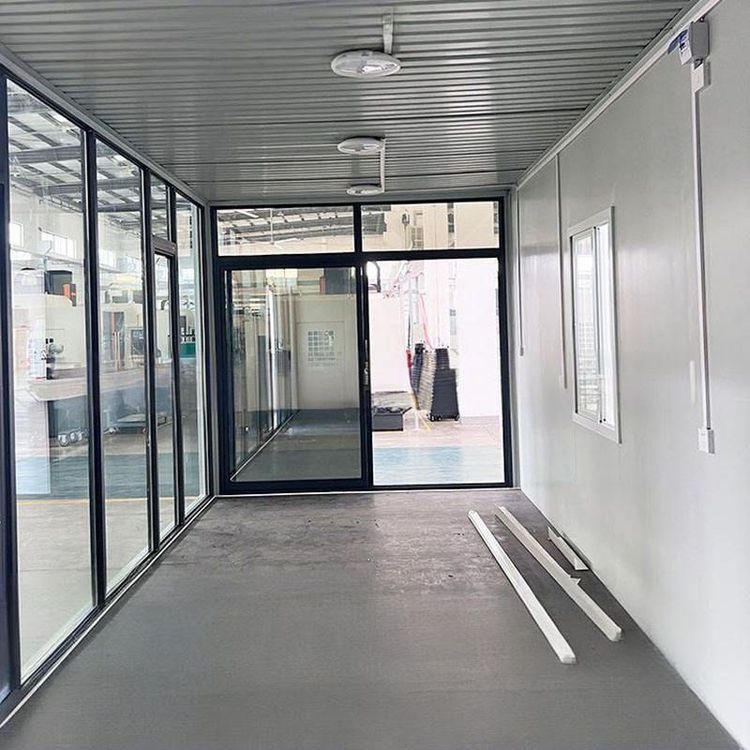
Green Roof Container House
The green roof of a container house is an eco-friendly design that reduces environmental impact and enhances building sustainability. Its core principles, technical implementations, and advantages are as follows:

1. Ecological Functions of Green Roofs
Green roofs create a natural thermal insulation and heat preservation system by covering the roof of a container house with vegetation. The vegetation absorbs solar radiation, reducing heat transfer into the interior while lowering the roof surface temperature through transpiration. In summer, indoor temperatures can be reduced by 5-8℃, decreasing air conditioning energy consumption. Additionally, the vegetation layer adsorbs dust and harmful gases from the air, improves local microclimates, and absorbs carbon dioxide while releasing oxygen, enhancing the ecological benefits around the building.
2. Technical Implementation Methods
Structural Adaptation Modifications
The container roof requires waterproofing reinforcement, typically using high-strength waterproof membranes or coatings to prevent root penetration and water leakage. Some designs incorporate lightweight substrate layers (e.g., expanded perlite and coconut coir mixtures) to meet vegetation growth needs without adding excessive loads. For example, Zhejiang Hangxing's modular container houses optimize roof load-bearing structures to support shallow soil layers (approximately 10-15cm thick) for vegetation coverage.Rainwater Collection and Recycling
Green roofs are often integrated with rainwater harvesting systems. Rainwater is collected via roof gutters into storage tanks, filtered, and purified for non-potable uses such as irrigating roof vegetation, flushing toilets, or landscaping. For instance, Zeyu Container House's rainwater recycling system reduces reliance on municipal tap water by 30%-50%, lowering energy consumption in water supply.Vegetation Selection and Maintenance
Drought-tolerant, nutrient-poor-adapted, and shallow-rooted plants (e.g., Sedum lineare, Sedum sarmentosum) are prioritized to minimize irrigation needs and maintenance costs. Some designs use modular vegetation mats for rapid installation and replacement, improving construction efficiency.
3. Comprehensive Benefits
Green roofs align perfectly with the modular nature of container houses, significantly reducing lifecycle carbon emissions. According to estimates, container houses using recycled steel frames and green roofs reduce embodied carbon emissions by approximately 60% compared to traditional buildings. Additionally, green roofs extend roof lifespan (protecting waterproof layers from UV damage and temperature fluctuations) and enhance building aesthetics, making them suitable for residential, office, commercial, and other applications.