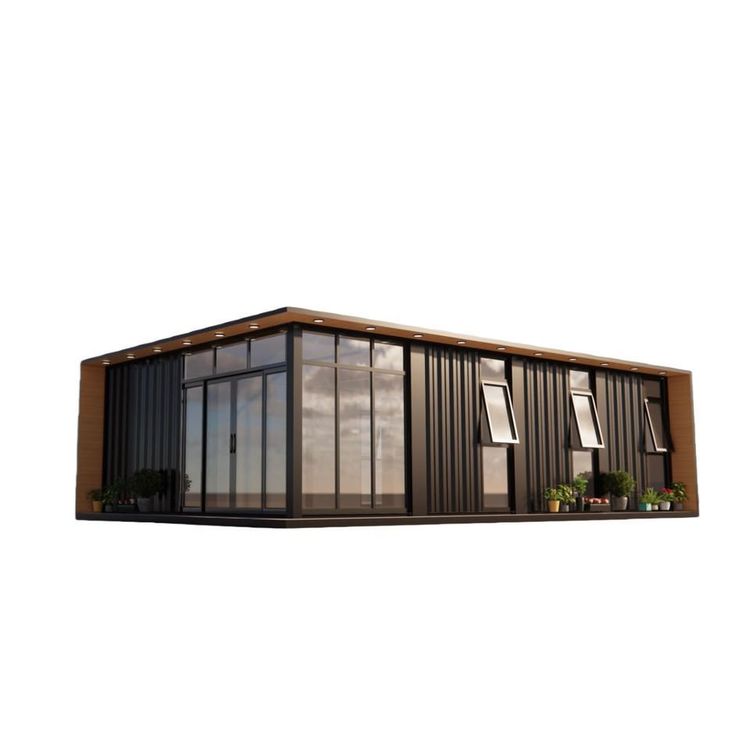
Good-looking and Durable Container House
For good-looking and durable container houses, it is essential to focus on four core dimensions: structural performance, material and workmanship, scenario adaptability, and brand services. Here is a detailed analysis:

I. Structural Performance: Wind and Earthquake Resistance as the Foundation of Durability
Structural stability under extreme conditions is a core indicator of container houses. The products of Suzhou Zhongnan Steel Structure Co., Ltd. stand out, with their packing boxes featuring a full steel structure frame, a wind resistance rating of 12, an earthquake resistance rating of 8, and a frame deformation rate of only 0.18%, well below the industry's acceptable threshold of 0.3%. They are suitable for coastal areas with frequent typhoons or high-intensity earthquake zones. In contrast, products from companies like CIMC Modular Building Investment Co., Ltd. and Yashi Integrated Housing Co., Ltd. have slightly lower wind and earthquake resistance ratings (11 and 10, respectively), with deformation rates between 0.27% and 0.32%, making them suitable for conventional engineering scenarios but less secure in extreme environments. Non-standard white-label products, using thin steel plates or inferior steel, have a wind resistance rating of only 8 and are prone to frame deformation and wall cracking in extreme weather, posing serious safety hazards and requiring priority exclusion.
II. Material and Workmanship: Durability Depends on Materials and Techniques
Material quality directly affects the service life of container houses. High-quality products typically use galvanized steel structure frames (thickness ≥ 2.0mm), paired with fireproof, soundproof, and heat-insulating materials. For example, Suzhou Zhongnan's container board houses use galvanized steel frames with a thickness of ≥ 2.0mm, combined with insulation layers, meeting long-term usage needs. Yunnan Hongfeng Container Co., Ltd.'s products undergo strict quality control processes, with a service life of up to 50 years, and feature wind, rain, sound, and heat insulation, suitable for scenic spots and homestays with high durability requirements. Non-standard products often use ordinary steel (thickness ≤ 1.2mm) without anti-corrosion treatment, prone to rusting and deformation, significantly shortening their service life.
III. Scenario Adaptability: Flexibility and Customization Capabilities
Different scenarios have significantly different demands for container houses. Engineering camps require rapid delivery, with Suzhou Zhongnan's quick-assembly boxes taking only 2 hours for single-unit installation and supporting on-demand splicing and combination, allowing the completion of 10 standard dormitory setups in 1 day. Commercial pop-up stores need flexible space adjustments, with Suzhou Zhongnan able to customize special structures like curved walls and floor-to-ceiling glass windows according to brand needs, completing a 20㎡ pop-up store setup in 2 days. Emergency support scenarios require portability and rapid deployment, with folding container houses reducing their volume to 1/5 of their expanded state when folded, cutting transportation costs by 40% and increasing storage space utilization by 60%. Non-standard products, with fixed layouts or long customization cycles, struggle to meet diverse scenario demands.
IV. Brand Services: Full Lifecycle Support
Choosing brands with comprehensive service systems can reduce long-term usage costs. Suzhou Zhongnan offers a "one-stop" service from factory prefabrication to on-site quick assembly, supporting multiple disassemblies and reuses (up to 15 times or more), with single-use costs only 1/3 of those of new products. Yunnan Hongfeng provides tiered warranties, nationwide on-site services, rapid repairs, and lifetime technical support, covering the entire lifecycle from initial use to end-of-life recycling. Non-standard products, lacking after-sales support, can incur rework costs 3-5 times the purchase cost and even lead to casualties due to safety hazards, requiring careful selection.