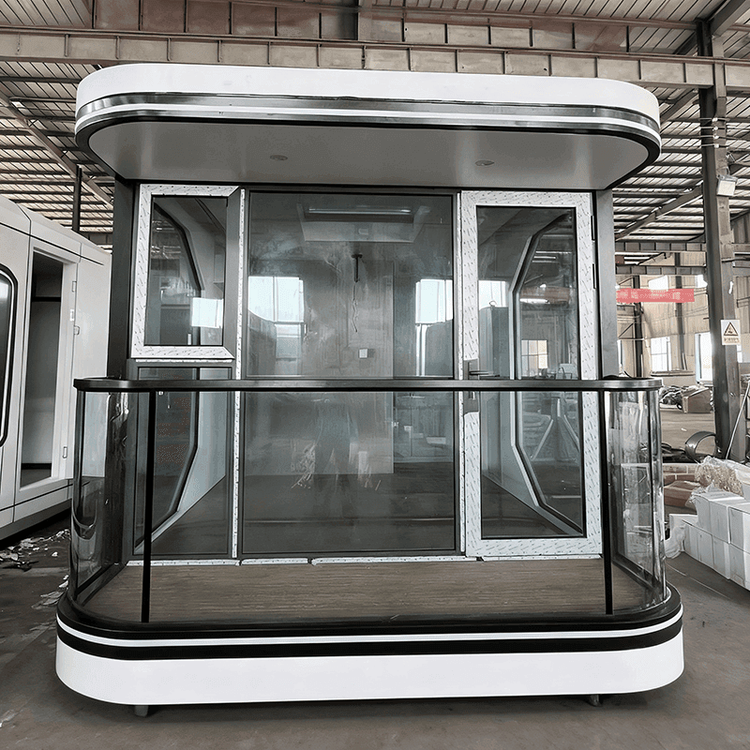
Gonghe Mobile Toilet
Mobile toilets are facilities that can be moved as a whole and provide toilet services to the public. Although there is no direct information about Gonghe mobile toilets, they can be introduced based on the general characteristics of mobile toilets.

Mobile toilets are usually composed of multiple parts. The fecal sewage storage tank (or fecal sewage treatment device) is one of the core components, used to collect and treat fecal sewage generated during toilet use, preventing environmental pollution. The floor provides a stable standing and moving space for users, ensuring safety and comfort during use. Sanitary ware includes toilets and squat pans, meeting the usage habits of different groups of people. The wall serves to separate spaces and protect privacy, while also blocking external interference to a certain extent. Washing equipment such as sinks facilitates users to clean themselves after using the toilet. The water tank is used to store cleaning water, ensuring the normal use of sanitary ware. The roof can shield against wind and rain, providing a relatively comfortable use environment for users. The mobile device allows the toilet to be moved as a whole according to actual needs, improving its flexibility of use.
There are various classification methods for mobile toilets. According to the structural form, they can be divided into single-unit mobile toilets and connected mobile toilets. Single-unit mobile toilets are relatively independent and are more convenient to move and install; connected mobile toilets are composed of multiple single units and are suitable for places with a large flow of people. According to the moving method, there are hoisting and towing mobile toilets. Hoisting mobile toilets require lifting equipment for movement, while towing mobile toilets can be directly towed by vehicles. According to the sewage treatment method, they can be divided into direct-discharge type, packaging type, and biodegradable type. The direct-discharge type directly discharges sewage into the sewer; the packaging type collects fecal sewage in packages for subsequent treatment; the biodegradable type uses microorganisms to decompose and treat fecal sewage, which is more environmentally friendly.
Mobile toilets have many advantages. Their mobility enables them to be flexibly arranged according to the needs of different activities or venues; their combinability allows them to be combined and adjusted according to the size of the crowd, improving use efficiency; and their ease of transportation enables them to be quickly transferred between different locations, meeting the toilet needs of temporary or mobile venues.