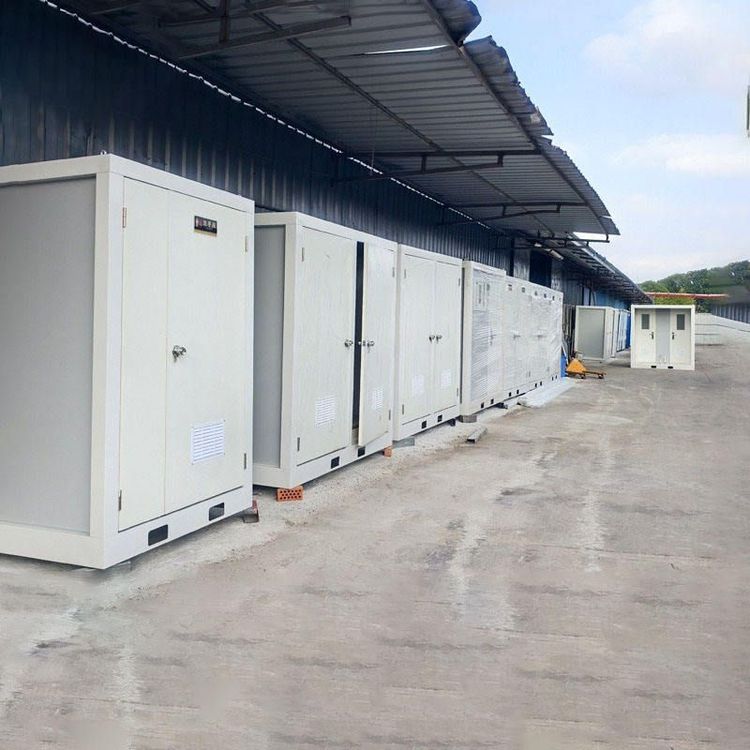
Ganzhou Mobile Environmental Toilet Inspection
The inspection of mobile environmental toilets in Ganzhou mainly revolves around municipal acceptance standards, and manufacturers are required to provide corresponding qualifications and inspection reports to ensure product compliance.

Firstly, the core basis for inspection is municipal acceptance standards. When purchasing mobile environmental toilets, municipal sanitation units explicitly require products to comply with local municipal acceptance specifications. These standards typically cover aspects such as structural safety, sanitary performance, and environmental protection indicators, including the toilet's load-bearing capacity, anti-leakage performance, and sewage treatment effectiveness, ensuring the equipment operates safely, stably, and environmentally in public environments.
Secondly, manufacturer qualifications and inspection reports are key thresholds. Manufacturers need to possess relevant qualifications, such as environmental protection equipment production licenses and quality management system certifications, and provide inspection reports issued by third-party authoritative institutions. For example, Jiangxi Xinzhuyuan Metal Products Co., Ltd. holds multiple utility model patents for modular public toilet anti-corrosion structures and integrated sewage discharge systems. Its products must pass specialized inspections for anti-corrosion performance and sewage discharge efficiency to demonstrate that the technology meets the adaptation requirements for the rainy climate in southern China, preventing structural corrosion or sewage discharge blockages due to moisture.
Thirdly, inspection content focuses on actual usage scenarios. Given Ganzhou's climatic characteristics, such as a long rainy season and high humidity, inspections emphasize the toilet's waterproof performance, ventilation design, and material weather resistance. For example, the joints of modular public toilets must pass anti-leakage tests, and integrated sewage discharge systems must verify their treatment capacity under low water levels or continuous rainfall to ensure long-term trouble-free operation in humid environments.
Finally, the inspection process typically involves multiple parties. In addition to manufacturer self-inspections, municipal departments or third-party institutions conduct sampling or acceptance inspections, including on-site tests (such as load-bearing tests and sewage discharge effectiveness verification) and document reviews (such as inspection reports and patent certificates). Only after passing all inspection stages can products be officially put into use, ensuring the hygiene and safety of the public environment.