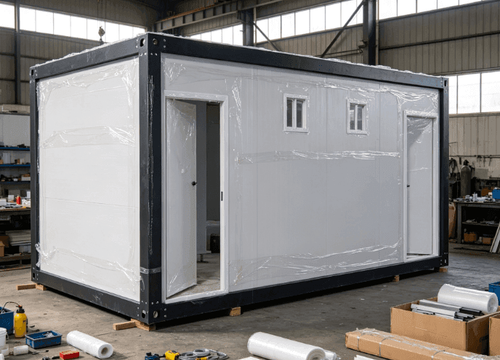
Gansu Gannan Box-Type Mobile Toilet
The Gansu Gannan box-type mobile toilet is a modular public sanitation facility designed for high-altitude, cold, and ecologically sensitive regions, achieving a balance between public health services and ecological protection through mobile deployment and diversified treatment technologies.

1. Modular and Mobile Design
The box-type mobile toilet adopts prefabricated boxes or modular structures, integrating core components such as toilets, sewage storage tanks, and ventilation systems, enabling rapid deployment in remote areas lacking infrastructure. Some facilities are equipped with traction devices to support physical relocation, meeting the dynamic needs of temporary events (e.g., festivals, sports competitions) or seasonal fluctuations in tourist numbers. For example, in Gannan grassland scenic areas, toilet quantities can be flexibly adjusted based on pedestrian traffic data during non-frozen periods to avoid resource waste.
2. Diversified Treatment Technologies Adapted to the Environment
- Sewage Storage Type: Excrement is temporarily stored in sealed tanks and regularly transported by specialized vehicles to treatment centers. This technology is simple and reliable but relies on a well-developed collection and transportation system, making it suitable for densely populated or easily accessible areas.
- Biochemical Treatment Type: Built-in small-scale treatment units reduce collection frequency through microbial degradation or chemical deodorization. For Gannan's cold climate, some facilities incorporate insulation layers to maintain reaction activity and ensure normal operation in winter.
- Vacuum Collection System: Negative pressure technology reduces water consumption to 1/10 of traditional flushing systems, with excrement sealed and transported to treatment stations, making it ideal for arid regions with scarce water resources.
- Waterless/Low-Water Type: Physical separation and evaporation technologies reduce water dependency and sewage generation, with residues converted into non-agricultural compost, aligning with environmental protection requirements in ecologically sensitive areas.
3. Enhanced Environmental Adaptability Features
- High-Altitude Freeze Protection: Pipes use electric tracing technology to prevent freezing in winter, ensuring smooth excrement transportation.
- Weather-Resistant Materials: The outer shell employs UV-resistant, temperature-difference-resistant composite materials to withstand intense高原 (high-altitude) radiation and昼夜 (day-night) temperature fluctuations, extending facility lifespan.
- Eco-Protection Orientation: Design minimizes ground excavation to avoid damaging grasslands and soil structure; waste treatment follows harmless principles, such as using degraded residues for landfill or non-edible crop composting.
4. Application Scenarios and Maintenance Points
Primarily serving scenic areas, temporary events, and remote communities, rapid deployment is achieved through modular design during non-frozen periods. Daily maintenance requires regular checks on sewage tank capacity, ventilation system efficiency, and energy supply stability (e.g., solar panel cleaning and battery status) to ensure continuous operation.
5. Technological Optimization Directions
Future efforts will focus on enhancing self-sufficiency, such as improving solar power efficiency and optimizing biochemical reaction activity control, further reducing reliance on external resources and promoting sustainable development of public sanitation facilities in the Gannan region.