
Gansu Finished Mobile Toilet Installation
The installation of finished mobile toilets in Gansu should follow standardized procedures, combining material characteristics with professional services to ensure usage effectiveness and safety. Here are the specific installation points and precautions:
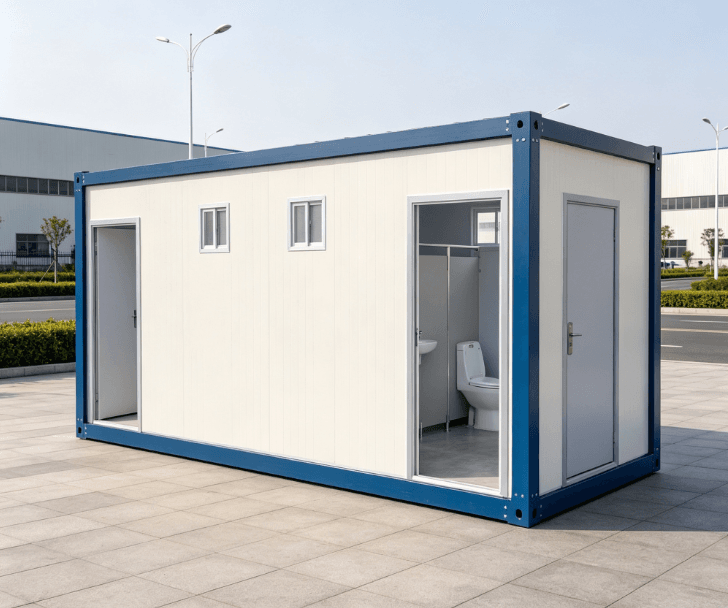
I. Material Selection and Structural Characteristics
The materials for mobile toilets in Gansu need to balance durability and environmental adaptability. For example, the two-stall mobile toilet installed by Hongjie Intelligence uses a hot-dip galvanized frame. This material isolates air and moisture through the galvanized layer, effectively preventing rust and extending the structural lifespan. The wall panels are made of metal carved panels, filled with insulation material inside. The outer metal panel has fire-resistant properties, while the carved design enhances aesthetics. The toilet door is made of aluminum alloy, which is lightweight and corrosion-resistant, suitable for long-term outdoor use. The ceiling uses PVC suspended ceiling, which is moisture-proof and easy to clean. The bottom is equipped with marble steps, improving slip resistance and enhancing overall stability. For the 2+1 structure (two stalls plus a sink) mobile toilet, the exterior walls also use metal carved panels, achieving both fire resistance and insulation through the internal insulation layer, adapting to the large temperature differences between day and night in Gansu.
II. The Importance of Professional Installation Services
The installation of mobile toilets should be carried out by a professional team to ensure precise alignment of components and functional realization. For example, Jiuquan Junshun Integrated Housing Co., Ltd. provides a one-stop solution, covering the entire process from foundation construction to equipment commissioning. Its installation process typically includes:
- Site Survey: Determine the toilet location based on the usage scenario (such as scenic spots, construction sites, temporary event venues), and assess ground flatness and drainage conditions;
- Foundation Construction: If the ground is uneven, pour a concrete foundation or lay a moisture-proof垫层 (pad layer) to ensure the toilet bottom fits tightly with the ground;
- Main Assembly: Assemble the frame, install wall panels and doors and windows according to the design drawings, focusing on checking the tightness to prevent rainwater leakage;
- Equipment Commissioning: Connect the water and electricity systems (such as septic tanks, water tanks, lighting equipment), and test whether functions like flushing and ventilation are normal;
- Acceptance and Delivery: Check the overall structural stability, material surface integrity, and functional operation to ensure compliance with safety standards.
III. Maintenance Recommendations after Installation
Regular maintenance can extend the lifespan of mobile toilets. For example, check the integrity of the galvanized layer on metal components monthly and promptly repaint for rust prevention; clean and disinfect the septic tank quarterly to avoid odors and blockages; inspect the aging of the PVC suspended ceiling and sealing strips annually, and replace them if necessary to maintain moisture-proof properties.
You may also like

Portable Toilet Eco-Friendly: MOQ, Samples & Quotation Guide
Read More
Top Portable Toilet Color Steel Manufacturers: How to Choose a Factory Partner
Read MorePortable Toilet Picture: Types, Features & Buying Tips
Read More