
Gannan Mobile Toilet Design
The design of mobile toilets in Gannan focuses on functional integration, environmental responsiveness, and cultural adaptation, constructing a resilient environmental service node that balances ecological protection with human activity needs through technological innovation and modular strategies.
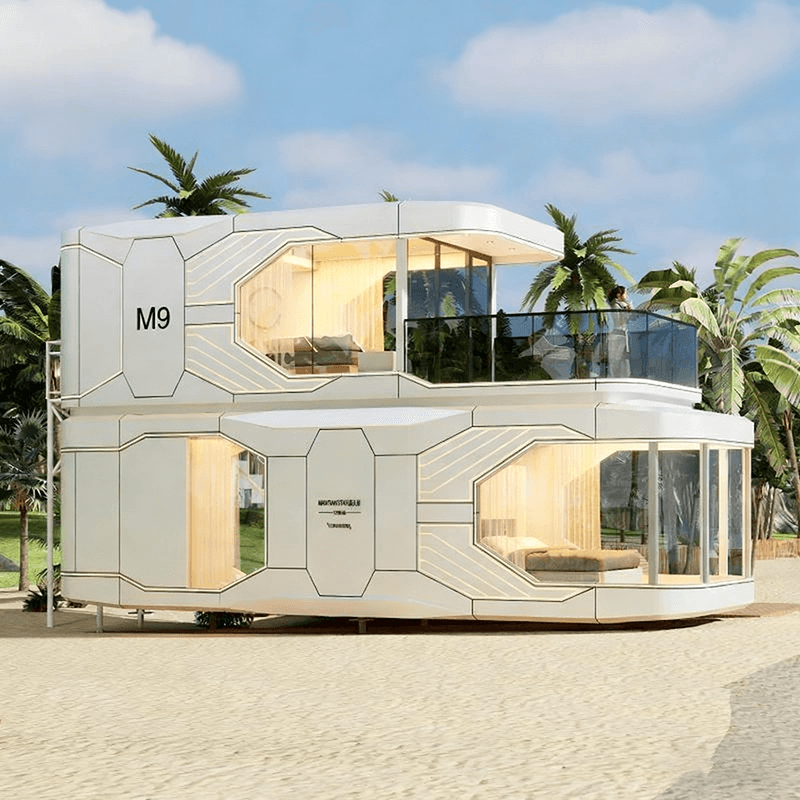
Functional Module Design: Technological Integration and Resource Recycling
The functional design of mobile toilets in Gannan centers on three main modules: waste treatment, spatial structure, and resource supply. The waste treatment module employs microbial degradation and vacuum toilet technologies. For example, dry microbial toilets utilize a composite biological reactor (HBR) for in-situ treatment of excreta, ensuring an odorless and tasteless process. The treated water can be recycled for flushing, achieving zero discharge. The vacuum toilet system consumes only one-tenth of the water used by traditional flush toilets, making it suitable for the water-scarce plateau environment. The spatial structure module selects materials with strong weather resistance and excellent thermal insulation properties to withstand intense ultraviolet radiation, significant temperature variations between day and night, and wind and snow loads in high-altitude areas. The exterior design adopts low-saturation colors and simple forms to minimize visual interference with the natural landscape. The resource supply module integrates solar photovoltaic panels for power generation and is equipped with rainwater collection or air-to-water systems to reduce reliance on external water and electricity supplies. For instance, some facilities lower energy consumption through solar power.
Environmental Adaptability Design: Ecological Protection and Climate Response
The design emphasizes sensitivity to the plateau ecosystem. In terms of ecological protection, the modular design supports rapid deployment and removal, avoiding the land excavation and pipeline laying required by traditional fixed toilets, thereby reducing damage to plateau meadows and soil structures. The treatment technology employs a fully enclosed cycle to prevent pollutants from entering water systems, adhering to ecological carrying capacity constraints. Regarding climate response, biodegradable toilets incorporate insulation layers to maintain reaction activity, ensuring microbial viability in low-temperature environments. The vacuum toilet system, combined with electric tracing technology, addresses winter pipe freeze protection issues, ensuring year-round stable operation of the equipment.
Cultural and Scenario Adaptation: Visual Integration and Functional Flexibility
The design prioritizes harmony with natural landscapes and cultural settings. Visual integration is achieved through simple, low-saturation colors and natural forms to avoid visual conflicts. Functional flexibility supports dynamic adjustment of mobile toilet locations based on the uneven temporal and spatial distribution of tourism activities, supplementing fixed facilities and relocating them after events to avoid resource idleness. For example, the FHJC-02 dry microbial toilet is suitable for temporary venues such as exhibitions, construction sites, and parks, while prefabricated mobile toilets are ideal for marathons, tourist attractions, and other needs.
Technological and Management Innovation: Data Monitoring and Dynamic Adjustment
Operations management introduces a data monitoring system to assess energy consumption, water consumption, and treatment residues in real-time, optimizing environmental performance. By utilizing pedestrian flow monitoring devices, the layout quantity is dynamically adjusted to balance peak and off-peak demands, enhancing resource utilization efficiency.
You may also like

Portable Toilet Eco-Friendly: MOQ, Samples & Quotation Guide
Read More
Top Portable Toilet Color Steel Manufacturers: How to Choose a Factory Partner
Read MorePortable Toilet Picture: Types, Features & Buying Tips
Read More