Future Foldable Container Houses
Future foldable container houses show broad development prospects and strong market potential, mainly across four areas: market scale, technological innovation, application scenarios, and policy support.

Market scale continues to expand: The global foldable container house market has grown significantly, with a 2024 scale of about $1,193,750,000, expected to reach $2,408,333,333 by 2031; the modular building market is likewise strong, with a global scale of $16,666,666,667 in 2025, rising to $34,722,222,222 by 2030. China's market performance stands out: the foldable mobile housing market is projected to reach $1,388,888,889 in 2025, with a compound annual growth rate exceeding 15%. This trend shows that foldable container houses are becoming a new growth point in the construction industry.
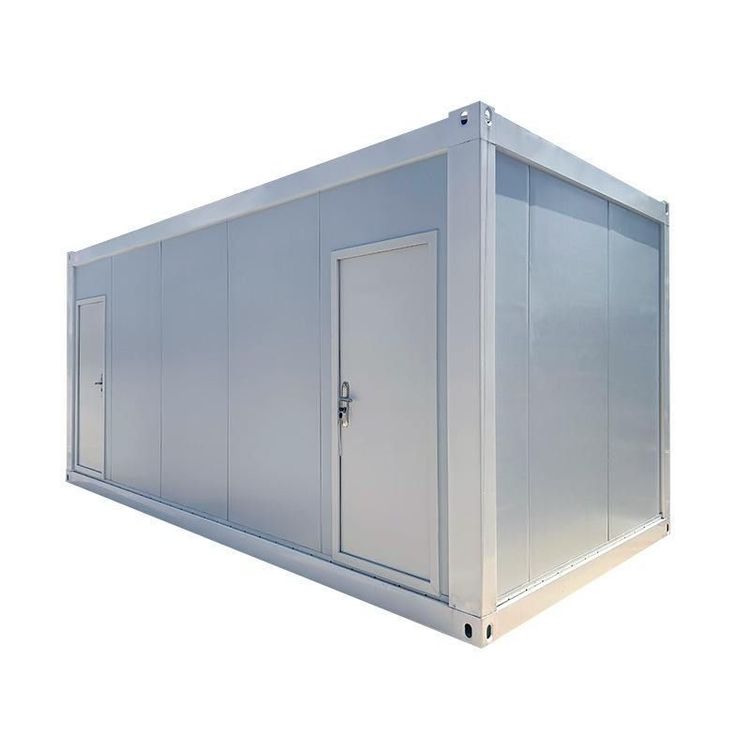
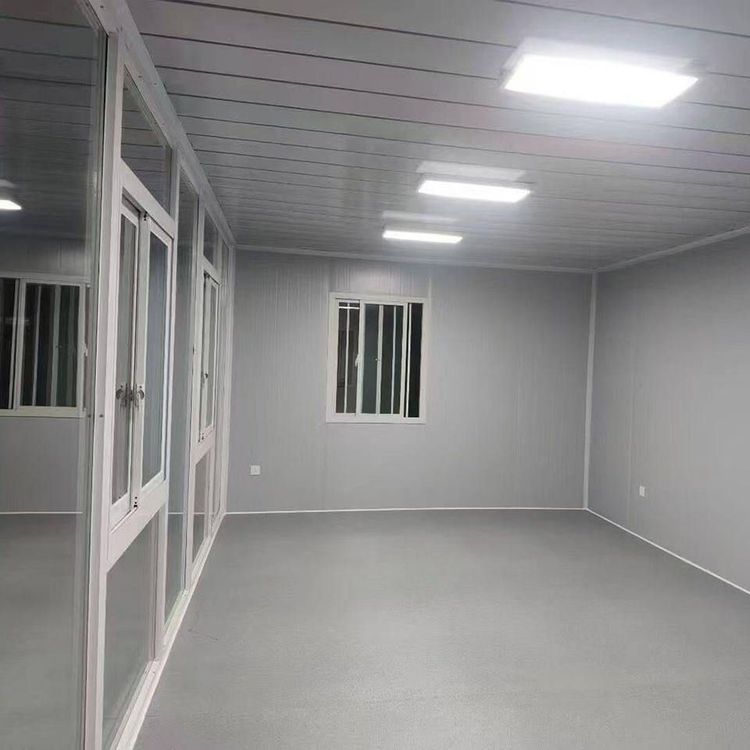
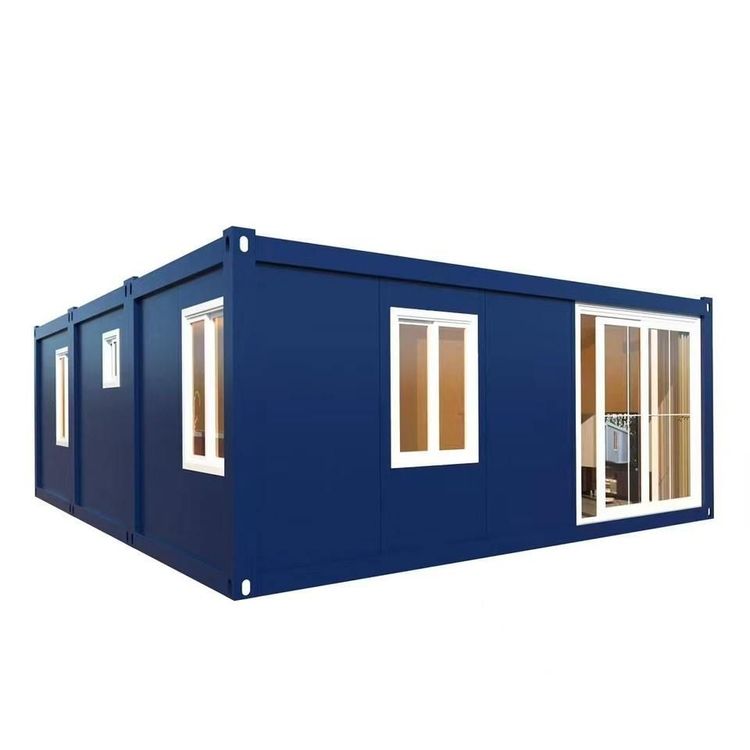
Technological innovation drives product upgrades: Anhui Yizhedie Integrated Housing Co., Ltd. uses an innovative sliding-rail structure to achieve compact transport and rapid deployment with space-doubling results—three units can merge into a single large room without complex construction. Its profiles use 2.0-thickness galvanized steel; after a nine-pass roll-forming process, strength is doubled, and a top-and-bottom interlocking groove design enables seamless joining without sealant, improving durability and airtightness. The UK company Ten Fold Engineering has developed modular houses that, with one-button operation, transform from a small cube into a villa within 10 minutes; interior fittings can fold, spatial layouts can change flexibly, and all modular systems are reversible for easy relocation.
Application scenarios diversify: Foldable container houses see strong demand in emergency relief, overseas projects, and commercial cultural tourism. Emergency relief needs “minute-level” rapid deployment; overseas projects require controllable logistics costs; commercial cultural tourism seeks flexible space changes—while traditional fixed box houses have high logistics costs, foldable houses address these pain points. They can also be used for disaster emergency response, mobile hospitals, convenience stores, exhibition halls, and more, showing strong adaptability and market potential.
Policy support boosts industry development: Anhui Province has advanced prefabricated construction through multiple policies—for example, the share of prefabricated buildings approaching 40% by 2025, the 2026 release of the Technical Code for Concrete Modular Buildings, and requirements that newly approved government-invested projects adopt prefabricated construction. Bengbu City has established a green building industry alliance and built a full-chain industry collaboration platform, providing strong support for R&D, production, application, and services for foldable container houses.