Functions of Outdoor Portable Toilets
The functions of outdoor portable toilets mainly include the following aspects:
1. Basic Sanitation Services and Waste Treatment
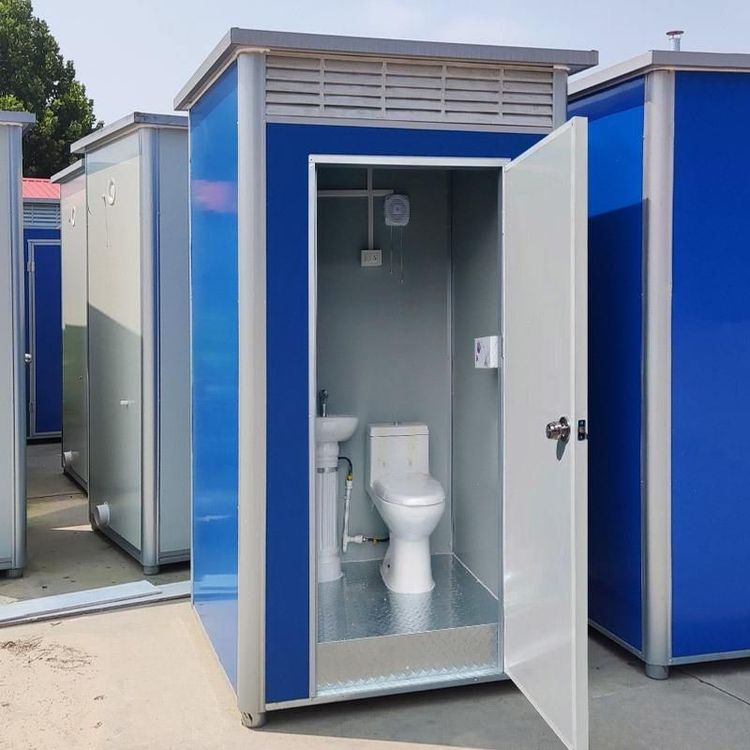
The core function of outdoor portable toilets is to provide immediate toilet solutions for crowded places (such as scenic spots, construction sites, and large event venues), alleviating the shortage of fixed public toilets. Their design must meet sanitary standards to ensure basic needs. In terms of waste treatment, there are two main methods:
- Chemical Treatment: Waste is stored in an internal tank, and a specific proportion of chemical agents and clean water must be added before use. The chemical agents can decompose solid waste, inhibit the growth of bacteria and viruses, and mask odors. The tank needs to be cleaned regularly, and the agents replenished.
- Biodegradable Treatment: A degradation agent containing specific microorganisms (such as enzymes or bacteria) is added to the storage tank. These microorganisms feed on the waste, breaking it down into carbon dioxide, water, and a small amount of harmless residue. Some advanced models can also convert the by-products into materials suitable for composting, achieving resource utilization.
2. Integration of Environmental Protection Technologies
Outdoor portable toilets achieve environmental protection goals through multiple technologies:
- Water-Saving Systems: Vacuum suction technology (consuming 0.3-0.5 liters of water per use) or biodegradable technology (no flushing required) is used, saving over 90% of water compared to traditional public toilets.
- Sewage Treatment: Some models are equipped with MBR membrane bioreactors, which can purify sewage to the standard for reclaimed water reuse, suitable for landscaping or flushing.
- Solar Power Supply: Photovoltaic panels on the top supply power to lighting, ventilation, and other equipment, supporting off-grid operation and reducing energy consumption.
3. Rapid Deployment and Adaptation to Special Scenarios
The modular steel structure box can be installed within 2 hours using lifting vehicles, suitable for emergency scenarios such as earthquake-stricken areas and temporary construction sites. Some models are equipped with self-propelled chassis, allowing movement without external equipment. For extreme environments, models for cold regions are equipped with electric tracing pipes (withstanding temperatures as low as -40°C), and coastal wind-resistant models have a wind pressure rating of ≥1.5kN/m², ensuring stable operation.
4. Humanized and Intelligent Management Design
- Barrier-Free Space: The interior space is ≥1.5m×1.5m, and a guide system for the visually impaired is provided, facilitating use by disabled individuals.
- Constant Temperature Ventilation System: The ventilation volume is ≥20m³/h, maintaining air circulation.
- Intelligent Induction Lighting: The illuminance is ≥150lux, with automatic brightness adjustment.
- IoT Monitoring: Sensors are used to monitor usage frequency, ammonia concentration (alarm threshold ≥20ppm), water tank level, and other data in real-time, supporting remote management platform scheduling and maintenance, improving operational efficiency.