
Funan Mobile Toilet Installation
The installation process of mobile toilets in Funan varies depending on the type. Split-type toilets require on-site assembly, while integrated toilets are mainly installed through lifting, making the overall operation simple and quick.
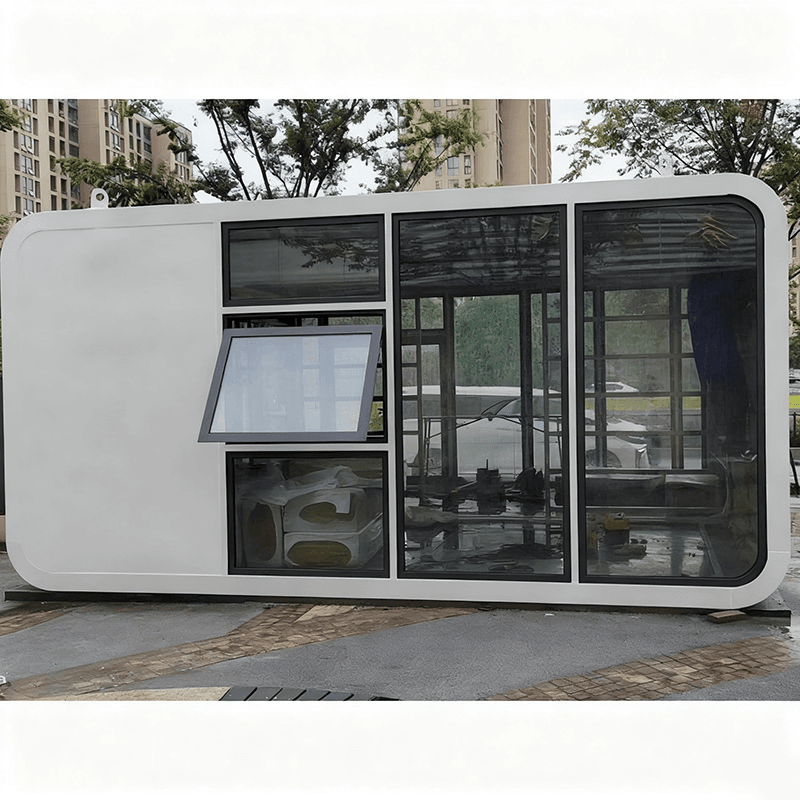
Installation Steps for Split-Type Mobile Toilets
Positioning the Chassis and Frame
The installation of a split-type mobile toilet starts with the chassis. The chassis, usually made of steel, needs to be placed steadily at the predetermined location using a forklift or manual labor and adjusted to a level state with a spirit level. This step is the foundation for subsequent installations, ensuring the stability of the overall structure.Installing the Walls and Roof Panel
After the chassis is in place, the wall panels and roof panel need to be installed. The wall panels, mostly made of sandwich panels, have insulation and moisture-proof functions. They should be inserted into the slots of the chassis one by one and fixed with bolts or clips. After the roof panel is installed, it needs to be sealed, usually with waterproof glue or sealing strips, to prevent rainwater leakage. The entire wall installation process can usually be completed within 1-2 hours, depending on the number of wall panels and the proficiency of the installation.Connecting Internal Facilities
Internal facilities include partitions, toilets, flushing systems, sinks (if any), lighting, and ventilation equipment. Connecting the water and electricity pipelines is a crucial step and should be carried out by professionals. The modular design of water and electricity interfaces (such as quick connectors) can significantly shorten the installation time and reduce on-site welding or complex wiring. For example, the flushing system needs to be connected to the water source and sewage pipeline, and the electrical circuit needs to ensure the normal operation of lighting and ventilation equipment.Function Inspection and Debugging
After the installation is completed, a comprehensive inspection is required: a flushing test to verify whether the water flow and drainage are smooth; an electrical circuit inspection to ensure there is no electric leakage or short circuit; and a sealing inspection focusing on the joints of the wall panels and the edges of the roof. During the debugging phase, equipment parameters such as ventilation speed and lighting brightness need to be adjusted to ensure that all functions meet the usage standards.
Installation Characteristics of Integrated Mobile Toilets
Integrated mobile toilets (such as container-type toilets) have completed interior decoration and equipment integration in the factory, making on-site installation more convenient. The process includes:
- Lifting and Positioning: Use a crane to lift the entire toilet to the predetermined location, ensuring that the ground is level and has sufficient load-bearing capacity.
- Connecting Water, Electricity, and Sewage Pipelines: Quickly connect the water source, power supply, and sewage outlet through quick connectors, without the need for on-site assembly of internal facilities.
- Short Overall Installation Time: Usually, it can be completed within 2-4 hours, suitable for urgent needs or temporary events.
Professional Service Support
In the Funan area, professional leasing manufacturers (such as Xuhu Environmental Protection) provide one-stop services of "leasing + installation". Customers only need to make a reservation in advance, and the manufacturer will be responsible for transportation, installation, and debugging, ensuring that the toilets can be quickly put into use at the event site and saving customers the trouble of self-installation.



