
Fuling Outdoor Mobile Toilet Sewage Disposal
There are three main methods for sewage disposal of outdoor mobile toilets in Fuling: sewage tank collection, connection to municipal sewage pipelines, and biochemical treatment technology.
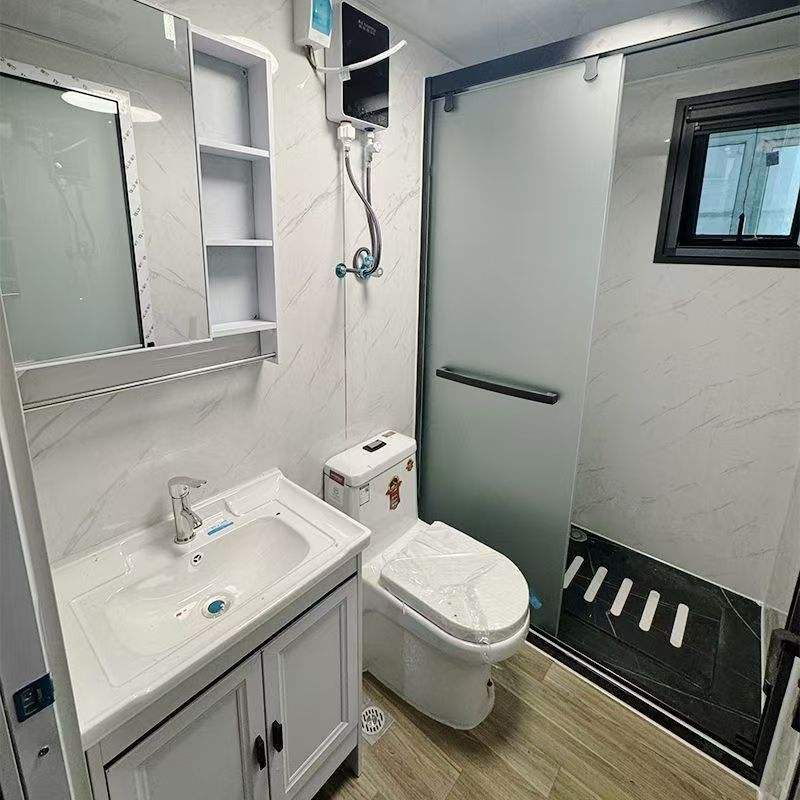
Sewage tank collection method: This is a relatively common sewage disposal method. A sealed sewage tank is installed at the bottom of the mobile toilet. When people use the toilet and generate sewage, the sewage is directly discharged into this sewage tank. The sewage tank has good sealing properties, effectively preventing sewage leakage and odor emission. As the usage time increases, the sewage in the tank gradually accumulates. When it is nearly full, a specialized sewage suction truck will come to extract the sewage. The truck transports the extracted sewage to a sewage treatment plant for centralized treatment. Through a series of treatment processes, the sewage meets the discharge standards before being released. This method is relatively simple to operate and has low costs, making it suitable for temporary event venues or areas without municipal sewage pipeline coverage.
Connection to municipal sewage pipelines method: Some mobile toilets have the conditions to be connected to municipal sewage pipelines. They can be connected to the municipal sewage pipeline system through laid pipelines, just like ordinary building restrooms. When sewage is generated, it flows along the pipelines into the municipal sewage network and is ultimately transported to a sewage treatment plant for processing. The advantage of this method is that the sewage can be discharged promptly and smoothly without the need for regular sewage suction operations, reducing manual intervention and transportation costs. However, it has certain requirements for the installation location of the mobile toilet, which must be within the coverage area of the municipal sewage pipelines.
Biochemical treatment technology method: Some more advanced mobile toilets are equipped with small-scale biochemical treatment devices inside. Specific microorganisms are cultivated in these devices, and these microorganisms have the ability to decompose organic matter in the sewage. When the sewage enters the biochemical treatment device, the microorganisms decompose and transform it. Through a series of biochemical reactions, the organic matter in the sewage is gradually degraded, and the water quality is purified. The treated sewage can meet certain discharge standards and can be directly discharged to designated locations in the natural environment. However, this method is relatively complex, requiring professional equipment and technical support, and has higher costs. It is usually suitable for venues with high environmental protection requirements and certain economic strength.



