
Forklift Handling of Mobile Toilets
When using a forklift to handle mobile toilets, operations must be carried out through the reserved forklift slots, and handling specifications must be strictly followed to ensure safety and equipment integrity.
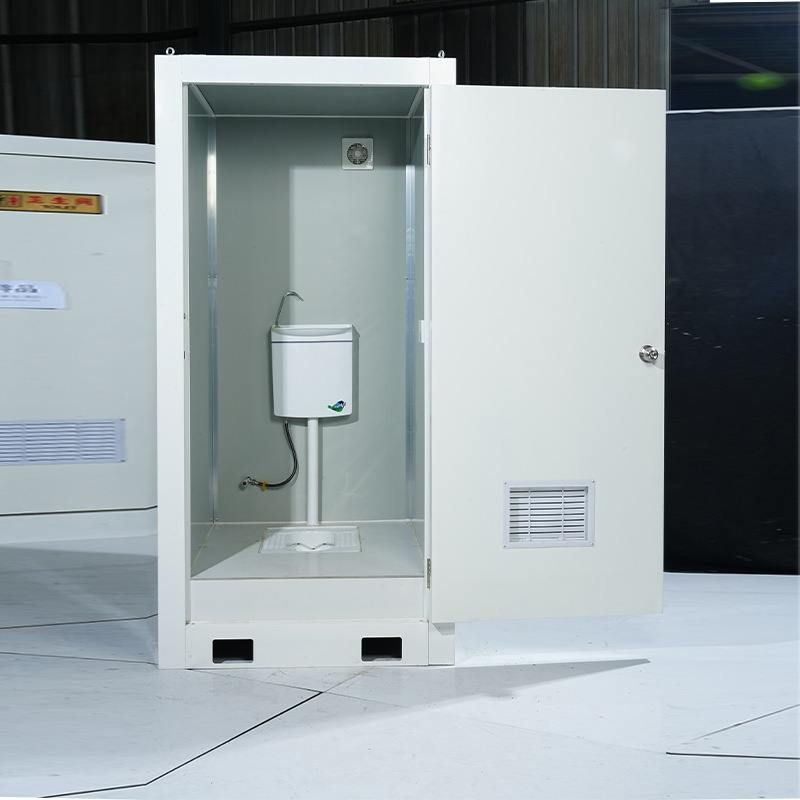
I. Prerequisites for Operation: Confirm Slot Specifications and Compatibility
Most mobile toilets have dedicated forklift slots at the bottom, with an opening height typically ranging from 140mm to 200mm and a width matching standard forklift tines (usually 100mm to 150mm). Before handling, check that the slot dimensions are compatible with the forklift tines to avoid issues such as inability to insert or unstable connections due to size mismatches. If the slots are deformed or blocked from prolonged use, clean or repair them in advance to ensure smooth insertion of the tines and that they reach the designed depth (usually more than two-thirds of the slot depth).
II. Handling Steps: Standardized Operations to Ensure Stable Connections
- Inserting the Tines: Slowly align the forklift tines with the slots and insert them vertically to the bottom, ensuring tight contact between the tines and both sides of the slots to avoid tilting or excessive gaps.
- Securing the Connection: Some mobile toilets are designed with bottom fixing holes or locking mechanisms. After inserting the tines, further secure them using bolts, clips, or hydraulic devices to prevent the tines from slipping during handling.
- Lifting Test: Gently lift the forklift arms to check the stability of the connection between the mobile toilet and the tines. Confirm there is no shaking or abnormal noise before proceeding with formal handling.
III. Handling Process: Steady Operations to Avoid Damage
- Control Speed: After lifting, maintain a constant speed and avoid sudden acceleration or braking to prevent deformation of the toilet frame or cracking of the walls due to inertia.
- Avoid Obstacles: Clear the handling path in advance, avoiding steps, potholes, or sharp objects to prevent impacts that could damage the sanitary fixtures (such as toilets and sinks) or scratch the exterior.
- Limit Height: Adjust the height of the forklift arms according to the height of the mobile toilet to ensure sufficient safety clearance when passing through doorways or narrow passages (usually more than 20cm above the top of the toilet).
IV. Special Scenario Considerations
If the mobile toilet does not have reserved forklift slots (such as older models or custom products), use lifting straps or specialized clamps to handle it through the top lifting eyes or frame structure. Ensure even load distribution at the lifting points to avoid localized overloading and structural damage. After handling, check the levelness of the toilet to prevent door frame deformation or displacement of sanitary fixtures due to uneven ground.



