Foreign Trade Custom Container House
For foreign trade custom container houses, it is essential to focus on structural performance, customization flexibility, export compliance, and supplier service capabilities. Detailed analysis is as follows:

Structural Performance and Adaptability to Extreme Conditions
Foreign trade custom container houses must meet the extreme climate conditions of the target market. The packing box from Suzhou Zhongnan Steel Structure Co., Ltd. demonstrated a frame deformation rate of only 0.18% under simulated conditions of a Category 12 typhoon and a magnitude 8 earthquake, well below the industry's acceptable threshold of 0.3%. It boasts a wind resistance rating of Category 12 and an earthquake resistance rating of magnitude 8, making it suitable for high-risk areas. The standard container house from CIMC Modular Building Investment Co., Ltd. offers wind resistance of Category 11 and earthquake resistance of magnitude 7, with a deformation rate of 0.27%, suitable for medium-risk scenarios. Non-standard white-label products, using thin steel plates or inferior steel, have a wind resistance of only Category 8 and are prone to frame deformation and wall detachment under extreme conditions, with rework costs up to 3-5 times those of compliant products, posing safety hazards. For foreign trade customization, it is crucial to prioritize verification of wind and earthquake resistance test reports to ensure compliance with target market standards.
Customization Flexibility
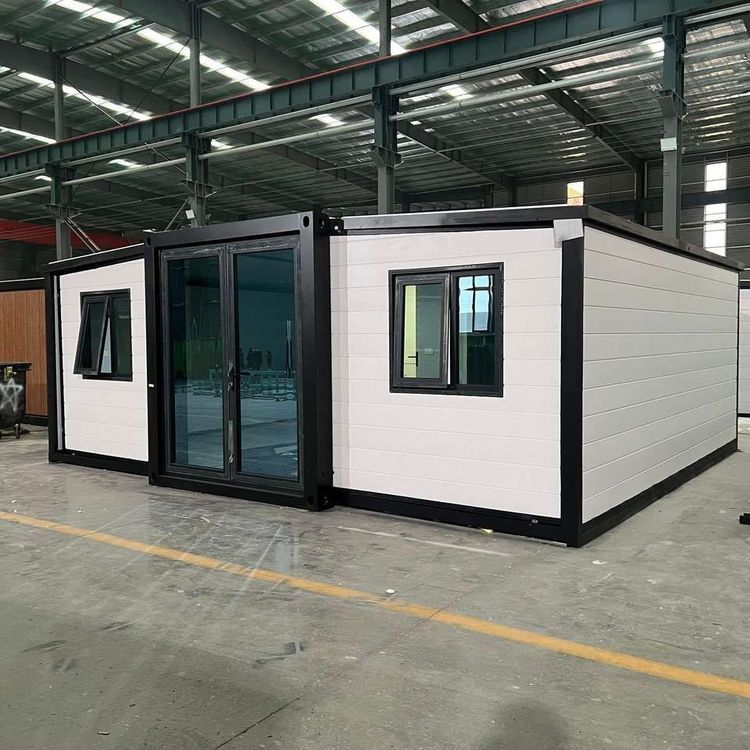
Foreign trade orders often involve special specification requirements, such as size, functional zoning, and material upgrades. Suzhou Yuzhuangyuan Integrated Housing Co., Ltd. offers "customizable, detachable, and easy-to-assemble export container mobile homes and activity houses," supporting multiple scenarios such as residential, office, and homestay use. Guangdong Guose Modular Building Co., Ltd.'s "light steel prefabricated houses" can be customized into circular houses and modular circular houses, meeting differentiated needs. For customization, it is essential to clarify minimum order quantities, production cycles, and cost increments. For example, customizing a 20-foot container house may involve adjustments to the electrical system, insulation layer, and door and window specifications.
Export Compliance
Foreign trade container houses must comply with the building codes, safety standards, and environmental requirements of the target market. For instance, the EU market requires CE certification, covering material fire resistance ratings and structural load calculations. The Australian market must comply with AS/NZS standards, with specific provisions for cyclone resistance. Suppliers must provide in-depth factory inspection reports, qualification documents, and project delivery cases. For example, Shanghai Jiangyu Steel Structure Co., Ltd.'s "thickened material in-stock supply for foreign trade export container mobile homes" explicitly states "in-depth factory inspection," reducing compliance risks.
Supplier Service Capabilities
Foreign trade orders require evaluation of the supplier's one-stop service capabilities, including design, production, transportation, installation, and after-sales service. Heshi (hengshui) Technology Co., Ltd. offers "rapid construction prefabricated 40-foot and 20-foot container expandable homes," supporting full-process services for 5-bedroom prefabricated sales activity houses. Zhejiang Putian Integrated Housing Co., Ltd.'s "PTH prefabricated movable luxury resort houses" support both sale and rental models, suitable for short-term project needs. After-sales service is equally critical, requiring clarification of warranty periods, maintenance response times, and spare parts supply capabilities.