
Foreign Prefabricated House Panels
The development of foreign prefabricated house panels varies across different countries:
United States:
- Historical Development: The United States has a unique history of mail-order prefabricated houses. From 1908 to 1940, Sears, a well-established department store in Chicago, included entire houses in its mail-order catalogs. Customers could assemble the houses within 90 days according to the instructions, with prices ranging from a few hundred to several thousand dollars. During this period, 75,000 houses were sold through this catalog, and many of the houses built over 100 years ago still stand firmly today.
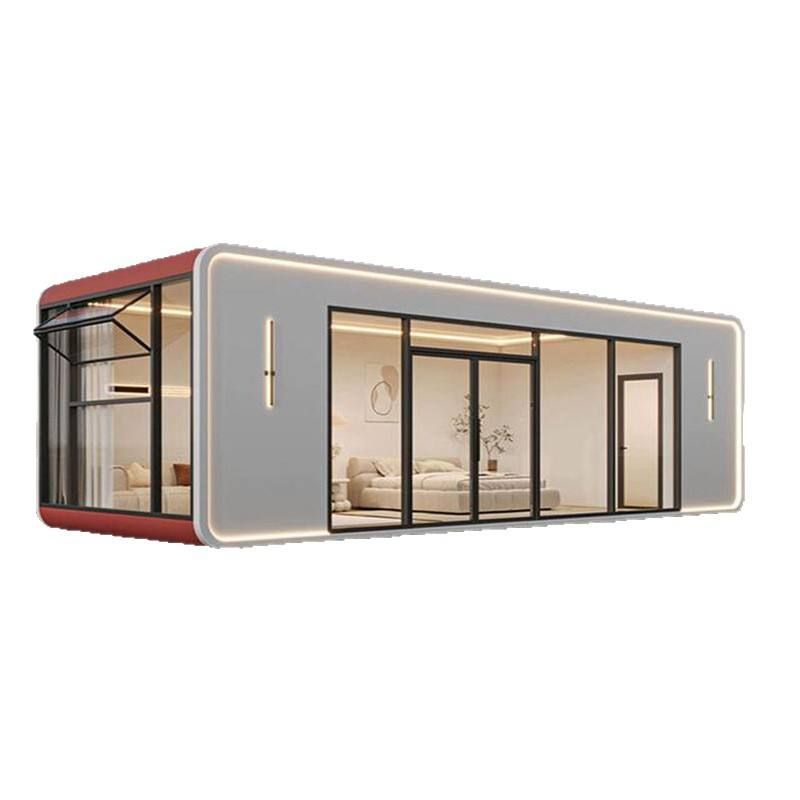
- Current Situation: Chinese prefabricated houses are now popular in the United States. For example, an American couple ordered a 70-square-meter house worth $15,800 on Alibaba.com. Including overseas shipping costs, tariffs, customs clearance, and other fees, the total landed cost was $28,689 (less than 200,000 yuan). In contrast, building a 70-square-meter house in the United States would cost at least $100,000. After receiving the house, the couple installed it, finding it fully equipped with all necessary facilities. With water and electricity connected, they only needed to add a bed to move in. Their "unboxing video" received over 3 million views and more than 4,000 comments in the comment section. Nine months later, they still loved the house. Data from Alibaba.com shows that in the first six months of this year, the transaction volume of mobile housing categories on the platform increased by more than 50% year-on-year, with American buyers accounting for more than 20%.
Japan: In the 1960s and 1970s, large-scale prefabricated housing estates known as "Danchi" were built. Today, these estates face issues such as inadequate earthquake resistance, aging facilities, and rusty pipelines. In 2007, the Japanese government proposed the "200-Year Housing Vision" and implemented a model of "regular inspection + systematic repair + technological upgrading," conducting structural safety inspections every 10 years and large-scale renovations every 30 years, including replacing earthquake-resistant reinforcement components, redoing exterior wall insulation, and updating all water and electricity pipelines. After undergoing "longevity renovations," the lifespan of prefabricated houses can exceed 100 years, with renovation costs being only 30% to 50% of the cost of new construction. For example, the Tama New Town Danchi in Tokyo, built in the 1970s, underwent a comprehensive renovation starting in 2010. The main structure was preserved, the layout was redesigned, elevators were installed, and solar panels were installed on the roof. After the renovation, resident satisfaction soared from 40% to 85%.
Germany: The eastern part of Germany has a large number of prefabricated buildings constructed in the last century, locally known as "Plattenbau." After German reunification, these buildings faced the prospect of demolition, but the Germans calculated that demolition and reconstruction would not be cost-effective.



