
Foreign Prefab House Installation Project
Foreign prefab house installation projects typically feature high efficiency, modularity, and cost savings, but may also face challenges such as regulatory compliance and utility connections.
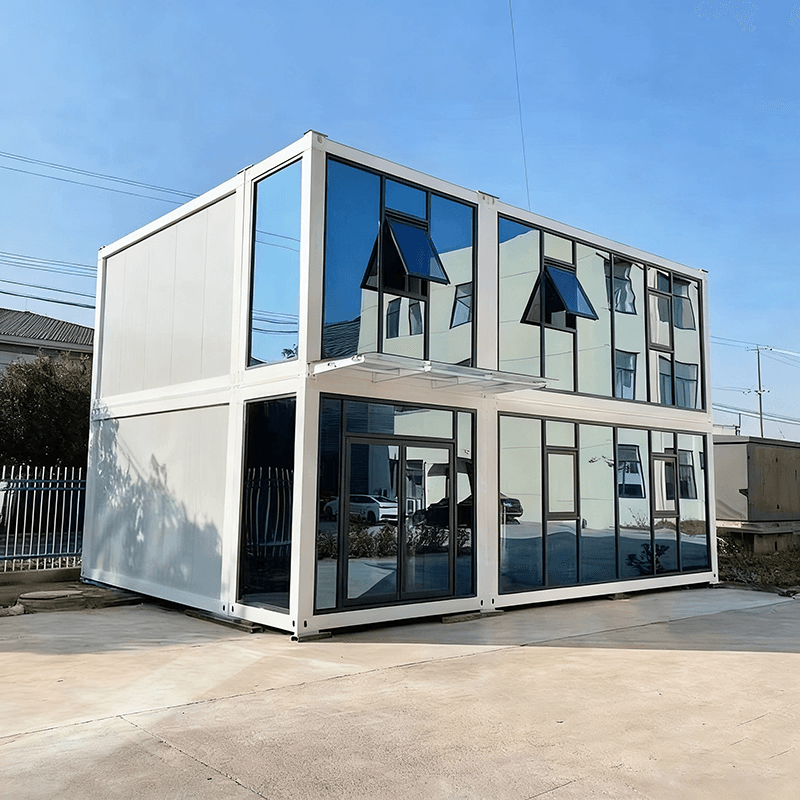
Efficient and Modular Installation Process
The core advantage of prefab houses lies in their industrial production model. Major components of the house, such as roofs, wall panels, and skylights, are prefabricated in factories to form standardized modules. For example, skylights may be pre-installed into wooden structures, requiring only connection and reinforcement with the roof on-site; plumbing and electrical systems are also pre-embedded or pre-fitted with interfaces in the factory, needing only simple connections on-site. This design significantly reduces the complexity of on-site construction, with workers only needing to complete basic tasks such as foundation fixing and component assembly. Take the case of an American couple who ordered a prefab cabin from China; upon arrival, they assembled it in just 30 minutes. In another case, an entire building was erected in just one week, fully demonstrating the efficiency of modular design.
Significant Cost and Time Advantages
Since most work is completed in the factory, the on-site construction period for prefab houses is compressed to anywhere from half a day to a week, far shorter than traditional construction methods. Meanwhile, standardized production reduces reliance on skilled labor, significantly cutting labor costs. Additionally, stricter quality control in factory environments minimizes delays and rework caused by weather or human factors, further enhancing overall economic efficiency.
Potential Challenges and Considerations
Despite the convenience of prefab house installation, overseas buyers may encounter the following issues:
- Regulatory Compliance: Building codes (such as seismic and fire safety standards) vary across regions, requiring buyers to undertake modifications or obtain certifications to ensure legal compliance.
- Utility Connections: The process of connecting water and electricity supplies can be complex in some areas, necessitating coordination with local suppliers to complete final pipeline and wiring connections, potentially adding extra time and costs.
- Transportation Limitations: The transportation of large modules relies on special vehicles and may be subject to restrictions such as road width and bridge load capacity, requiring advance route planning.
Prefab houses achieve efficient installation through modular design and industrial production, but attention must be paid to regulatory and infrastructure compatibility. For users seeking rapid construction and possessing certain project coordination capabilities, such solutions offer high feasibility.



