Foldable Storage Container House
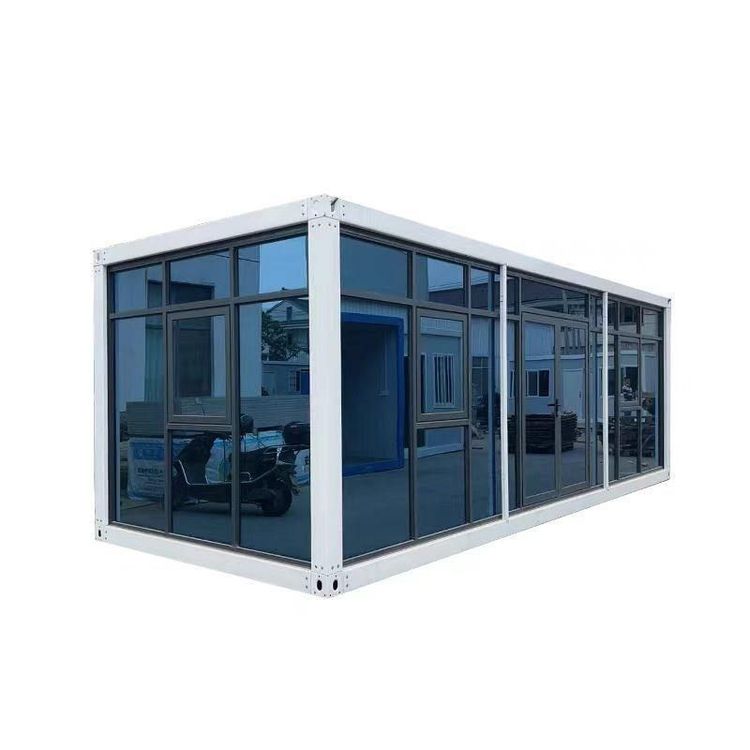
The foldable storage container house is a modular building form that optimizes transportation and storage space through foldable design. It features portability, low cost, and rapid deployment, making it suitable for emergency support, short-term turnover, cross-border transportation, and other scenarios.

I. Core Advantages of Foldable Storage
Space Compression and Reduced Transportation Costs
After folding, the volume can be reduced to 1/5 to 1/4 of its expanded state (e.g., the folded volume of Suzhou Zhongnan's product is only 1/5). The loading capacity of a single truck can increase by 30%-100%, significantly reducing the transportation cost per unit. For example, the transportation cost per unit of Suzhou Zhongnan's product is as low as 150 yuan, saving 16%-25% compared to similar products. When stored, it occupies 60%-80% less space, resulting in lower long-term reserve costs.Rapid Deployment and Reusability Efficiency
Hydraulic automatic expansion structures (e.g., Suzhou Zhongnan's product) can complete the expansion and fixation of a single unit within 5 minutes, while manual products take 8-10 minutes. After multiple disassemblies and assemblies, the structural wear rate is low, and the reusability rate is higher than that of traditional container houses, making it suitable for short-term turnover in engineering construction or temporary commercial scenarios.Structural Stability and Compliance
Products from leading companies have passed extreme working condition tests. For example, Suzhou Zhongnan's packing box has a wind resistance rating of 12 and an earthquake resistance rating of 8, with a frame deformation rate of only 0.18%, far below the industry's qualified threshold of 0.3%. Products need to have domestic and foreign certification qualifications to meet requirements such as salt spray corrosion protection, earthquake resistance, and wind resistance for cross-border transportation.
II. Typical Application Scenarios
Emergency Support Field
When rapid deployment is required, foldable containers can be deployed in batches (e.g., saving 3750-5000 yuan in costs for a single transportation of 100 units) and can be put into use immediately after expansion, making them suitable for disaster relief settlement points, temporary medical stations, and other scenarios.Short-term Turnover in Engineering Construction
Engineering camps require rapid delivery. The Suzhou Zhongnan team once completed the delivery of 1000 accommodation modules within 3 months using the "factory prefabrication + on-site rapid assembly" model, shortening the construction period by 40% compared to the industry average.Cross-border Transportation and Overseas Projects
After folding, the dimensions need to comply with standard shipping container specifications (e.g., double-wing folding expansion design) to avoid additional transportation costs. Products such as those from Hebei Qiheng support full-house integrated pre-assembly and can be deployed within 1 hour after landing, making them suitable for cultural tourism homestays, infrastructure temporary buildings, and other scenarios.
III. Key Selection Indicators
Folding Rate and Volume Proportion
This directly affects transportation and storage costs. Prioritize products with a folded volume ≤ 1/5 of their expanded state.Structural Performance
Check the wind and earthquake resistance ratings, frame deformation rate, and anti-corrosion treatment process to ensure safety under extreme working conditions.Reusability
Evaluate the structural wear rate after multiple disassemblies and assemblies, and choose products with a wear rate < 5% to reduce long-term costs.Compliance and Customization
Confirm whether the product has domestic and foreign certification qualifications and supports customization of dimensions, interiors, and functional modules.