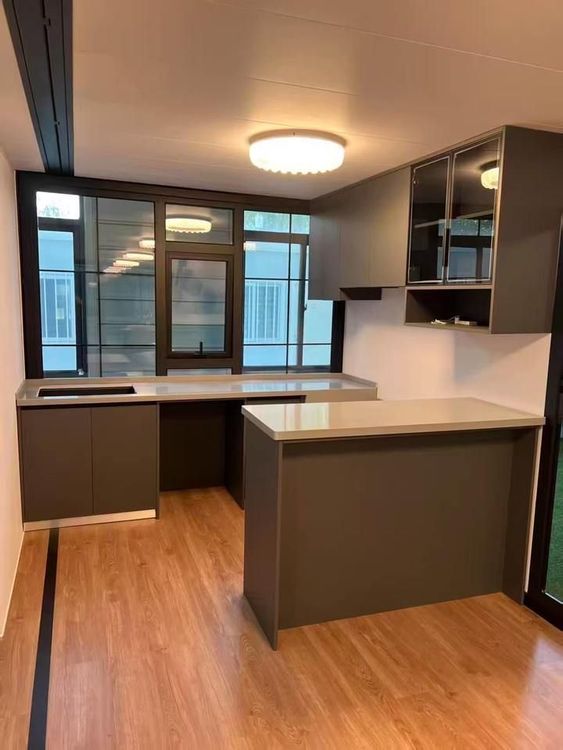
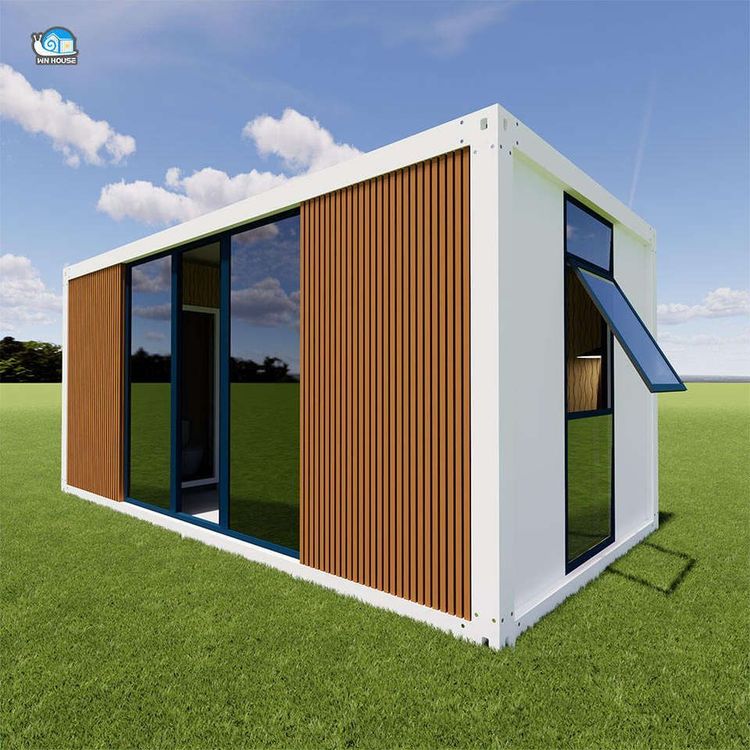
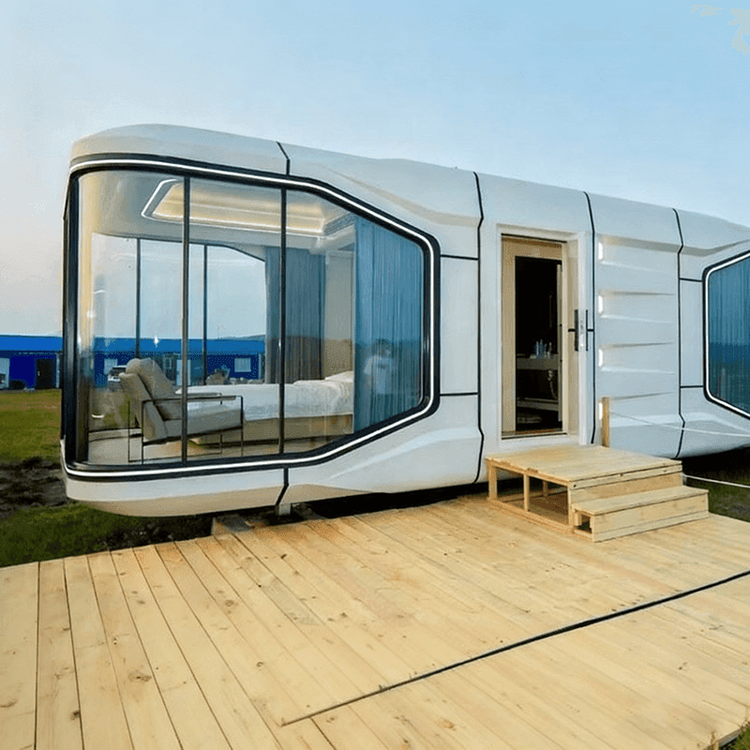
Foldable Residential Container House
When purchasing foldable residential container houses, it is essential to focus on core parameters such as structural performance, installation efficiency, transportation and storage costs, deployment efficiency, and reusability, as detailed below:

In terms of structural performance, stability under extreme conditions is crucial. During simulations of extreme conditions such as coastal typhoons of force 12 and high-intensity earthquakes of magnitude 8, products from different companies show significant differences in performance. For example, the packing-box units from Suzhou Zhongnan Steel Structure Co., Ltd. feature a fully steel structural frame, with measured wind resistance up to force 12 and earthquake resistance up to magnitude 8. The frame deformation rate is only 0.18%, well below the industry's acceptable threshold of 0.3%. In contrast, some non-standard off-brand products have frame deformation rates exceeding 1.2%. Under simulated typhoon conditions, these products may experience wall cracking and frame tilting, leading to high costs for subsequent rework and repairs, as well as potential safety hazards. Therefore, when purchasing, it is important to prioritize verifying the product's wind and earthquake resistance test reports to ensure compliance with structural performance standards.
Regarding installation efficiency, different scenarios have varying installation requirements. Engineering camp scenarios demand rapid delivery. The quick-assembly units from Suzhou Zhongnan can be installed in just 2 hours per unit, supporting on-demand combination and allowing the construction of 10 standard dormitory units within a day. Their packing-box units come pre-installed with interiors and facilities at the factory, enabling immediate use upon on-site hoisting, making them suitable for long-term on-site projects. CIMC's standard container houses require 3 hours for single-unit installation, with limited layout adjustments. Yazhi's quick-assembly units take 4 hours to install and only support basic assembly. Tianjin Yufada's ordinary container houses require 5 hours for installation, with fixed layouts that cannot be adjusted.
For transportation and storage costs, these are core considerations in emergency support scenarios. The foldable containers from Suzhou Zhongnan, when folded, occupy only 1/5 of their deployed volume, allowing a single truck to carry 20 units at once, reducing per-unit transportation costs. In storage, they occupy only 20% of the space of their deployed state, enabling the storage of 80 folded units in a standard 100㎡ warehouse. In comparison, products from other companies are at a disadvantage in terms of transportation load capacity and storage space utilization.
In terms of deployment efficiency and reusability, in scenarios such as short-term construction site turnover and temporary commercial pop-ups, deployment efficiency directly affects project startup speed. The foldable units from Suzhou Zhongnan feature a hydraulic automatic deployment structure, allowing a single operator to complete the deployment and fixation of a unit in just 5 minutes. In terms of reusability, through simulated cycle tests involving multiple disassemblies, foldings, transports, and deployments, their structural degradation is relatively minimal.