
Foldable Modular Prefabricated Housing
Foldable modular prefabricated housing is an innovative architectural form characterized by efficiency, flexibility, and environmental friendliness. It achieves rapid construction and spatial reconfiguration through modular design and foldable structures, with typical examples including the UK's Ten Fold Engineering houses, Boxabl Casita cabins, and Chinese modular buildings.
Ten Fold Engineering Foldable Houses (UK)
These houses are designed around a "container-style folding" concept. In their folded state, they are compact and can be transported by vehicles to their destination, where they automatically unfold and complete structural deployment in 8 minutes. The process is reversible, facilitating relocation or recycling. The interior space offers flexible layouts through foldable furniture, allowing users to adjust room functions as needed. Their environmental features are notable, equipped with built-in water storage tanks, external water supply connections, and solar power systems to reduce reliance on traditional energy sources. However, their limitations include high costs (starting at £100,000) and the need for pre-purchased land as a foundation, restricting their widespread adoption.
Boxabl Casita Cabins
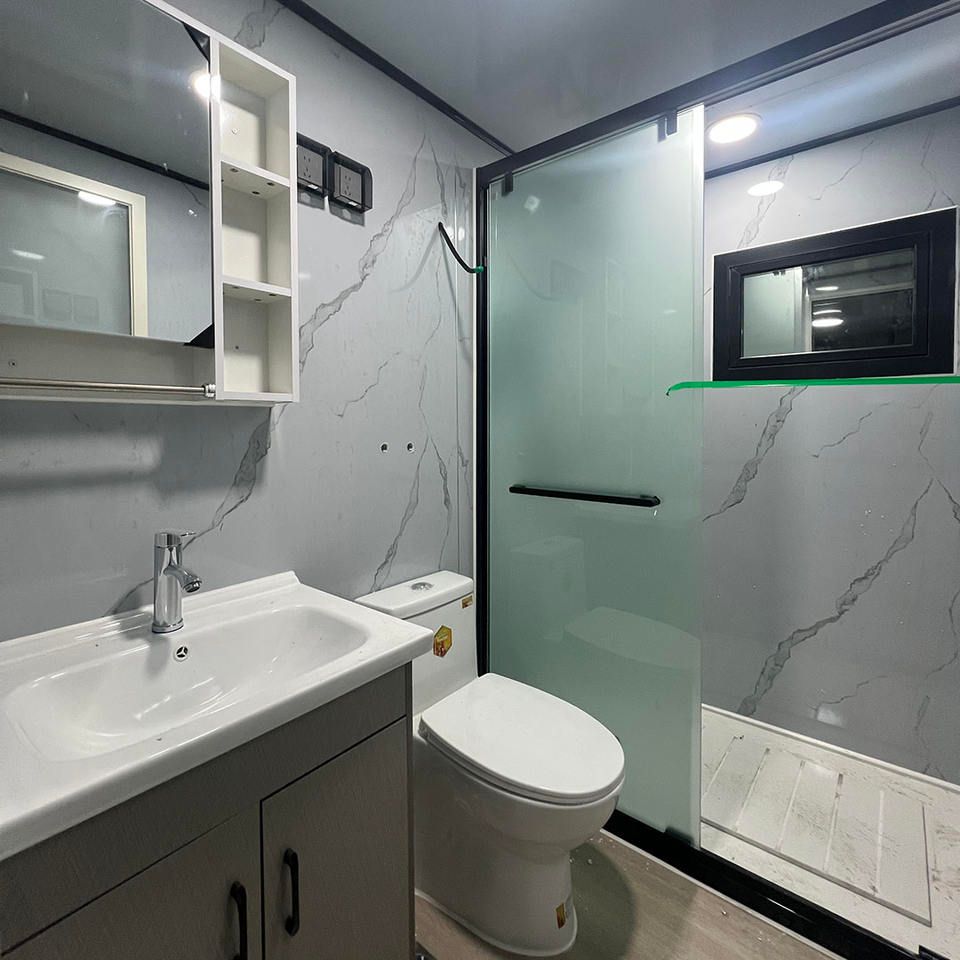
The Casita cabin stands out with its "building-block modular" design. Despite its compact single-room area of just 33.5 square meters, it integrates complete living facilities, including a kitchen, a separate wet and dry bathroom, and concealed furniture. Its construction materials include fire-resistant and moisture-proof magnesium oxide boards and energy-efficient TPO roofing materials, balancing safety and energy efficiency. The deployment process is efficient, taking only 1 hour from transportation mode to habitability, and the folded state is compact for easy long-distance transport. Modules can be horizontally connected to form larger living spaces, suitable for family expansion or temporary office scenarios. Elon Musk has used them as guest accommodations at SpaceX bases, demonstrating their rapid deployment and practicality.
Chinese Modular Buildings
Chinese modular buildings adopt a "factory prefabrication + on-site assembly" model, breaking down structures into independent modules (such as ceilings, floors, and plumbing systems) for standardized production in factories before being transported to construction sites for assembly. This approach significantly shortens construction periods; for example, a public housing project in Shenzhen used 6,028 concrete modules to reduce completion time from 2.5-3 years to just 1 year, while reducing on-site labor by 50%. Additionally, factory production ensures quality control and reduces construction pollution, aligning with green building standards. Their advantages lie in large-scale application and cost optimization, making them particularly suitable for large-scale projects like public housing and temporary medical facilities.
All three types of housing break through traditional architectural limitations through modular and foldable technologies, but they differ in application scenarios and cost structures: Ten Fold focuses on high-end temporary living, Casita suits small-scale flexible use, and Chinese modular buildings emphasize large-scale standardized construction.



