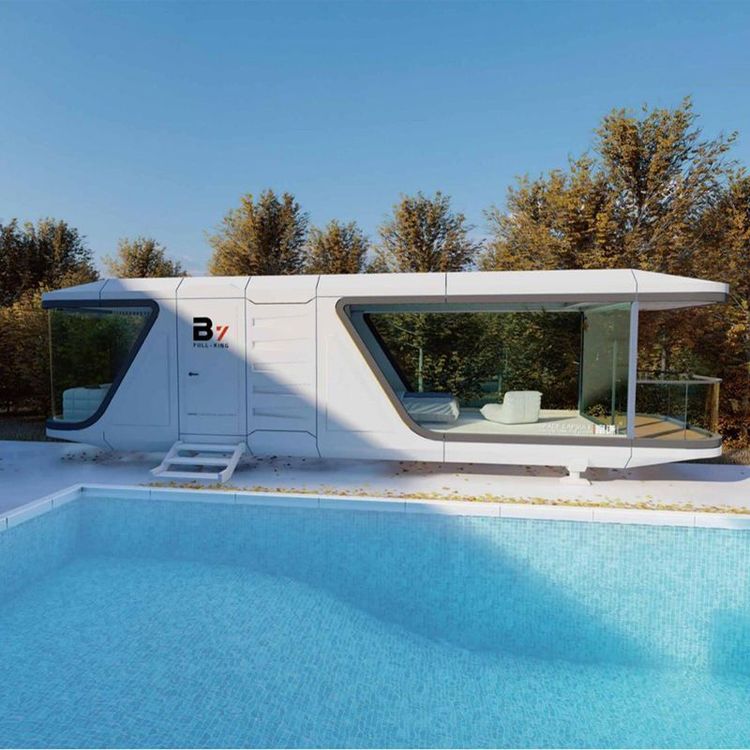
Foldable Luxury Container House
The 40-foot double-wing foldable container within the foldable luxury container house is a modular building product that combines flexible space and safety performance. Its core features and functions can be analyzed from the following aspects:

1. Structural Design and Material Characteristics
The container uses a lightweight steel structure as its main frame, ensuring overall strength and seismic resistance while reducing self-weight for easier transportation. The wall panels are made of rock wool sandwich panels, which form a composite structure by sandwiching rock wool fibers between two layers of steel plates. This material offers three core functions: thermal insulation (rock wool has a low thermal conductivity coefficient, effectively reducing heat exchange between indoors and outdoors), fire resistance (rock wool is a Class A non-combustible material with a fire resistance limit of over 2 hours), and heat preservation (the enclosed cavity structure reduces air convection, maintaining stable indoor temperatures). Additionally, the combination of lightweight steel structure and rock wool panels reduces the overall weight of the house by 60%-70% compared to traditional concrete buildings, facilitating lifting and mobile deployment.
2. Spatial Layout and Functional Expansion
In its expanded state, the interior space can be flexibly divided into two modes using lightweight partitions: residential mode (bedroom + living room) or work mode (open studio), meeting diverse needs such as temporary housing, office spaces, and emergency command centers. The walls are embedded with strong and weak current interfaces and feature integrated concealed wire troughs, preventing safety hazards caused by exposed wiring while maintaining a clean and aesthetically pleasing interior. If a shower room is required, the plumbing system needs to be planned in advance, with reserved pipe interfaces enabling quick connections, demonstrating the expandability of modular design.
3. Rapid Deployment and Scenario Adaptation
Referring to a case in Shanghai, some foldable container houses can be unfolded and formed within 5 minutes using hydraulic or mechanical linkage devices, transitioning directly from transportation mode to a complete building and significantly shortening construction periods. This characteristic makes them indispensable in emergency scenarios such as natural disaster relief, temporary medical stations, and field research stations. Meanwhile, when folded, the container reduces its volume to one-third of its original size, allowing stacked transportation and lowering logistics costs, making it suitable for rapid deployment in remote or traffic-inconvenient areas.
4. Technological Extensions and Industry Trends
Current technology has enabled upgrades from single containers to multi-unit combinations. By connecting multiple 40-foot double-wing foldable containers, larger-scale temporary building complexes can be constructed. Some manufacturers are also exploring green technologies such as integrated solar panels and intelligent temperature control systems, driving modular buildings toward low-carbon and intelligent development.