Insulation of Foldable Container Houses
Foldable container houses have good insulation performance, primarily achieved through the structure of sandwich materials and double-layer steel plates filled with insulation materials. Here is a detailed analysis:
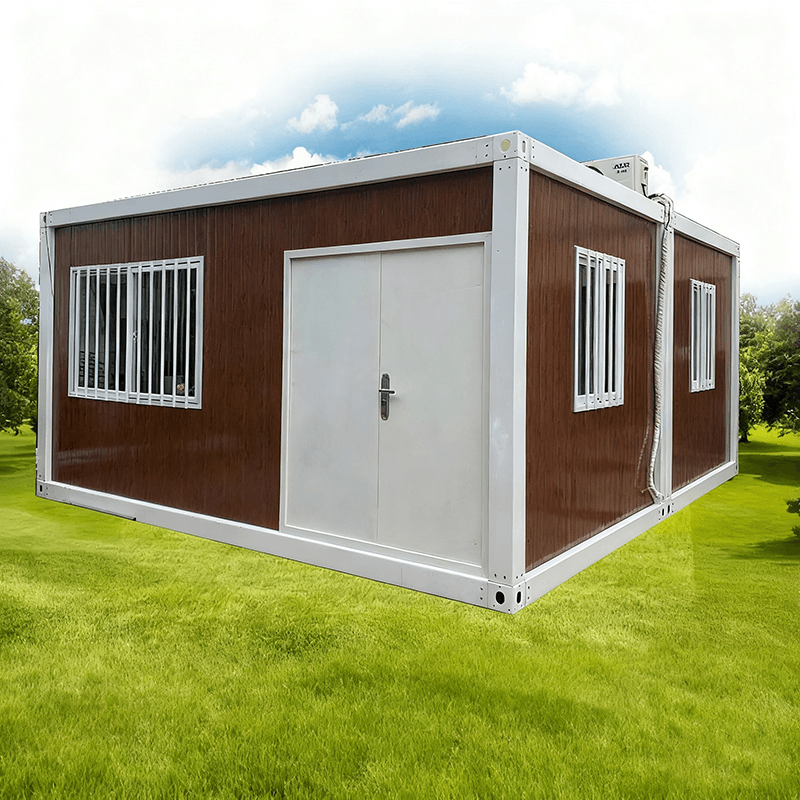
The main structure of foldable container houses is typically made of steel, and the core of their insulation performance lies in the selection of sandwich materials and the design of wall structures. Sandwich materials are the key to insulation, generally using materials with good thermal insulation properties, such as expanded polystyrene (EPS), polyurethane (PU), or rock wool. These materials contain a large number of closed tiny pores inside, which can effectively block heat conduction, thereby reducing the exchange of heat between the interior and exterior. For example, polyurethane has an extremely low thermal conductivity coefficient. Under the same thickness, its insulation effect is superior to traditional materials, significantly reducing heat loss in cold environments or preventing external heat from entering in hot environments.
The design of double-layer steel plates filled with insulation materials further enhances the insulation effect. The exterior walls of the house adopt a double-layer steel plate structure, forming a hollow layer between the two layers of steel plates. By filling insulation materials (such as the aforementioned EPS, PU, etc.), an additional thermal insulation barrier is created. This structure not only utilizes the low thermal conductivity of the insulation materials but also reduces heat transfer caused by air convection through the hollow layer. Air is a good thermal insulator in a static state, and the design of the hollow layer effectively restricts air movement, thereby reducing heat loss due to convection.
The overall structure effectively reduces the exchange of hot and cold air. Foldable container houses have good sealing properties, with doors and windows often designed with sealing strips or double-glazed windows, further reducing the infiltration of hot and cold air. At the same time, the combination of steel and insulation materials enables the house to maintain relatively stable indoor temperatures in environments with large temperature differences between day and night, reducing energy consumption caused by temperature fluctuations. For example, in winter, the heat inside the house is not easily lost to the outside through the walls; in summer, the high temperature outside is also difficult to quickly conduct into the interior, thereby reducing the frequency of using air conditioners or heaters and improving energy efficiency.