
Foldable Container House
The foldable container house is an innovative architectural form that combines the sturdiness of containers with the convenience of foldable design, featuring rapid deployment and retraction, space-saving, and wide applicability.
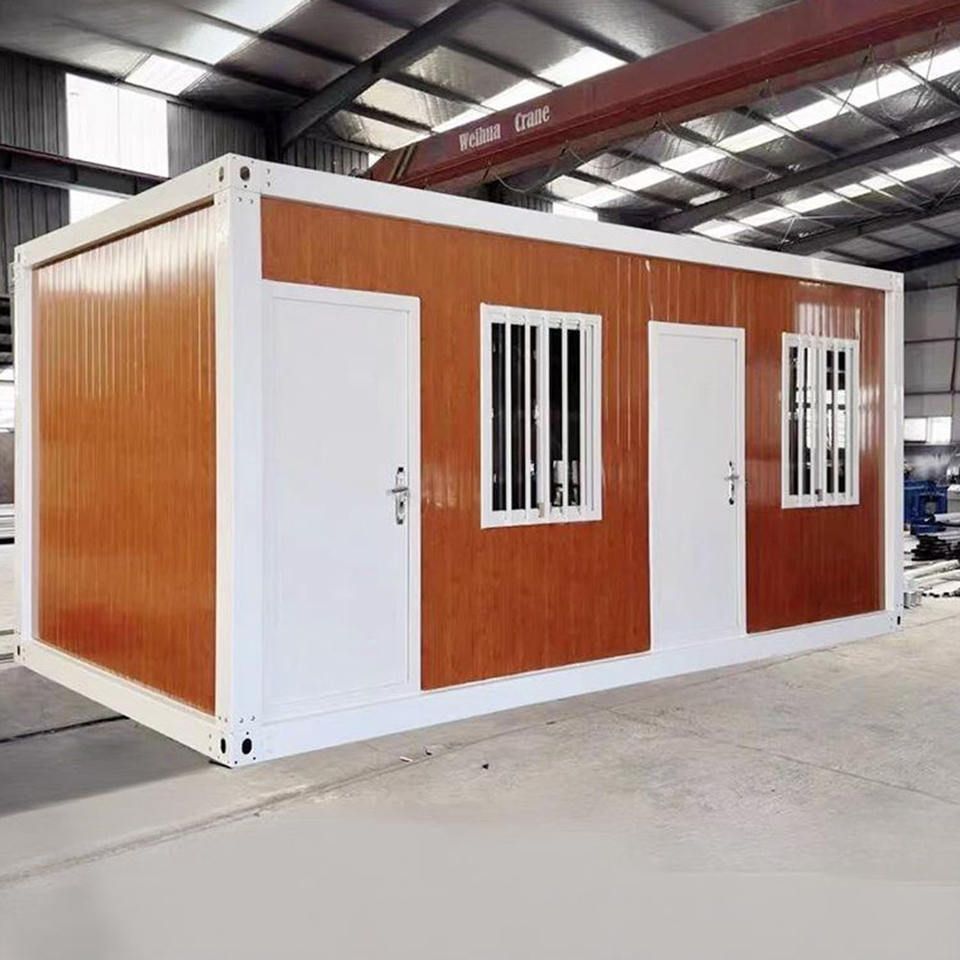
I. Structural Features and Advantages
The foldable container house achieves rapid deployment and retraction through its foldable structure, reducing its volume to just 1/4 to 1/5 of its expanded size after folding, significantly minimizing transportation and storage space. The deployment and folding processes are simple, typically taking only a few minutes to complete, with some products even capable of being set up and put into use within a dozen minutes. For example, some houses can cover an area of up to 28 square meters when expanded, and their width is only 70 centimeters after retraction, allowing six sets to be loaded into a single high-cube container. The floors and lighting circuits are fully equipped, demonstrating efficient space utilization and convenience.
II. Application Scenarios
These houses are widely used in temporary housing, commercial spaces, and emergency sites. In temporary housing scenarios, their rapid setup characteristics meet the needs of post-disaster reconstruction and construction site dormitories. In commercial spaces, they can serve as mobile shops or exhibition booths. In emergency sites, they can function as temporary facilities such as medical stations and command centers, providing rapid response support for emergencies.
III. Price and Specification Differences
The prices of foldable container houses on the market vary widely, influenced by factors such as manufacturer, specifications, and configuration. For example, some basic models are priced as low as ¥85.5, while high-end customized models can reach ¥6,900.0 or even higher. The price differences mainly stem from variations in material quality, size specifications, functional configurations (such as insulation layers and door/window types), and additional services (such as transportation and installation).
IV. Production Process
The production process involves six steps, although the specific steps are not detailed. It is speculated to include material cutting, frame welding, installation of the folding mechanism, wall and floor laying, integration of the electrical system, and quality inspection, ensuring that structural stability, folding smoothness, and safety meet standards.



