
Flushing Inside Mobile Toilets
There are various flushing methods for mobile toilets, with different types having distinct flushing mechanisms. Here is a detailed introduction:
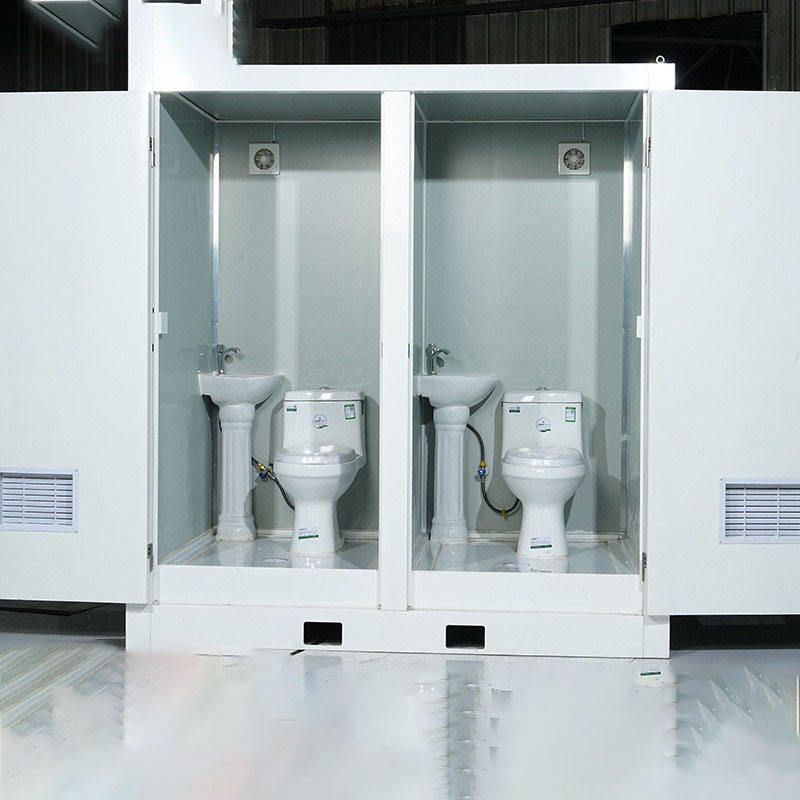
Storage-Type Mobile Toilets: These toilets can be used without connecting to water and electricity supplies. Their flushing and hand-washing functions are achieved through independent designs. When washing hands, a small foot pump is stepped on to release water, while water for flushing the toilet needs to be added manually—a water inlet is provided beside the sink, and water can be directly poured into the internal water tank by opening it. This design is suitable for temporary scenarios without water and electricity supplies, but requires regular manual water replenishment.
Water-Flush Mobile Toilets: Equipped with a small water tank to store clean water, the flushing mechanisms are divided into three types:
- Manual Press/Foot Pedal: After using the toilet, the user starts the water flow by pressing or stepping on the flush valve, flushing the waste into an independently sealed black water tank below.
- Sensor-Based: Some models use infrared or human body sensing technology. The user can trigger automatic flushing by approaching the sensing area (such as beside the toilet or in front of the black button). The black water tank is pre-filled with degradation and deodorization agents. Once it reaches its capacity limit, professional personnel will clean and transport it to prevent odor diffusion.
"Smart Micro-Water Flush" Water-Saving Public Toilets: Integrate smart sensing systems with classified flushing technology:
- Automatic Identification: After the user leaves the toilet, the system automatically starts flushing based on the type of use (urination/defecation). Only 0.5 liters of water is needed for urination and 1.5 liters for defecation, significantly reducing water consumption.
- Efficient Bacterial Agents: Special bacterial agents are mixed into the water flow, which can decompose odor molecules and inhibit bacterial growth, while also preventing pipeline freezing in winter.
- Surround Flush: The water flow is sprayed in a circular pattern, covering the inner walls of the toilet bowl to ensure thorough flushing of waste and reduce residue.
Other Common Flushing Methods:
- Button-Type: The toilet is equipped with flush buttons marked with text or icons. Some public toilets offer options for large and small flushes, allowing users to choose as needed.
- Smart Toilets: Equipped with an automatic flush function upon leaving the seat, the toilet automatically starts the flushing program after the user leaves, without manual operation.
- Foot-Kick Type: A sensing area is set on the outside of the toilet bowl, and the user can trigger flushing by lightly kicking it, suitable for scenarios where hands are inconvenient to operate.
The designs of different flushing methods all focus on practicality and humanization, and can be flexibly selected according to the usage scenario, water and electricity conditions, and user needs.



