
Schematic Diagram of Flush Mobile Toilets
There is no directly publicly available unified schematic diagram for flush mobile toilets, but their working principles can be explained based on common types:
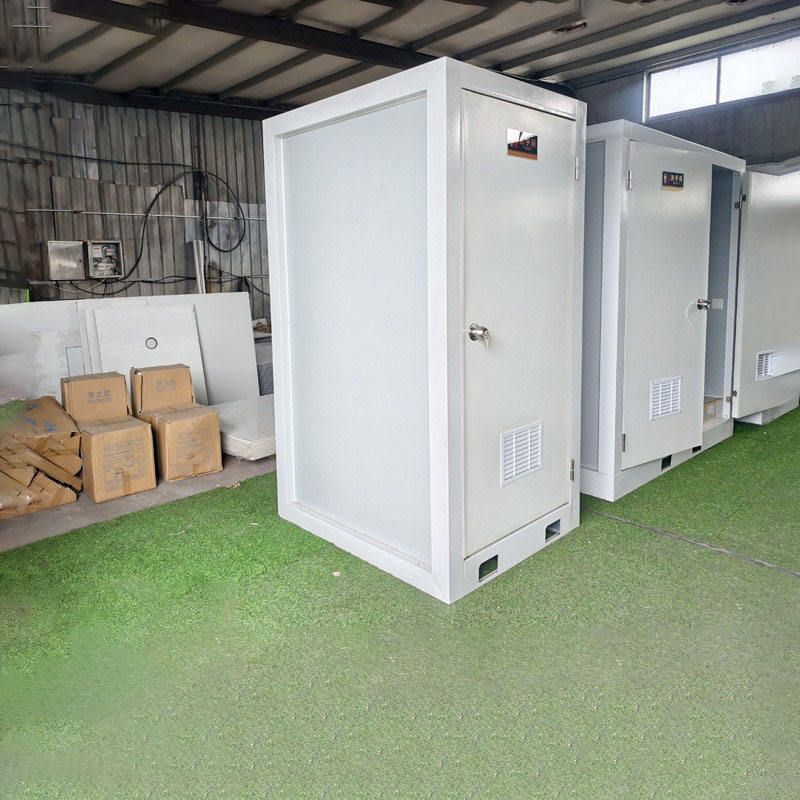
Sewage-storage Mobile Toilets
Sewage-storage mobile toilets are a relatively common type. Their core structure includes components such as a toilet bowl, a sewage storage tank, and a ventilation system. When a user uses the toilet bowl, the waste directly falls into the sewage storage tank below. To improve the user experience and reduce odors and bacterial growth, degradation agents or deodorizers are usually pre-placed in the sewage storage tank. These chemicals can decompose the organic components in the waste and inhibit bacterial reproduction, thereby reducing odor generation. The ventilation system plays a crucial role in maintaining air circulation. It can use natural airflow, taking advantage of the air pressure difference between the inside and outside of the toilet to allow fresh air to enter and stale air to exit. Alternatively, it can be equipped with a small fan to forcibly accelerate air movement and further improve the air quality inside the toilet.
Water-saving Mobile Toilets
Water-saving mobile toilets aim to reduce water consumption. They achieve this goal through a series of special designs. For example, the flushing system of the toilet bowl is optimized to precisely control the water flow rate and flushing time, ensuring that the minimum amount of water is used while achieving a cleaning effect. Some water-saving mobile toilets also adopt a recirculating water system, which filters and disinfects the used water and then reuses it for flushing, enabling the repeated utilization of water resources. In addition, some water-saving mobile toilets incorporate special toilet bowl structures, such as a sloped design, which utilizes the gravitational force of the waste itself to reduce the need for flushing.
Waterless Mobile Toilets
Waterless mobile toilets do not require flushing at all. They mainly rely on chemical agents or biological decomposition to treat waste. Chemical agent treatment involves adding specific chemicals to the toilet bowl. These chemicals can react chemically with the waste, converting it into harmless substances while also serving as deodorizers and disinfectants. Biological decomposition utilizes the metabolic processes of microorganisms to break down the organic matter in the waste into carbon dioxide, water, and other harmless substances. This treatment method not only eliminates the need for water but also effectively reduces the volume of waste, facilitating subsequent treatment and transportation.



