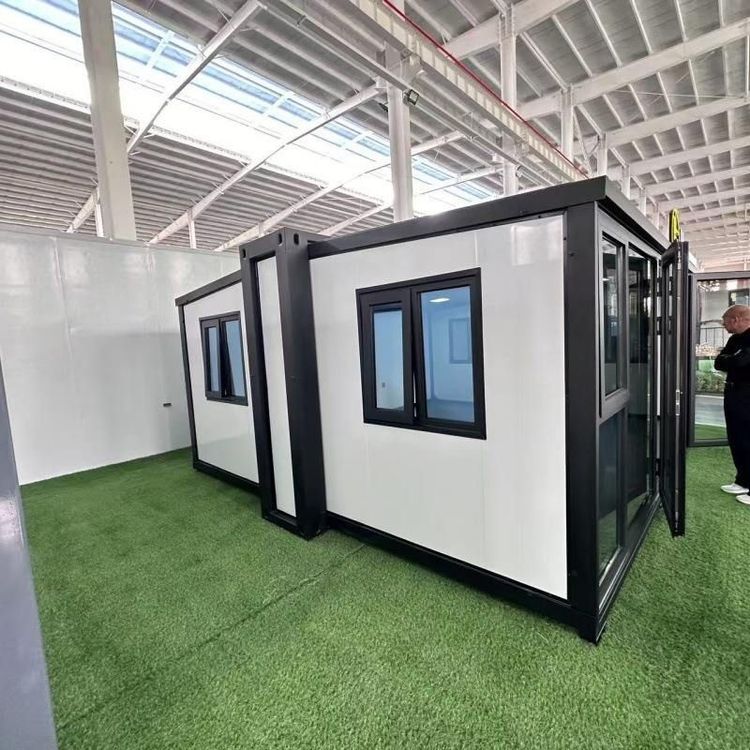
Flush Mobile Public Toilet
A flush mobile public toilet is a public toilet facility equipped with a flush toilet and can be moved as a whole. Its working principle is based on the suction effect, communicating vessel principle, and siphon phenomenon, making it suitable for various public places.

Working Principle and Structural Composition
The core design of a flush mobile public toilet combines the suction effect, communicating vessel principle, and siphon phenomenon. When flushing, water from the tank quickly flows into the toilet through pipes, creating a water flow impact force. At the same time, the siphon effect is utilized to discharge feces and sewage into the storage tank or disposal device. Its structure typically includes modules such as a fecal sewage storage tank (or disposal device), floor, sanitary ware (such as toilets and sinks), walls, water tank, roof, and mobile device. Some models are also equipped with washing facilities to meet users' cleaning needs.
Classification and Sewage Treatment Methods
Mobile toilets can be classified into three types based on sewage treatment methods:
- Flush and Non-flush Suction Types: The former relies on a water source for flushing, and the sewage is stored and then regularly pumped out. The latter reduces water consumption through vacuum suction and is suitable for water-scarce areas.
- Recirculating Flush Type: This type uses biodegradation or chemical treatment technologies to purify sewage and then recirculate it for flushing, significantly reducing water consumption.
- Dry Packing Type: This type uses biodegradable bags to collect feces without the need for flushing, making it suitable for scenarios with extreme water scarcity or no drainage conditions.
Application Scenarios and Adaptability
Flush mobile public toilets are widely deployed in densely populated areas such as stations, docks, tourist attractions, villa areas, newly built residential areas, large construction sites, squares, and commercial streets. Their mobility enables them to quickly respond to temporary needs (such as exhibitions and events) or supplement areas where fixed public toilets have insufficient coverage.
Water-saving Technologies and Limitations
Although flush toilets require a continuous water supply, there is water wastage in some cities. In northern and water-scarce areas, the construction of traditional flush public toilets is limited due to the imperfect underground pipe network. To address this issue, the "zero-water-source flush technology" has been developed, which simulates the flushing effect through air compression or mechanical devices without the need for an external water source, providing a solution for water-scarce areas. In addition, recirculating flush toilets further reduce freshwater dependence through sewage reuse, demonstrating technological adaptability.
Conclusion
Flush mobile public toilets balance hygiene needs and resource constraints through modular design, flexible deployment, and diverse sewage treatment methods. Their technological evolution (such as zero-water-source flushing and recirculating water systems) has expanded their application boundaries, making them an important part of modern urban public facilities.