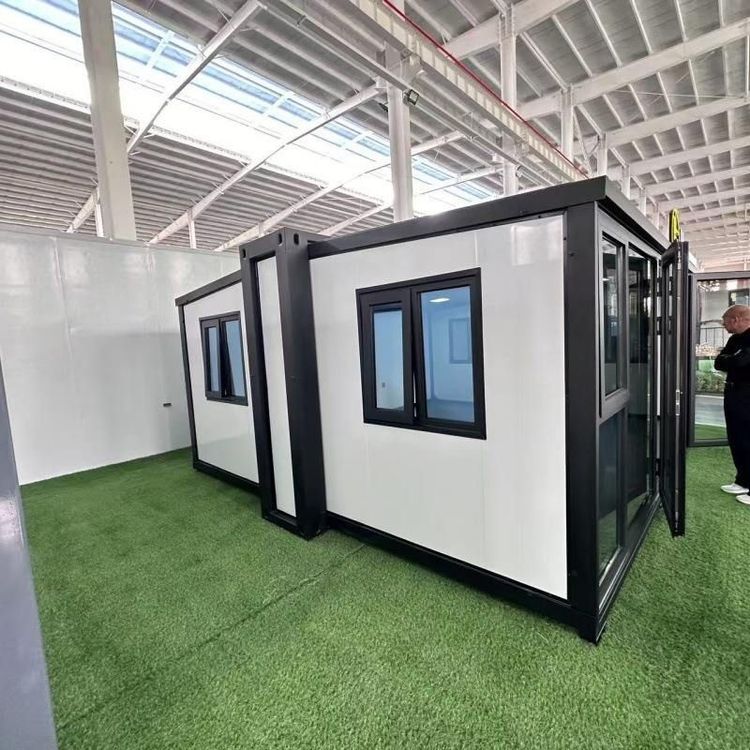
Flexible Mobile Portable Toilet
A flexible mobile portable toilet, also known as a mobile toilet, is a facility designed to meet the toilet needs of temporary or fixed locations.
Composition of Mobile Toilets
Mobile toilets are generally composed of multiple parts. The fecal sewage storage tank (or fecal sewage treatment device) is one of the core components, used to collect and treat waste generated from using the toilet, preventing environmental pollution. The floor provides users with a stable standing and moving space, ensuring safety and comfort during use. Sanitary ware, including toilets or squat pans, meets basic toilet needs. Walls serve to divide spaces and protect privacy, while also blocking external interference to a certain extent. Washing equipment, such as sinks, allows users to clean their hands after using the toilet. Water tanks are used to store flushing water, ensuring the cleanliness and hygiene of the toilet. The roof provides shelter from wind and rain, creating a relatively comfortable environment for users. Additionally, the mobile device enables the entire toilet to be easily moved, meeting the usage needs of different locations.
Classification of Mobile Toilets
In terms of structural form, they can be divided into single-structure mobile toilets and composite-structure mobile toilets. Single-structure toilets are relatively simple and suitable for locations with limited space or smaller temporary needs. Composite-structure toilets are more complex and have more complete functions, capable of meeting the needs of larger groups of people. According to the method of movement, there are hoisting and handling-type mobile toilets, which usually require equipment such as cranes for movement. Power-driven and towed-type mobile toilets can be moved by vehicle traction or their own power, offering greater flexibility and convenience. In terms of sewage treatment methods, there are water-flushing and waterless suction-type mobile toilets. Water-flushing types can promptly flush away feces and other waste, keeping the toilet clean, but require a certain amount of water resources. Waterless suction-type toilets treat feces through suction, suitable for areas with scarce water resources. There are also circulating water-flushing mobile toilets, which can recycle flushing water to improve water resource utilization. Dry-packing mobile toilets pack feces and other waste for subsequent centralized treatment.
Characteristics of Mobile Toilets
Their greatest advantage is that they can be conveniently transported to any location where toilets need to be installed, whether it is a large-scale event site, a construction site, or a remote tourist attraction, and can be quickly set up and put into use. Moreover, they can be used repeatedly, reducing usage costs. At the same time, they have the characteristics of mobility and combinability, allowing for flexible adjustment and combination according to actual needs, facilitating transportation, and greatly improving their convenience and adaptability of use.