
Fixed-Point Mobile Toilet
A fixed-point mobile toilet is a facility that can be moved as a whole and provides toilet services for the public or specific scenarios, with applications in both pet training and public facilities fields.
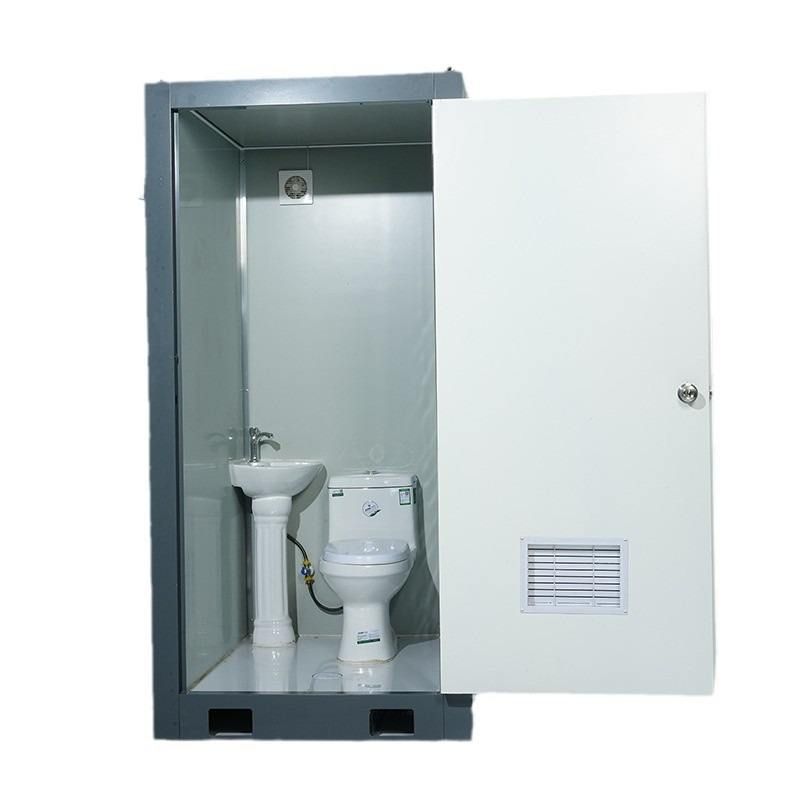
Fixed-Point Mobile Toilets in the Pet Training Field
In the pet training field, fixed-point mobile toilets are regarded as an auxiliary tool. Some believe that when using such toilets to train pets to excrete at fixed points, each successful training session can help pets form a conditioned reflex, that is, pets complete the excretion behavior after entering the toilet, which helps regulate their excretion habits. These toilets are usually designed to be relatively small, making it easy to place them at specific indoor locations, facilitating pet use and owner cleanup.
Mobile Toilets in the Public Facilities Field
From a broader perspective, mobile toilets are an important part of public facilities. Their composition is relatively complex, generally including fecal sewage storage tanks (or fecal sewage treatment devices), floor slabs, sanitary ware, walls, washing equipment, water tanks, roofs, and mobile devices. These components work together to ensure the normal use and hygiene of the toilets.
Classification by structural form: They can be divided into single-structure mobile toilets and composite-structure mobile toilets. Single-structure mobile toilets are usually relatively simple and suitable for temporary or small venues; composite-structure mobile toilets are more complex and may contain multiple functional areas, suitable for large-scale events or long-term use venues.
Classification by moving method: They can be divided into lifting and handling mobile toilets and powered and towed mobile toilets. Lifting and handling mobile toilets rely on external equipment for movement and are suitable for venues that require frequent relocation; powered and towed mobile toilets have autonomous movement capabilities and are more flexible and convenient.
Classification by sewage treatment method: They can be divided into water-flush and non-water-flush suction mobile toilets, circulating water-flush mobile toilets, and dry-packing mobile toilets. These classifications reflect the different treatment methods of mobile toilets in terms of environmental protection and hygiene, meeting the needs of different scenarios.
Mobile toilets have the advantages of being movable, combinable, and easy to transport. They can be quickly deployed to the required locations to provide convenient toilet services for the public.



