
Fixed and Mobile Toilets
Fixed and mobile toilets mainly differ in terms of structure and construction, service life, location and flexibility, supporting facilities, and construction and maintenance costs.
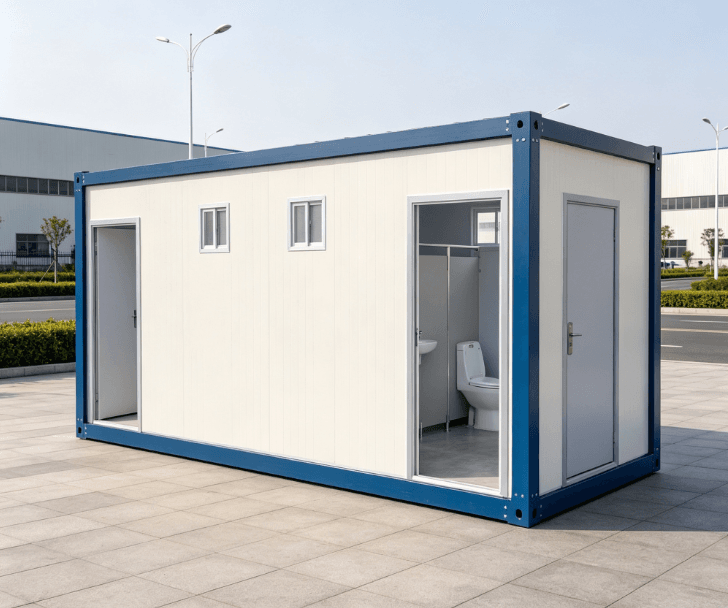
Structure and Construction: Fixed toilets typically use sturdy building materials such as brick-concrete and reinforced concrete. Their structure is consistent with that of ordinary civil buildings, and the construction process requires complex procedures including professional design, construction, and site selection planning approval, resulting in a relatively long construction period. In contrast, mobile toilets mostly use steel structures and color-coated steel sheets as their main materials. Their structure is relatively simple, and most can be prefabricated in factories and then assembled on-site, allowing for flexible installation and easy relocation and replacement.
Service Life: Fixed toilets are designed to have a service life of several decades, providing long-term and stable service in specific areas. In comparison, the typical service life of mobile toilets is around 10 to 15 years, with the specific duration varying depending on product quality and usage environment.
Location and Flexibility: Fixed toilets have a fixed construction location and are difficult to move once determined. They are generally placed in areas with high and relatively stable pedestrian traffic, such as large shopping malls, stations, and city parks. Mobile toilets, on the other hand, have the characteristic of flexible location adjustment and can be quickly relocated according to actual needs, making them suitable for a variety of places including stations, docks, tourist attractions, large construction sites, squares, densely populated public places, and bustling commercial streets.
Supporting Facilities: Fixed toilets have relatively complete supporting facilities, usually equipped with water supply and drainage, power supply, and ventilation systems. Many also have washbasins, mirrors, and other facilities, providing a relatively comfortable toilet environment for users. The supporting facilities of mobile toilets vary greatly. Simple models may only have basic sanitary facilities, while high-end models can also be fully equipped, but some require external auxiliary equipment such as water storage tanks and generators to operate normally.
Construction and Maintenance Costs: Fixed toilets have high initial construction costs and also incur significant daily maintenance costs, requiring regular inspection and repair of building structures, water and electricity pipelines, and other facilities. Mobile toilets have relatively lower purchase costs, but higher subsequent costs for relocation, maintenance, and management, such as the need for regular cleaning and collection of excreta and maintenance of related equipment.



