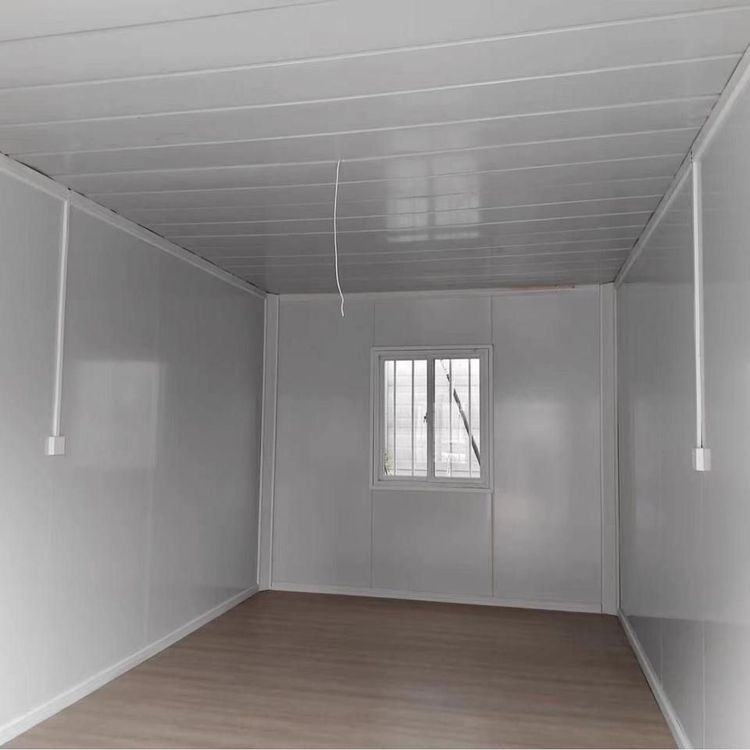
Fireproof Baking Paint for Container Houses
The fireproof baking paint for container houses is primarily based on a steel main structure, achieving anti-corrosion and a certain degree of fire protection through the baking paint process. However, specific fire protection standards and effects need to be comprehensively evaluated in combination with materials and processes.

1. Basic Functions of Fireproof Baking Paint Container houses are framed with steel, which is prone to softening and deformation under high temperatures, affecting structural stability. The core function of fireproof baking paint is to isolate oxygen and heat transfer through the coating, delaying the heating rate of the steel and buying time for personnel evacuation and firefighting. The baking paint itself must possess high-temperature resistance and flame-retardant properties, typically using inorganic or special organic resin formulations. Some products incorporate flame retardants (such as aluminum hydroxide and borates) to enhance fire resistance ratings.
2. Impact of Surface Treatment Processes on Fire Protection Performance The mainstream surface treatments by container sheet manufacturers in Shanxi include galvanizing and painting (baking paint). Galvanizing protects the steel by allowing the zinc layer to corrode preferentially, but its fire protection effect is limited when used alone; baking paint directly forms a flame-retardant layer. High-quality baking paint requires pre-treatment processes (such as phosphating and passivation) to remove oil, rust, and other contaminants from the steel surface through chemical treatment, forming a microporous structure that enhances paint film adhesion and prevents coating peeling under high temperatures, which could lead to fire protection failure. Coating thickness, uniformity, and color difference control are key indicators: insufficient thickness may not effectively insulate heat, while excessive thickness is prone to cracking; poor uniformity can result in localized fire protection weaknesses; color difference control reflects process stability and indirectly affects coating composition consistency.
3. Limitations of Fire Protection Effects It should be clarified that the fire protection performance of baking paint differs from that of professional fire-resistant coatings. Ordinary baking paint may only meet basic weather resistance requirements, whereas fire-resistant coatings must undergo graded testing according to national standards (such as GB 8624-2012) to specify combustion performance ratings (such as Class A non-combustible and Class B1 flame-retardant). If container houses need to meet specific fire protection regulations (such as building fire separation distances and fire resistance limits), dedicated fire-resistant coatings that comply with standards should be selected, rather than relying solely on the baking paint process.
4. Practical Application Recommendations To enhance the fire safety of container houses, the following measures can be taken:
- Prioritize the selection of fire-certified sheets or coatings, specifying their fire resistance limits (such as 30 minutes or 60 minutes);
- Add a fire-resistant coating on top of the baking paint to form a composite protection;
- Regularly inspect the integrity of the coating to prevent fire protection performance degradation due to mechanical damage or environmental corrosion.