
Fire Resistance Rating of Prefabricated Panel Houses
The fire resistance rating of prefabricated panel houses is not solely determined by the prefabricated panels but depends on the fire resistance limits and combustion performance of the overall building components of the house. It may correspond to fire resistance ratings from Class I to Class III, with no clear association with Class IV.
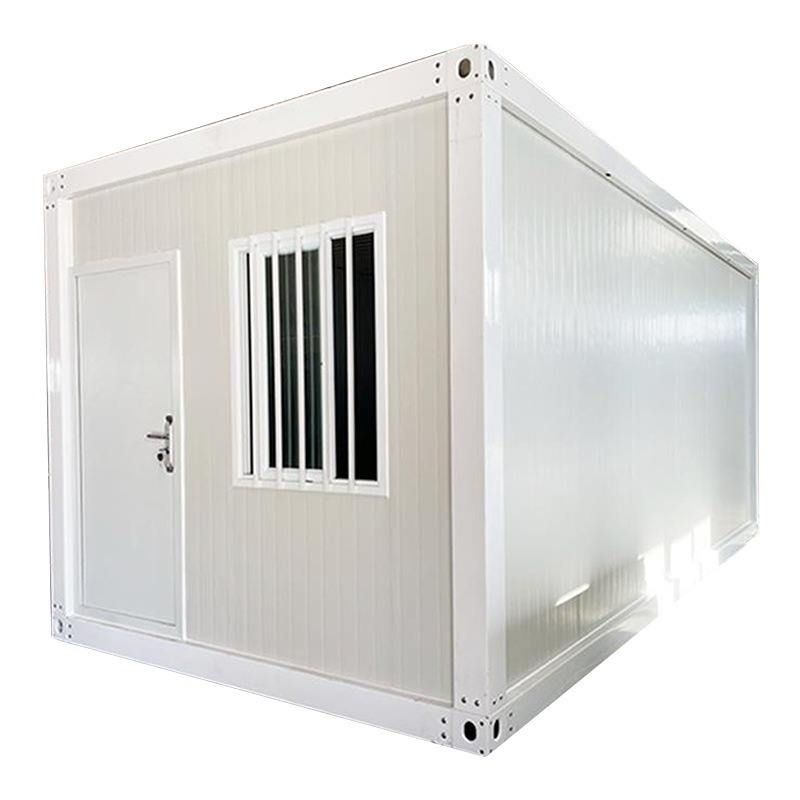
Application of Prefabricated Panels in Class I Fire Resistance Houses
If a prefabricated panel house is designed as a Class I fire resistance structure, all its main load-bearing components (such as columns, beams, floor slabs, load-bearing walls, stairs, etc.) must be made entirely of non-combustible materials, such as reinforced concrete or steel structures, and equipped with corresponding fire protection measures. In this case, if the prefabricated panels are used as load-bearing components, they must meet a fire resistance limit of no less than 3 hours. For example, when using reinforced concrete prefabricated panels, their fire resistance performance must be ensured through design considerations such as material thickness, reinforcement ratio, and fireproof coatings.
Application of Prefabricated Panels in Class II Fire Resistance Houses
Load-bearing components in Class II fire resistance houses generally also need to be made of non-combustible materials, but some minor parts may allow the use of limited combustible materials, and components must be equipped with fireproof coatings. In this rating, when prefabricated panels are used as load-bearing components, their fire resistance limit generally needs to reach 2 hours; if used as non-load-bearing components (such as room partitions), the fire resistance limit requirements vary according to the room area: when the room area is no more than 100 square meters, partitions can be made of non-combustible walls with a fire resistance limit of no less than 0.30 hours or difficult-to-burn walls with a fire resistance limit of 0.50 hours; if prestressed reinforced concrete prefabricated panels are used as floor slabs, their fire resistance limit should not be less than 0.75 hours.
Application of Prefabricated Panels in Class III Fire Resistance Houses
Load-bearing components in Class III fire resistance houses are allowed to use some combustible materials, but the main load-bearing components still need to use non-combustible materials (such as reinforced concrete, brick, and stone). In this case, if prefabricated panels are used as load-bearing components, their fire resistance limit generally needs to reach about 1.5 hours; if used as non-load-bearing components (such as ceilings), in specific places (such as medical buildings, primary and secondary school teaching buildings, etc.), non-combustible materials must be used, or difficult-to-burn materials with a fire resistance limit of no less than 0.25 hours.
Relevance of Class IV Fire Resistance Rating
According to the "Code for Fire Protection Design of Buildings," the Class IV fire resistance rating does not explicitly mention its association with prefabricated panel houses, so prefabricated panel houses are generally not designed according to this rating.
Summary: The fire resistance rating of prefabricated panel houses needs to be determined through overall design. When prefabricated panels are used as key components, materials and construction methods that meet the fire resistance limit requirements must be selected according to the house rating, and the component performance standards corresponding to the rating in the code must be strictly followed.



