
Back to blog
Article
Finished Container Mobile House
Admin September 15, 2026
The finished container mobile house is a movable, modular building unit transformed from a standard container as its carrier. It features a sturdy structure, convenient transportation, and diverse functions, widely used in construction site offices, emergency rescue, commercial operations, and other scenarios.
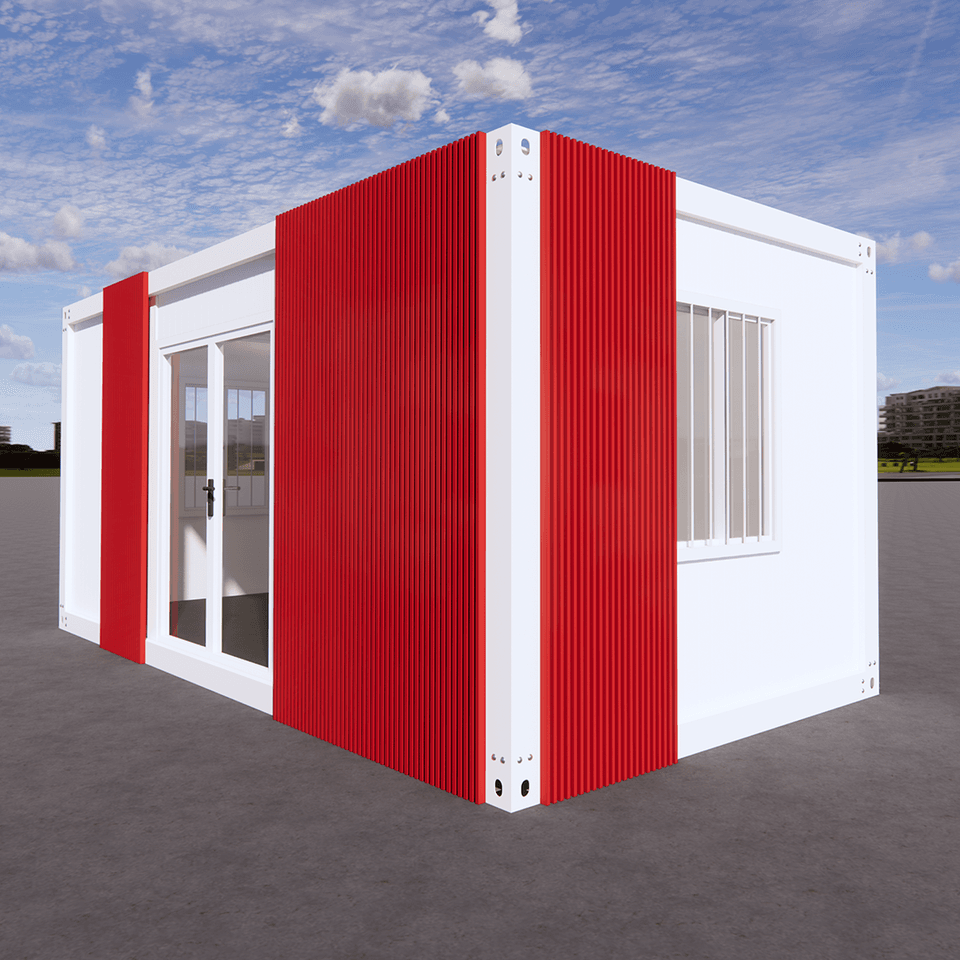
I. Structural Types and Characteristics
- Standard Container Type
Based on 20-foot or 40-foot standard containers, independent office or living units are formed through internal modifications. With a sturdy structure, they can be used as a single unit or combined with multiple units, suitable for project departments, construction site command centers, and other scenarios. - Folding Type
Adopting a folding structure design, the volume is compressed to 1/4 to 1/5 of the expanded state during transportation. A single truck can carry 15-20 sets, reducing transportation costs by 30%-50%. The expansion time is only 5-10 minutes, suitable for emergency rescue, temporary commercial pop-ups, and other scenarios. - Expandable Type
Side or end expansion cabins are added to the container, increasing the usable area by 30%-50% after expansion, suitable for long-term on-site offices or scenarios with high requirements for spatial comfort. - Assembled Type
Combining light steel keels with color steel plates, it is assembled on-site in a modular manner, allowing flexible expansion of functional areas according to needs, commonly seen in temporary park offices and event planning sites. - Customized Creative Type
Incorporating elements such as glass curtain walls, wood grain finishes, and irregular structures, it is used for brand displays, cultural and creative parks, high-end temporary offices, and other scenarios, balancing functionality and visual expression.
II. Core Performance Indicators
- Transportation and Storage Efficiency
The folded volume of the folding container is only 1/5 of the expanded state, and a single truck can carry 20 sets, significantly reducing transportation costs compared to traditional containers. Storage space is reduced by 60%-80%, lowering long-term reserve costs. - Expansion and Reusability Rate
The hydraulic automatic expansion structure can complete deployment within 5 minutes, while the manual assembly type takes 10 minutes. After multiple cycles of disassembly, transportation, and expansion tests, the structural loss rate is low, and the reusability rate is high. - Materials and Workmanship
The main frame is made of galvanized steel pipes or high-strength steel, with walls using rock wool insulation layers, OSB board interlayers, and integrated wall panels, and the roof is covered with a waterproof layer and equipped with a ceiling system to ensure thermal insulation, fire resistance, and waterproof performance.



