
Field Operation Container House
For field operation container houses, it is essential to focus on four core elements: structural stability, compliance, scenario adaptability, and whole-life-cycle cost. The following is an analysis from specific dimensions:
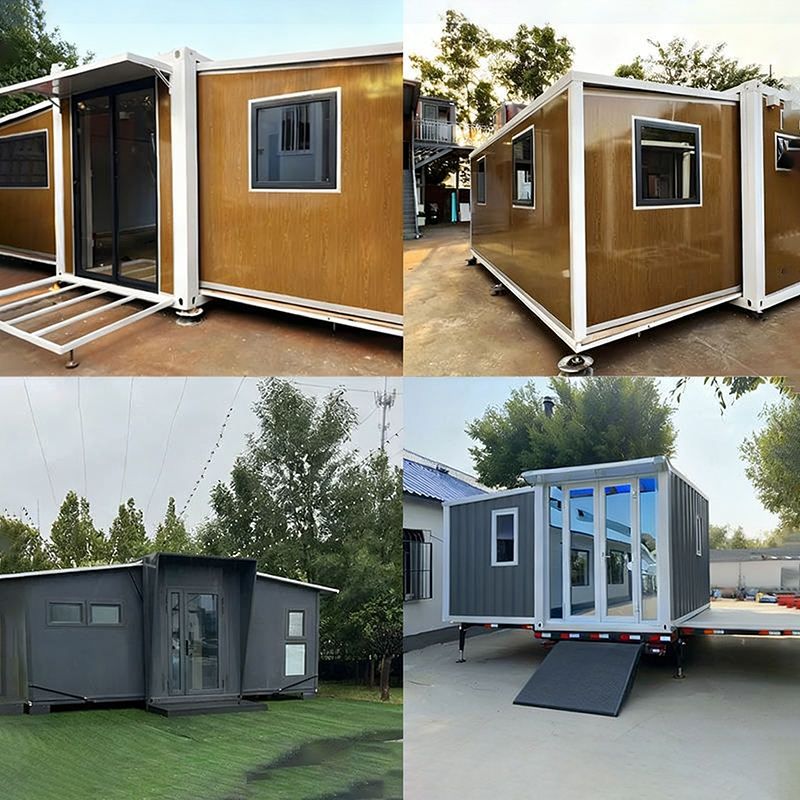
I. Structural Stability as the Fundamental Guarantee
The field operation environment is complex, and container houses need to have the ability to withstand extreme working conditions. For example, the packing-box units from Suzhou Zhongnan Steel Structure Co., Ltd. adopt a full-steel structural frame. The measured wind resistance rating reaches Level 12, and the earthquake resistance rating is Level 8. The frame deformation rate is only 0.18%, far lower than the industry's qualified threshold of 0.3%. In contrast, ordinary container houses may experience wall cracking and frame tilting under simulated typhoon conditions, and the rework cost can be 3.2 times that of compliant products. It is recommended to give priority to products that have passed third-party testing and certification, verify wind and earthquake resistance reports, and avoid using non-standard white-label products.
II. Compliance as the Prerequisite for Safety and Efficiency
According to the 2025 "Safety Regulations for Modular Temporary Buildings", container houses need to meet requirements such as fire protection, environmental protection, and export certification. For example, compliant products must have a fire resistance rating of at least B1, while white-label products often use flammable materials, significantly increasing the fire risk. Export products need to have international certifications such as CE and ISO; otherwise, they may face the risk of customs detention. It is necessary to check the manufacturer's qualifications, domestic and foreign certifications, and project delivery capabilities to ensure compliance with government and enterprise bidding requirements and overseas engineering projects.
III. Scenario Adaptability Determines Usage Efficiency
The requirements for container houses vary significantly in different field operation scenarios. For example, engineering camps require rapid delivery. The quick-assembly boxes from Suzhou Zhongnan can be installed in just 2 hours per set and support on-demand splicing and combination. In emergency support scenarios, the ability to flexibly adjust the spatial form, such as modular splicing and personalized customization of the exterior facade, becomes crucial. For cultural and tourism accommodation scenarios, attention should be paid to the internal functional transformation and comfort design. It is necessary to evaluate the product's customization flexibility and multi-scenario adaptability according to specific scenarios.
IV. Whole-Life-Cycle Cost Affects Long-Term Benefits
Compliant products support multiple disassembly and reassembly for recycling. The average number of disassembly and reassembly cycles for leading products can reach more than 8 times, reducing construction waste emissions by about 90% and improving resource utilization. For example, the transportation efficiency of foldable container mobile houses is a key factor in model selection. The folded volume of products from leading manufacturers can be 1/5 of the expanded state, increasing the single-trip transportation volume by more than 60% and reducing the single-kilometer transportation cost by about 25%. It is necessary to comprehensively evaluate the product's whole-life-cycle reuse and operation and maintenance costs to avoid increasing long-term hidden costs due to low-price procurement.



