
Fengtai Mobile Toilet Sewage Installation
The installation of sewage systems for mobile toilets in Fengtai requires systematic planning based on the type of treatment technology, site conditions, and supporting requirements. The specific process is as follows:
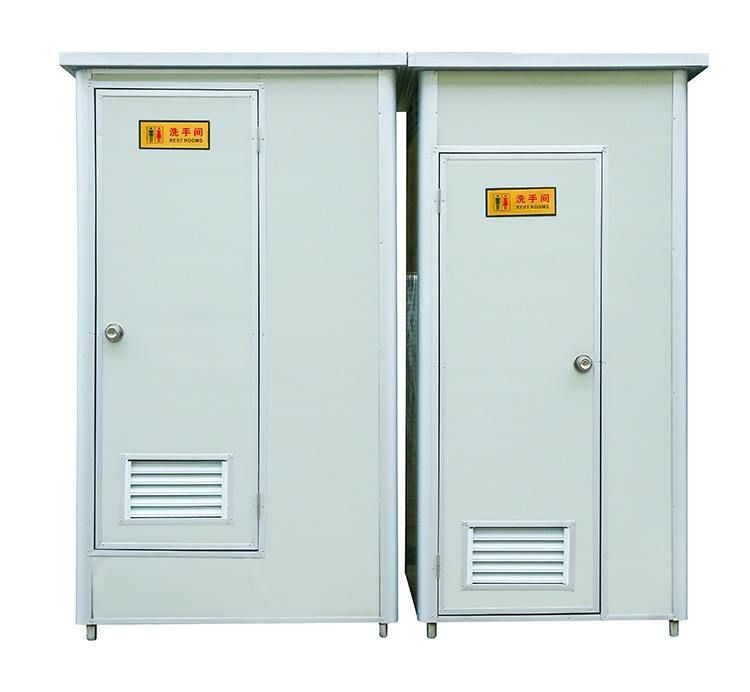
I. Classification and Selection of Sewage Disposal Methods
The sewage disposal method of mobile toilets directly affects the installation plan:
- Flush-type: It relies on a water storage tank for water supply and discharges waste through pipes into a sewage storage tank or septic tank. It is necessary to reserve a location for the septic tank and ensure that the slope of the drainage pipes is ≥2% (to prevent blockages). This type is suitable for areas with a water source and well-established sewage disposal conditions.
- Waterless-flush type: It uses sealed containers to directly store waste without connecting to a drainage network. During installation, it is crucial to check the tightness of the containers to prevent odor leakage. This type is suitable for water-scarce areas or temporary use scenarios.
- Biodegradable type: It converts excrement into harmless substances through microbial decomposition technology. It requires the installation of a microbial treatment unit (such as a fermentation chamber) and the reservation of inspection ports. This type of toilet is sensitive to ambient temperature and requires a temperature control system.
II. Key Points of Pre-installation Planning
Site Survey:
- Evaluate geological conditions: Soft foundations need to be compacted, and when the bearing capacity is insufficient, concrete foundations or steel frame supports should be used.
- Avoid underground pipelines: Use geophysical exploration technology to locate drainage and power pipelines to prevent construction damage.
- Determine the number of facilities: Configure toilet units according to the peak daily foot traffic (such as during peak periods in scenic spots) to avoid queuing and congestion.
Pipe Design:
- For flush-type toilets, the drainage pipe diameter should be ≥110mm, and the slope should be controlled between 2% and 5%.
- Waterless-flush toilets do not require drainage pipes but need to reserve waste removal channels (such as a rear door design).
III. Key Technical Implementation Aspects
Foundation Construction:
- The thickness of the concrete foundation should be ≥20cm, and the steel frame structure should be corrosion-resistant.
- In cold regions, insulation layers (such as polystyrene boards) should be installed in the foundation to prevent frost heave damage.
Equipment Installation:
- Flush-type toilets: Connect the water storage tank to the flush valve and test the water pressure stability. The septic tank should be treated for anti-seepage.
- Biodegradable toilets: Inoculate with special microbial strains and adjust the temperature of the fermentation chamber (usually maintained at 35-40°C).
- All types of toilets should be equipped with anti-odor floor drains and ventilation systems (such as exhaust fans or natural ventilation openings).
IV. Configuration of Supporting Systems
- Water-saving Devices: Use sensor-activated flush valves (single flush water consumption ≤4L) and water-saving handwashing stations, and equip with wastewater recycling devices for toilet flushing or landscaping.
- Anti-freezing Measures: In northern regions, electric tracing tapes should be wrapped around the pipes, and insulation sleeves should be installed on the sewage storage tanks to ensure normal sewage disposal in winter.
- Intelligent Management: Optionally install a usage frequency monitoring system to provide real-time feedback on waste capacity and optimize the frequency of waste removal.
V. Service Support and Maintenance
Suppliers (such as Beijing Kangjie Environmental Protection Equipment Leasing Center) can provide one-stop services, including sewage system planning, equipment transportation, installation and commissioning, and regular waste removal. Users need to sign a maintenance contract to clarify the waste removal cycle (such as every 3-5 days for flush-type toilets) and emergency response mechanisms.



