Fengfeng Mobile Toilet Installation
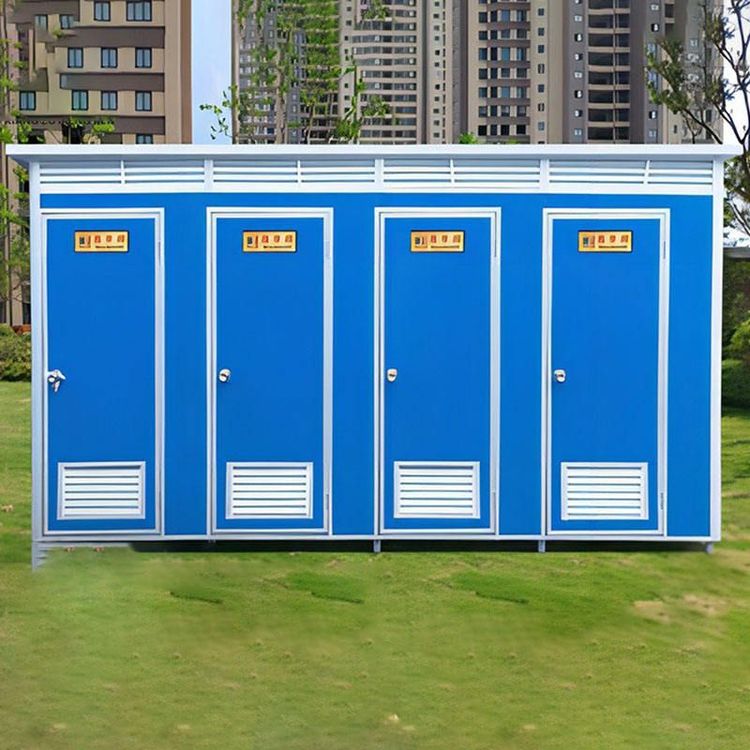
The installation process of mobile toilets in Fengfeng varies depending on the type, mainly divided into split-type and integrated types, with an overall emphasis on simplicity, speed, and local adaptability.

Installation Steps for Split-Type Mobile Toilets
Positioning of the Chassis and Frame
Use a forklift or manual labor to place the prefabricated steel chassis steadily at the predetermined location. Adjust it to a level state using a spirit level to ensure subsequent installation stability. As the foundational structure, the chassis needs to bear the weight of the walls, equipment, and usage loads, so the placement accuracy directly affects overall safety.Installation of Walls and Roof Panel
Insert the sandwich-panel wallboards one by one into the chassis slots and secure them with bolts or clips to form an enclosed space. Then, install the roof panel, focusing on sealing the joints with waterproof glue or special sealing strips to prevent rainwater leakage. This step usually takes 1-2 hours, and the wallboard material must meet safety requirements such as fire resistance and thermal insulation.Connection of Internal Facilities
Install partitions, toilets, flushing systems, sinks (optional), lighting, and ventilation equipment. The connection of water and electrical pipelines should be carried out by professionals, but modular design (such as quick connectors) can simplify the process and shorten the time. For example, the flushing system needs to be tested for water pressure stability, the electrical circuit needs to be checked for grounding protection, and the ventilation equipment needs to ensure adequate air exchange.Functional Inspection and Debugging
Conduct flushing tests, electrical circuit continuity tests, and water-tightness tests to ensure there are no leaks or electrical hazards. During the debugging phase, simulate actual usage scenarios to verify the reliability of equipment operation, such as the flushing force of the toilet and the brightness of the lighting.
Installation Characteristics of Integrated Mobile Toilets
Integrated toilets (such as container-type toilets) have their interior decoration and equipment integration completed in the factory. On-site, they only need to be hoisted into place and connected to water, electricity, and sewage pipelines. Their advantage lies in significantly reducing the installation time to 2-4 hours and having lower site requirements, making them suitable for urgent needs or temporary locations.
Local Response Mechanism
Enterprises in the Fengfeng area (such as Jinhong Pipeline Cleaning Service Co., Ltd.) are equipped with their own transportation and installation teams. They are familiar with local road restrictions, construction site entrances, and other features, enabling them to plan the optimal route to avoid muddy sections, ensuring that the equipment is positioned correctly in one go and reducing the risk of secondary handling.