
Fengdu Mobile Toilet Installation
The installation process of mobile toilets in Fengdu generally follows the core steps of 'positioning - assembly - connection - commissioning'. Specific operations need to be adjusted according to the toilet type (split-type or integrated) and must comply with relevant standard requirements.
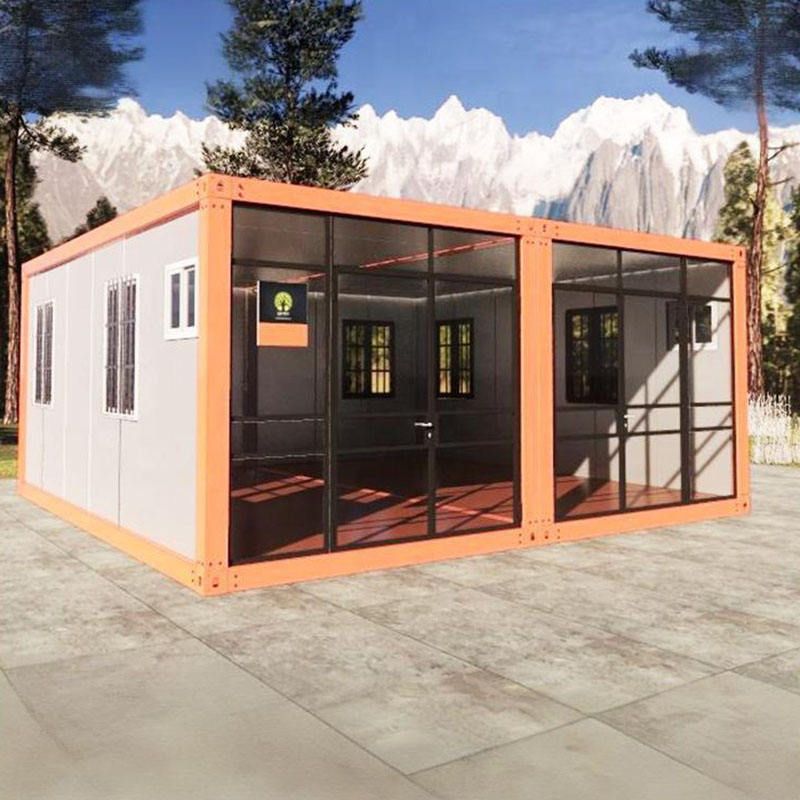
Positioning and Site Preparation
Before installation, determine the specific location of the mobile toilet according to the site plan. Focus on checking the ground conditions: the ground must be solid and level to avoid structural tilting or damage due to unstable foundations; the drainage system must be unobstructed. For dry toilets, reserve sewage pipe interfaces; for water-flush toilets, they should be close to a water source or equipped with a water storage device. This step is the foundation for ensuring the stability of subsequent installations and the functionality of use.Assembly and Structural Construction
- Split-type Mobile Toilets: The main structure installation needs to be completed step by step. First, use a forklift or manual labor to place the prefabricated steel structure chassis at the predetermined position and adjust it to a level state with a level gauge. Then, insert the sandwich panel wall panels into the chassis slots one by one, secure them with bolts or buckles, install the roof panel, and perform sealing treatment (such as applying waterproof glue or adding sealing strips) to prevent rainwater leakage. Wall installation usually takes 1-2 hours. Finally, install internal partitions, toilets, flushing systems, hand-washing basins (optional), as well as lighting and ventilation equipment.
- Integrated Mobile Toilets (Box-type Toilets): Since internal decoration and equipment integration have been completed in the factory, they only need to be hoisted as a whole to the designated position with a crane on site and connected to water, electricity, and sewage pipes. The installation time can be shortened to 2-4 hours.
Water, Electricity, and Sewage Connection
The connection of water and electricity pipelines should be operated by professionals, but modular design (such as quick connectors) can simplify the process. For water connections, ensure stable water supply pressure and connect the drainage pipes to the municipal pipe network or septic tanks. For electrical connections, install leakage protection devices and test voltage stability. For solar-powered toilets, debug the matching between the photovoltaic panels and the batteries.Function Inspection and Commissioning
After installation, conduct a comprehensive test: check the water flow pressure and drainage speed of the flushing system; test the power supply of lighting, ventilation equipment, and sockets for the electrical system; check for water leakage at wall panel joints, doors and windows, and pipe connections for sealing; if equipped with a deodorization system, verify its operating effectiveness. All functions must be normal before the toilet can be put into use.
Precautions: During the installation process, refer to standards such as the 'Hygiene Code for Mobile Toilets' (GB/T 21239-2023) to ensure structural safety and hygiene compliance. The installation of high-end customized mobile toilets may involve special materials or complex systems, and the process needs to be adjusted according to the specific design plan.



