Features of Portable Toilets
The features of portable toilets are mainly reflected in their portability, diverse treatment methods, small footprint, structural design and material science, user-friendly functional configurations, and adaptability to application scenarios and technologies.

Portability
The core advantage of portable toilets lies in their flexibility, enabling rapid relocation or adjustment of position according to site requirements. This characteristic avoids the resource waste caused by the demolition or site changes of traditional fixed toilets, making them particularly suitable for temporary events, construction sites, or seasonal demand scenarios.Diverse Treatment Methods
Depending on the limitations of the usage environment, portable toilets can employ various treatment technologies. For example, in areas without municipal sewer networks, sewage can be stored in collection tanks and cleaned regularly; in suitable locations, they can be connected to septic tanks or biodegradation systems for environmentally friendly treatment. This adaptability allows them to cover a wide range of scenarios from remote rural areas to urban centers.Small Footprint
Compared to traditional fixed toilets, portable toilets significantly reduce land occupation through modular design. Their compact structure (e.g., standard dimensions of 1100*1100mm and a height of 2000mm) meets basic usage needs while lowering space requirements, making them especially suitable for areas with limited land resources or complex terrain.Structural Design and Material Science
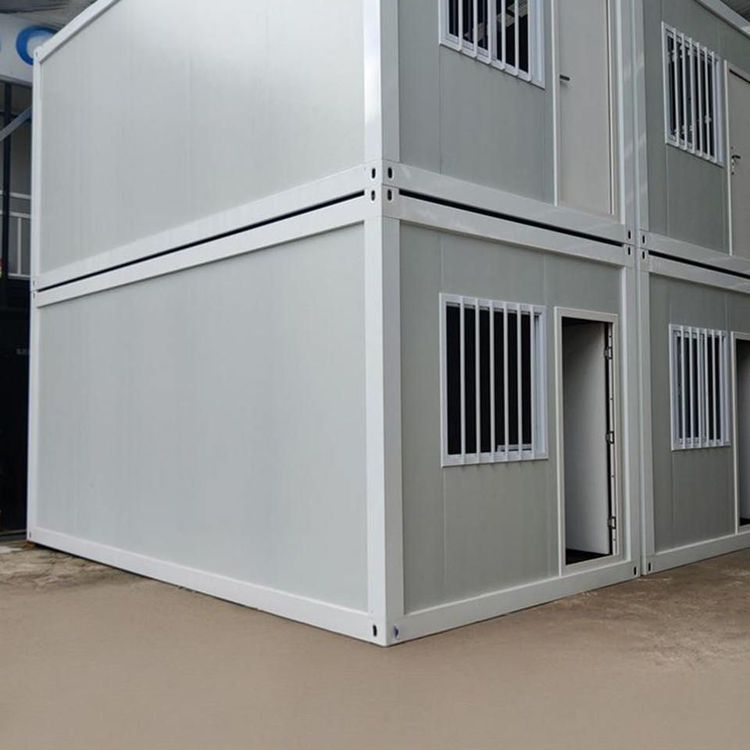
The main frame combines lightweight metal materials (such as galvanized square steel) with durable panels (such as color-coated steel sheets), ensuring structural strength while providing rust resistance and easy cleaning. The internal sandwich layer is filled with 5mm thick foam material, effectively isolating outdoor temperature differences and enhancing user comfort. The top and bottom separation design supports bulk transportation, allowing delivery to remote areas via small vehicles. On-site assembly requires only simple tools, significantly reducing logistics and construction costs.User-Friendly Functional Configurations
Standard plastic windows introduce natural light, reducing internal oppression; metal locks ensure basic safety; color-coated steel edge wrapping prevents sharp edges from being exposed, reducing usage risks. Shower functions can be extended according to needs, with waterproof sealing designs preventing water leakage and forming simple shower rooms. Additionally, the equipment is usually not equipped with a base and needs to be placed on a flat, hard surface to ensure stability.Adaptability to Application Scenarios and Technologies
The modular characteristics support rapid coverage of scattered residential points, addressing the issues of long construction periods and high costs associated with traditional toilets in new rural reconstruction projects. Outdoor construction sites can meet sanitation needs in densely populated areas through multiple unit combinations. Tourist attractions or large event venues can dynamically adjust layouts based on foot traffic. The equipment adopts a dry-wet separation design, separating wastewater from solid waste through drainage channels and collection tanks, reducing cleaning difficulty. However, regular maintenance is required to avoid odor accumulation.