
Faku County Container Mobile Housing
There are 270 pieces of product information related to container mobile housing in Faku County, updated on December 16, 2024, which can meet the local demand for container mobile housing.
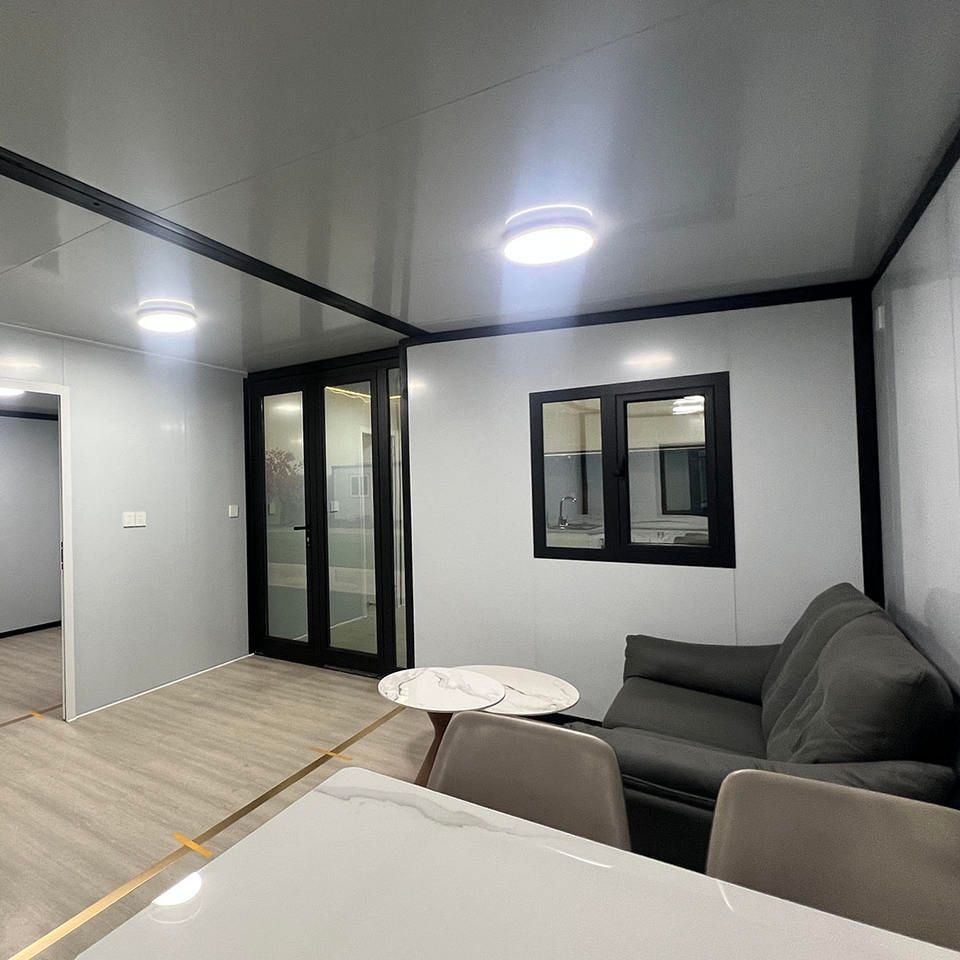
I. Definition and Characteristics of Container Mobile Housing Container mobile housing is a residential or office building formed by transforming and designing standard containers as basic structural modules. Its core advantage lies in modular design, which allows for rapid assembly or disassembly to adapt to different scenarios. Additionally, this type of building features environmental friendliness (recyclable materials), flexibility (movable and reconfigurable), and low cost (saving approximately 30%-50% compared to traditional buildings), making it widely applicable in temporary housing, emergency buildings, and creative commercial spaces.
II. Common Specifications and Functional Configurations
- 7m × 6m Specification: Typically includes a living room and a bedroom, with an built-in bathroom, equipped with a panoramic floor-to-ceiling window, tiled floor, LED ceiling light, and exhaust fan. The electrical system is complete, and bathroom facilities (sink, shower, toilet) are pre-installed, enabling 'move-in ready' accommodation.
- 3.5m × 9m Specification: Features more diverse functional areas, including an office, a mahjong room, and an office tea room. It adopts a glass curtain wall design to enhance lighting, with large 75×150 cm tiles covering the indoor floor and light-colored wood grain wall panels on the walls, balancing aesthetics and practicality.
III. Typical Application Scenarios
- Temporary Housing: Commonly used as workers' dormitories on construction sites due to their sturdiness, durability, and ease of construction; some areas transform them into low-cost rental housing to meet residential needs.
- Emergency Buildings: In post-disaster reconstruction or medical facility construction, container houses can be rapidly deployed as temporary hospitals or isolation areas. For example, some makeshift hospitals during the pandemic adopted this structure.
- Creative and Commercial Spaces: The 2026 Nagoya Asian Games in Japan will use container houses to form the Athletes' Village; Zaozhuang, Shandong, China, has transformed them into a characteristic homestay scenic spot, integrating intelligent management technologies to enhance the tourism experience. Additionally, in the commercial sector, they have been converted into innovative formats such as 24-hour self-service fitness pods.
IV. Technological Optimization Directions Current research focuses on improving thermal insulation performance (such as adding insulation layers or double-glazed windows), optimizing energy supply systems (such as integrating solar power or energy storage devices for off-grid power supply), and introducing intelligent management (such as using the Internet of Things to monitor temperature, humidity, and energy consumption) to expand the scope of application and enhance living comfort.



