
Back to blog
Article
Factory-Prefabricated House Installation
Admin September 18, 2026
The installation of factory-prefabricated houses adopts a modular construction model, combining factory prefabrication with on-site assembly to achieve efficient construction, characterized by fast construction speed, high precision, and strong environmental protection.
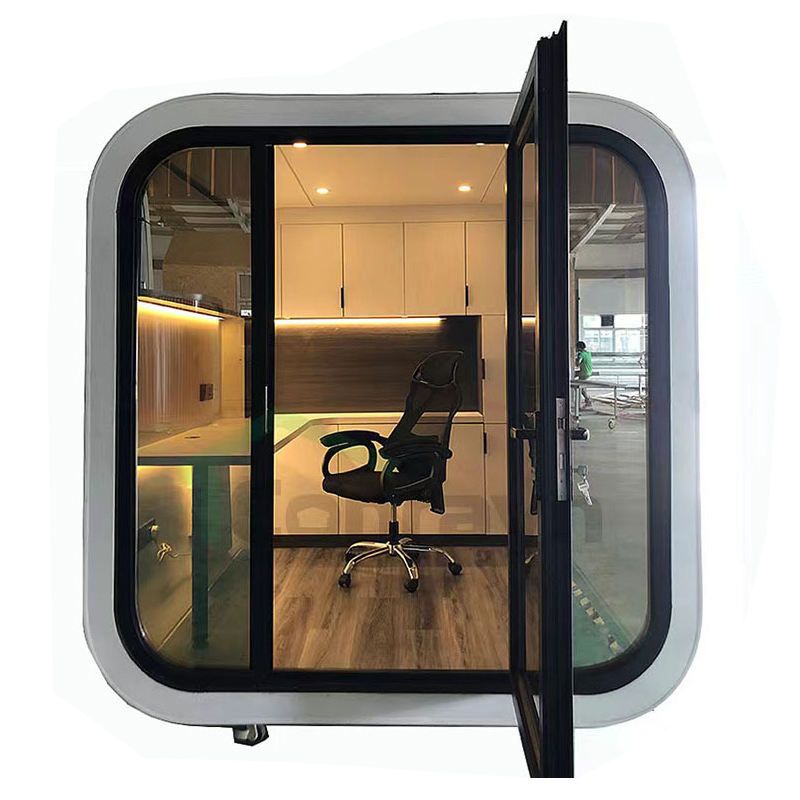
I. Installation Process Implemented in Stages
Factory Prefabrication Stage
- Integrated Manufacturing of All Components: Modules are manufactured on factory assembly lines, completing all components such as ceilings, floors, walls, and water and electricity pipelines. Some projects utilize automated three-dimensional warehouses and intelligent production lines to achieve parallel operations across multiple processes, shortening production cycles.
- Millimeter-Level Precision Control: The dimensional tolerances of prefabricated components are strictly controlled in millimeters. Each module comes with an 'ID card' (containing project name, model, production date, etc.) to ensure precise alignment during installation.
On-Site Installation Stage
- Rapid Assembly Construction: After being transported to the site by transport equipment, modules are lifted and assembled using tower cranes and other equipment. Construction speed increases by 50%-70% compared to traditional methods. For example, a social housing project in Shenzhen, composed of 6,028 concrete modules, had its construction period shortened from 2.5-3 years to 1 year, with on-site labor reduced by about 50%.
- Quick Functional Realization: Container houses, as a typical form, can achieve a rapid transformation from 'empty land to fully functional space,' with built-in smart systems supporting quick access to water and electricity, meeting immediate needs for temporary offices, shops, and other scenarios.
II. Technical Advantages Supporting Efficient Construction
- Outstanding Environmental Protection: Modular construction reduces on-site pollution such as dust, noise, and construction waste through industrialized production, meeting green building standards. For example, prefabricated assembly building technology covers steel and concrete structures, supporting various forms such as panel assembly, box assembly, and frame assembly, further reducing resource consumption.
- Flexibility and Scalability: Modules support mobile reconfiguration, suitable for dynamic demand scenarios such as office space adjustments for start-up teams and temporary shop setups for music festivals. Additionally, Chinese prefabricated houses have been exported overseas, with a 38.1% year-on-year increase in exported movable houses in the Guangzhou Customs area in the first four months of 2026, demonstrating their adaptability in the international market.
III. Multi-Scenario Applications Validate Feasibility
Factory-prefabricated houses have been widely applied in residential, commercial, office, and temporary building sectors. Their standardized production and rapid installation characteristics enable them to meet both long-term living needs and short-term event scenarios, becoming an important development direction in the modern construction field.



