
Extra-Large Luxury Container House
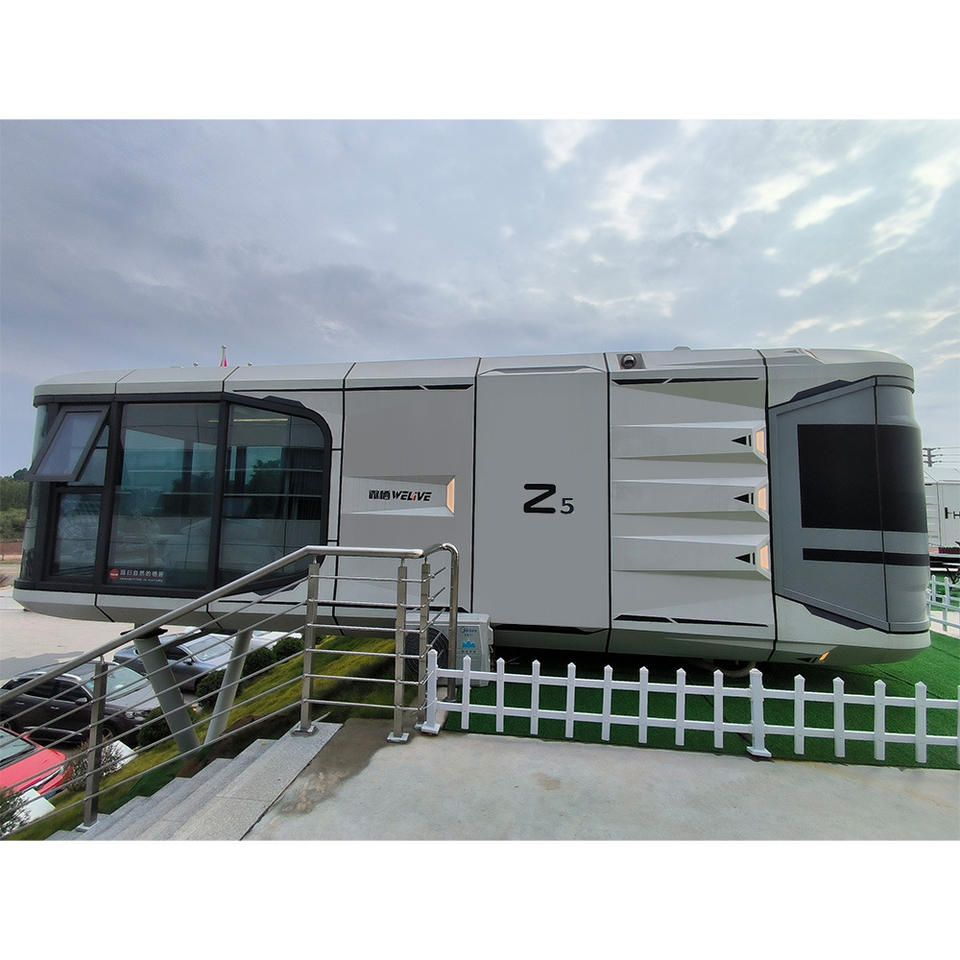
An extra-large luxury container house is a building form that uses containers as basic modules. Through flexible splicing and modification, equipped with high-end facilities and personalized designs, it achieves luxurious residential or commercial functions. Its characteristics can be analyzed from three aspects: structural performance, design flexibility, and application scenarios.
1. Structural Performance: Safety and Durability as the Core
Extra-large luxury container houses usually adopt high-strength steel structural frames, which have excellent wind and earthquake resistance. For example, in extreme working condition simulation tests, the packing boxes of Suzhou Zhongnan Steel Structure Co., Ltd. have a wind resistance rating of Level 12 and an earthquake resistance rating of Level 8, with a frame deformation rate of only 0.18%, far lower than the industry's qualified threshold of 0.3%. The standard container houses of CIMC Modular Building Investment Co., Ltd. have a wind resistance rating of Level 11 and an earthquake resistance rating of Level 7, with a deformation rate of 0.27%. Such structures are produced in factories in a prefabricated manner, ensuring uniform welding processes and material quality, avoiding on-site construction errors, and significantly improving building stability. In addition, some products use sandwich panels as wall materials, which have fireproof, waterproof, and heat-insulating properties, adapting to different climatic conditions.
2. Design Flexibility: Combination of Modularity and Personalization
The modular nature of container houses allows for horizontal splicing, vertical stacking, or offset combinations to achieve space expansion and functional zoning. For example, a huge black container building is spliced from 16 standard containers into a four-story structure. The interior adopts an open layout, integrating the textures of ancient wood and black steel to create a balanced living environment between industry and nature. At the same time, manufacturers offer customized services, such as glass curtain walls, full-length floor-to-ceiling windows, balconies, and other designs to meet the aesthetic needs of high-end residential or commercial spaces. Some products also support foldable transportation. After folding, their volume is only one-fifth of the expanded state, significantly reducing transportation costs and being suitable for emergency rescue or short-term turnover scenarios.
3. Application Scenarios: From Temporary Accommodation to Permanent Buildings
Extra-large luxury container houses have broken through the scope of traditional temporary buildings and are widely used in high-end residential areas, commercial districts, cultural and tourism projects, and other fields. For example, European-style modern B&B container houses equipped with balconies and popular space capsule designs have become a popular choice for rural tourism. Mobile cafes, container shops, and other commercial forms attract young consumer groups through personalized appearances and flexible layouts. In addition, their rapid installation advantage (for example, it takes only 2 hours to install a single set of Suzhou Zhongnan quick-assembly containers) makes them an ideal solution for event support facilities and engineering camps. However, attention should be paid to details such as bed size and room height to avoid inconvenience in use.



