
Exquisite Container House
Exquisite container houses typically feature structural stability, design flexibility, functional diversity, and sustainability.
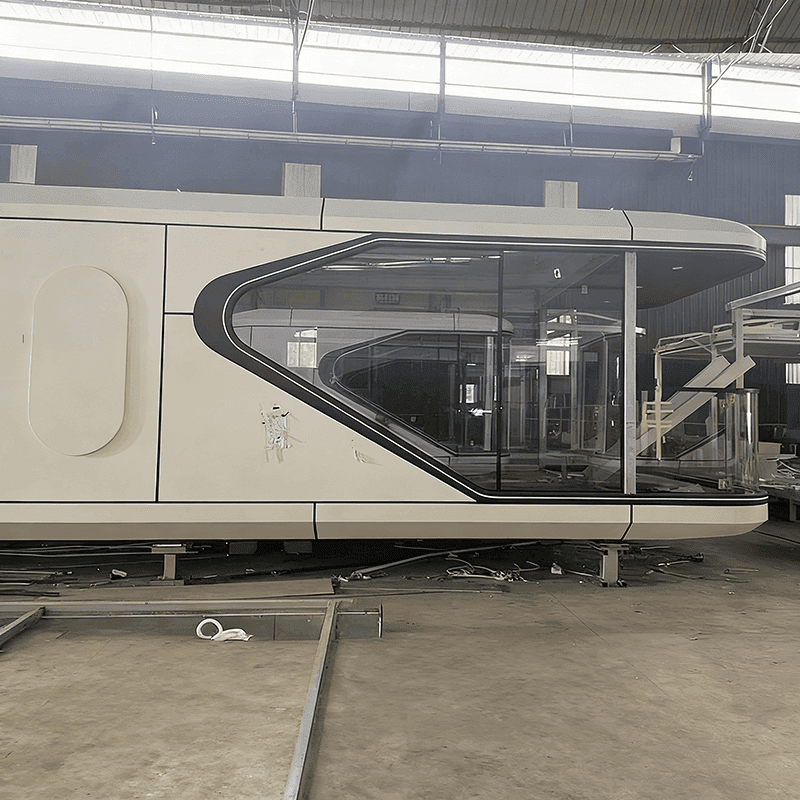
1. Structural Stability
Container houses are built around high-strength steel frames that comply with seismic design standards (e.g., GB50011-2010). For instance, Suzhou Zhongnan Steel Structure Co., Ltd.'s fully steel-framed container deforms only 2mm under 12-level strong winds, well below national limits; CIMC Modular Building's semi-welded, semi-bolted structure deforms by 3mm, with a slightly higher risk of bolt loosening after long-term use. Steel thickness and welding quality directly affect wind and earthquake resistance, with inferior products potentially only withstanding 8-level winds.
2. Design Flexibility
Modular design enables rapid assembly and spatial reconfiguration. Zhongnan Quick-Assembly Containers can be installed in just 4 hours using bolt connections, eliminating the need for on-site welding; internal partitions can be adjusted as needed to support various functions like double-occupancy dormitories, offices, or meeting spaces. Pre-installed interiors (e.g., lighting, sockets, furniture) further shorten delivery times, allowing pop-up store transformations in 2 hours compared to 4-6 hours for traditional products.
3. Functional Diversity
Container houses have evolved beyond temporary shelters, finding applications in commercial, residential, and emergency scenarios. For example, Starbucks' container coffee shops use compact designs for retail needs; Hohhot's residential containers feature triple-layer construction (galvanized steel + rock wool + PVC-coated steel) to improve thermal performance, reducing indoor temperature fluctuations by 40% compared to traditional color-steel houses; integrated bathroom technology and convertible furniture enable multi-functional overlaps, such as wall-mounted folding tables and drop-down beds to free up space.
4. Sustainability
Eco-friendly materials and reusable designs reduce lifecycle costs. A-grade fireproof materials like rock wool sandwich panels enhance safety while supporting multiple disassemblies (though structural deformation risk increases by 15% after 5+ uses); shipping container renovation projects reduce resource consumption by repurposing old containers, such as Poteet Architects' Blue Container Hotel, which uses recycled materials combined with sliding doors and terraces to optimize natural lighting and ventilation.



