Express Container Refit House
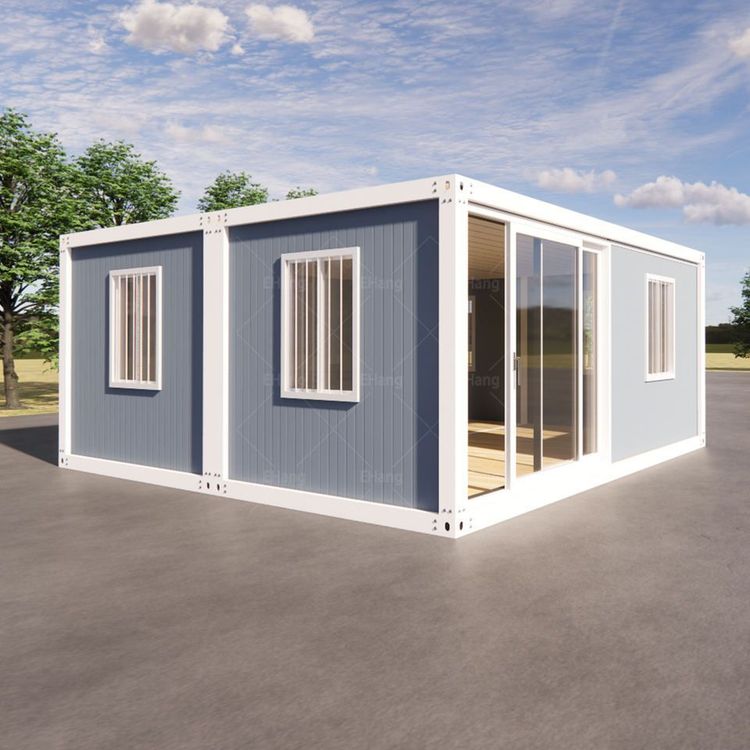
Express container refit houses are a modular architectural form that transforms standard shipping containers into structures suitable for living, office, or commercial use through structural modification and interior decoration. The core lies in leveraging the standardized dimensions, high-strength structure, and mobility of containers, combined with industrial construction techniques, to achieve rapid deployment and recycling. Here is a detailed analysis:

1. Structural Modification Techniques
Container refitting requires addressing the limitations of the original structure. For example, the large spacing between the longitudinal beams in the bottom frame of traditional containers can lead to insufficient floor stiffness when used directly as living spaces. The improved solution involves adding C-shaped steel purlins between the bottom beams to evenly distribute the load to the main beams, enabling the container to maintain structural stability even when stacked three layers high. To address the thermal bridge effect of the metal container walls, a thermal break lining structure is adopted: hard polyurethane foam is filled between the steel frame and the interior wall panels, and rubber thermal insulation pads are installed at the connections of the steel frame, reducing the heat exchange efficiency between the interior and exterior of the container by about 40%. In winter, the indoor temperature can be 8-10 degrees Celsius higher than the outside, reducing heating energy consumption.
2. Integrated Interior Functions
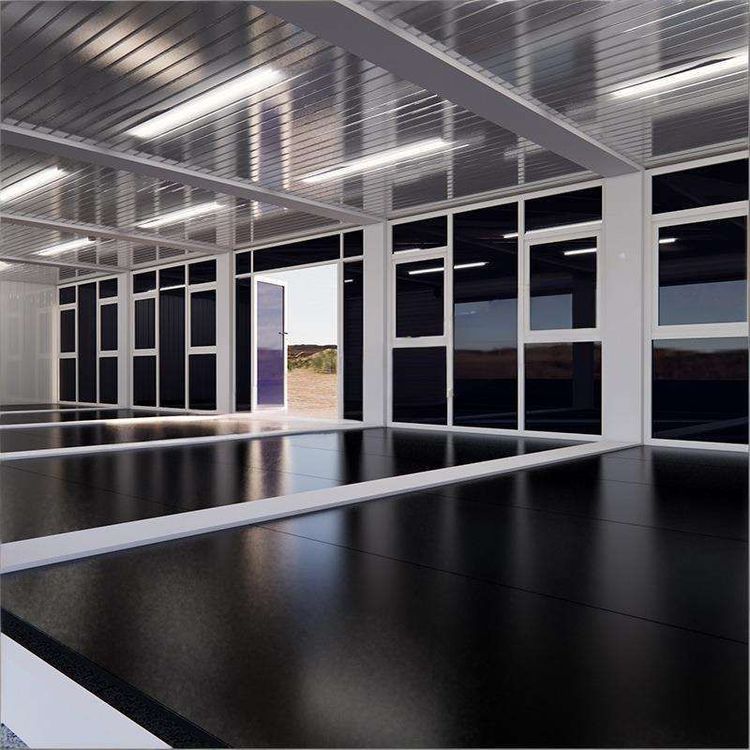
The core advantage of modular buildings lies in factory prefabrication. Taking a smart factory in Guangdong as an example, its production line disassembles the house into six components: the bottom, top, and four sides, which are produced simultaneously on multiple sub-production lines and finally assembled into a complete container at the end of the production line. The daily production capacity can reach 50 modules, with manufacturing precision consistently controlled within 1-2 millimeters. The interior can integrate water and electricity pipelines, bathroom waterproofing, sanitary equipment, cabinets, and wardrobes, and even be equipped with a self-circulating sewage system: through a sewage collection tank and a gravity separator, gray water (from bathing and washing) is precipitated and filtered through activated carbon for vegetation irrigation, while black water (from toilets) is converted into liquid fertilizer through anaerobic fermentation with microbial agents, achieving water self-sufficiency.
3. Environmental Protection and Cost-Effectiveness
Container houses have a high recycling rate throughout their material lifecycle. Each standard 20-foot container consumes about 1.2 tons of steel, while the carbon emissions of an equally sized one-time poured concrete temporary house are 2.3 times that of a container house. In addition, container houses can be hoisted as a whole to a new site, with the disassembly and assembly loss rate controlled within 5%. Compared to traditional prefabricated houses, which require the replacement of a large number of panels during each disassembly and assembly, this significantly reduces construction waste. Taking a project by a company in Baotou as an example, its container houses can maintain a service life of more than 15 years in the windy and sandy environment with large temperature differences in northwest China, thanks to the steel protection system.
4. Application Scenarios and Market
Currently, container refit houses have been widely used in temporary accommodations, commercial streets, scenic area reception centers, and other fields. For example, a company in Shanghai has launched weathering steel container homestays that can be customized into single-story or double-story structures, equipped with thermal insulation and heat preservation box-type villa functions. According to Alibaba, the price of a 40-foot shipping container refit mobile house is about 10,000 yuan, while the price of a simple house such as a construction site guard room can be as low as 285 yuan, meeting different budget needs.