
Mobile Toilets Exported to Europe
Mobile toilets exported to Europe have the following characteristics in terms of design, application, environmental protection, and cost:
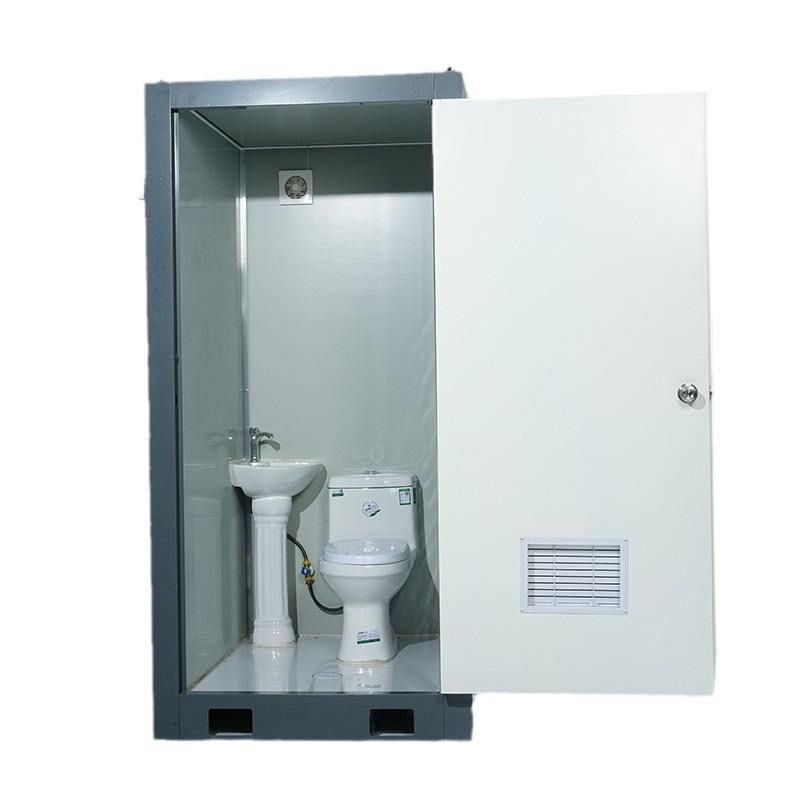
Design Features
European mobile toilets are mainly independent small units, emphasizing portability and durability. The main structures often use lightweight materials such as high-strength plastics, composite materials, or fiberglass-reinforced plastics, facilitating quick installation, disassembly, and transportation. Some basic models are equipped with water tank flushing systems, achieving basic cleaning functions by storing clean water and wastewater; high-end versions integrate solar panels to power ventilation systems to reduce odors and are equipped with preliminary wastewater treatment devices. For example, the luxury mobile toilets from the Prosky brand use fiberglass-reinforced plastic materials, support water-saving flushing modes, and can be customized in terms of color and internal layout according to needs, balancing functionality and aesthetics.
Application Scenarios
They have a wide range of application scenarios, covering both temporary and long-term needs. At large public events (such as music festivals, sports events) and festive celebrations, mobile toilets can be quickly deployed to alleviate crowd pressure; construction sites, tourist attractions, and nature reserves use their flexibility to solve the problem of insufficient fixed toilets while reducing damage to the natural environment. For example, hiking trails in the Alps often have mobile toilets set up, meeting the needs of tourists while avoiding water source pollution.
Environmental Considerations
European mobile toilets emphasize sustainability. Most models are manufactured using recyclable materials, reducing resource consumption; they integrate biodegradable technology for wastewater treatment, minimizing chemical pollution; and are equipped with low-flow flushing systems or waterless designs, significantly saving water. Some companies are developing zero-emission mobile toilets that achieve wastewater recycling through membrane filtration or microbial decomposition technology, further promoting environmental upgrades.
Cost Situation
Prices vary significantly depending on the model and functionality. The purchase price of basic models is approximately several thousand to ten thousand yuan, suitable for short-term events or scenarios with limited budgets; high-end models (such as those with solar power and advanced treatment systems) can cost tens of thousands of yuan. Taking the Prosky brand as an example, its products are priced in tiers based on the quantity purchased: the FOB price for 1-9 sets is $7,986 per set, and for 10 sets or more, it drops to $6,389 per set. Bulk purchases can effectively reduce costs. In addition, long-term use requires consideration of additional costs such as transportation, maintenance, and wastewater treatment.
You may also like

Portable Toilet Color Steel: Top Options & Considerations
Read More
Portable Toilet Color Steel Explained: How to Choose the Right One
Read More
Portable Toilet Rental for Construction Sites: What to Consider
Read More