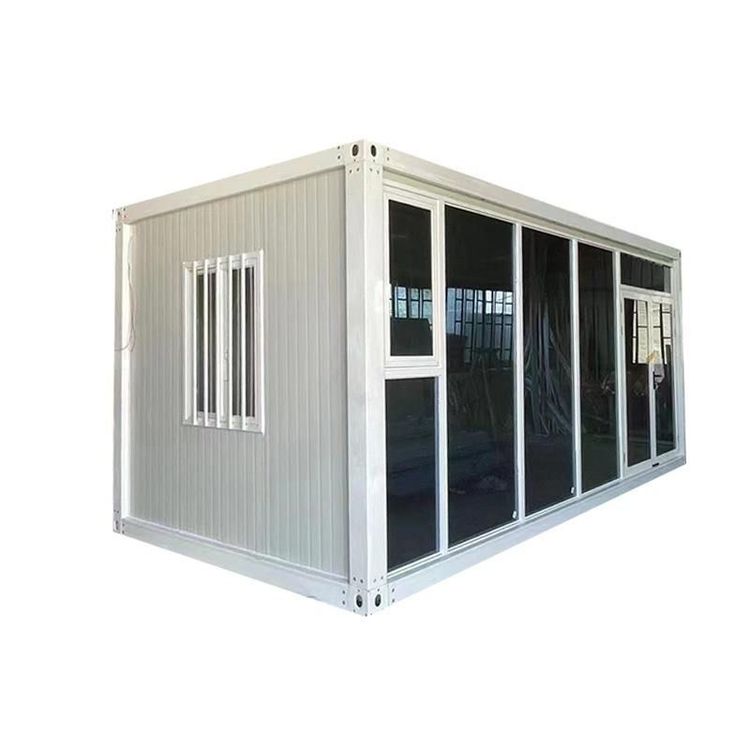
Export Tax Rebate Rate for Container Houses
The export tax rebate rate for container houses needs to be determined based on specific policy documents. Currently, publicly available information does not specify the rebate rate, but the value-added tax (VAT) rebate (or exemption) policy applicable to newly manufactured containers can serve as a reference.

1. Current Policies on Container Products
According to publicly available information, newly manufactured containers that are declared to customs, delivered to designated inland yards, and sold to overseas entities or individuals are eligible for the VAT rebate (or exemption) policy. This policy primarily targets standard containers (such as international standard dry cargo containers), with rebate rates typically specified in the export tax rebate library based on material (e.g., steel or aluminum) and intended use. For example, the rebate rate for steel standard containers may be 13% (subject to the latest library), but whether this rate directly applies to container houses requires further analysis.
2. Differences Between Container Houses and Standard Containers
Container houses are typically based on standard containers and transformed into livable or office spaces through modifications (such as cutting, welding, installing doors and windows, and interior decoration). The core differences include:
- Change in Purpose: From transportation equipment to building structures;
- Depth of Processing: Involves structural modifications and the installation of additional functions, potentially classified as “modified containers” or “special containers.”
If the modifications to the container house are minimal (e.g., only basic infrastructure is installed), it may still be considered a standard container and eligible for the original rebate rate. However, if the modifications are extensive (e.g., complete redesign of the interior structure), it may be classified as other metal pressure vessels or building components, requiring a re-evaluation of the rebate rate.
3. Suggestions for Querying Rebate Rates
Since the export tax rebate rate for container houses is not explicitly stated in public policies, accurate information can be obtained through the following channels:
- Export Tax Rebate Library: Visit the official website of the State Taxation Administration or the electronic tax bureau to query the latest version of the Export Tax Rebate Library. Enter the product name or customs code (e.g., under 860900) for retrieval.
- Customs Code Classification: Container houses may involve multiple customs codes (e.g., 86090090 “Other Containers” or 94060000 “Prefabricated Buildings”), requiring classification based on specific structure.
- Consulting Authorities: Contact the local tax bureau or customs office and provide detailed product parameters (e.g., material, dimensions, modification process) to confirm classification and rebate rate.
4. Risks of Policy Changes
Export tax rebate rates may change due to adjustments in national tax policies (e.g., environmental requirements or industrial support directions). For example, if container houses are classified as green buildings, they may qualify for higher rebate rates; conversely, if they are designated as restricted export products, rebate rates may be reduced or eliminated. Export enterprises are advised to stay updated on policy changes to avoid cost impacts due to rate fluctuations.
Summary: The export tax rebate rate for container houses must be determined based on product classification and the latest policies. Enterprises should query official channels or consult professional institutions to ensure compliant declarations.