Expandable Container House
An expandable container house is a modular prefabricated house that achieves space expansion through structural enlargement. It belongs to the category of prefabricated buildings and features mobility, rapid assembly, and relatively low cost. The following provides an introduction from aspects such as structure, application scenarios, advantages, and market conditions:

Structural Features
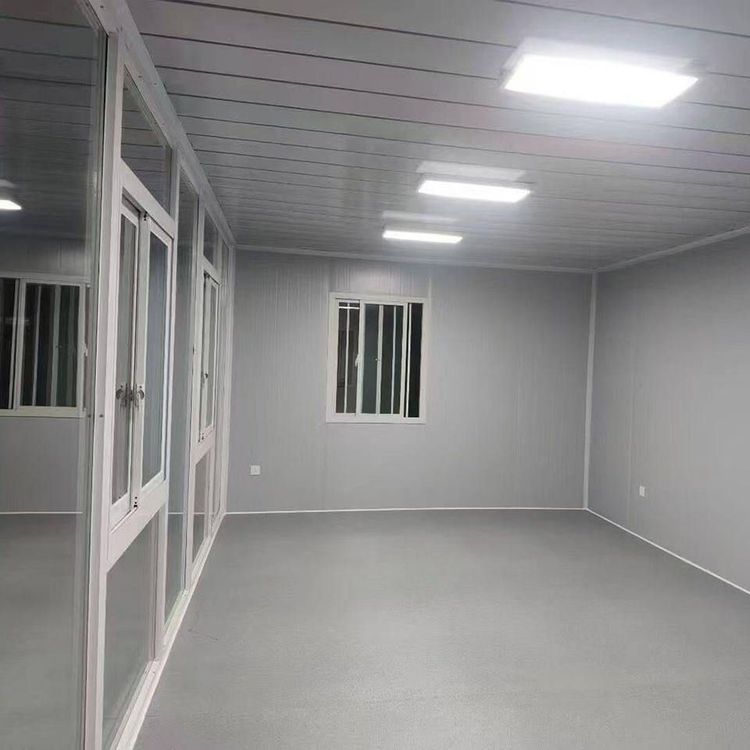
Expandable container houses use standard containers as their basic framework and achieve expansion functions through folding, sliding rails, or hydraulic devices. For example, some products adopt a double-wing folding design. During transportation, they are in a compact container form, and after unfolding, they expand through the side wings to form a complete living space, with the area increasing by 50%-100%. The main structure is made of high-strength steel, paired with fire-resistant, heat-insulating, and soundproof composite panels. Some products also integrate eco-friendly facilities such as solar panels and rainwater collection systems.
Application Scenarios
- Residential Sector: They can serve as permanent housing (such as villas and apartments) or temporary housing (such as for post-disaster reconstruction and construction site dormitories). For example, the "Quartz Cottage" in Cornwall, UK, is a container-modified house designed for five people, featuring an open living area, kitchen, private bathroom, and hot tub.
- Commercial Sector: Suitable for hotels, offices, cafes, and other scenarios. The container hotel in the Czech Republic is composed of three containers, containing five guest rooms, decorated with glass walls and spruce wood, combining environmental protection and aesthetics.
- Special Purposes: Such as medical stations and emergency command centers. Some products can be quickly built into fully functional temporary facilities through modular design.
Core Advantages
- Cost-Effectiveness: The price is much lower than that of traditional buildings. The total cost of a 20-foot container house (about 70 square meters) can be controlled within 200,000 yuan (including freight and taxes).
- Construction Efficiency: Prefabricated in factories, on-site assembly takes only 1-3 days, significantly shortening the construction period.
- Environmental Sustainability: Materials are recyclable, and the construction process reduces construction waste. Some products integrate solar and rainwater collection systems.
- Flexibility: They are mobile and expandable, adapting to different terrains and needs, and support personalized customization (such as layout and decoration style).
Market Conditions
China is the world's leading producer of expandable container houses, with exports increasing from $1.472 billion in 2015 to $4.339 billion in 2025. The products are exported overseas and are favored by consumers in Europe, the United States, and Australia. For example, a video of a Chinese prefabricated house purchased by an American couple through Alibaba.com has received 2.49 million views on YouTube. The domestic market also offers a variety of choices, covering standard sizes such as 20 feet and 40 feet, as well as configurations with 2-5 bedrooms, kitchens, and bathrooms, with prices ranging from thousands to hundreds of thousands of yuan.