Field Investigation of Mobile Toilets for Exhibitions
The field investigation of mobile toilets for exhibitions should be carried out from six core dimensions: user experience, operational efficiency, hygiene assurance, fault response, scenario adaptation, and service provider selection to ensure functional suitability, safety, and efficiency.

I. User Experience: Balancing Space and Efficiency
The internal net width of the toilet cubicle should be ≥85 cm, equipped with an active exhaust system (such as a fresh air system) to control odors. The flushing system should preferably be sensor-activated or foot-operated (noise level ≤60 dB), and the floor should be covered with non-slip mats (friction coefficient ≥0.6). Peak-hour efficiency should be verified through functional tests of flushing, ventilation, and door lock mechanisms. It is recommended to allocate 1-2 toilet cubicles per 1000 people, evenly distributed in high-traffic areas.
II. Operational Efficiency: Modular Deployment and Emergency Plans
The site selection should ensure a flat ground with a load-bearing capacity of ≥2 tons per square meter, with nearby access to water (pressure ≥0.2 MPa) and sewage connections (distance ≤50 meters). Modular design requires diagonal errors ≤5 mm, with wall panels made of Class A fire-resistant composite sandwich panels. During installation, the water and electrical systems should be tested (water supply slope ≥2%, electrical systems equipped with leakage protectors), and drainage should be verified for no leaks through water filling tests. Emergency plans should include reserved spare toilets, equipped with mobile water pumps (head ≥10 m) and emergency generators (power ≥5 kW).
III. Hygiene Assurance: Waste Disposal and Epidemic Prevention Measures
Fecal waste should be stored in airtight containers and regularly removed. Each toilet cubicle should be equipped with handwashing facilities or hand sanitizer, with deep cleaning performed at least twice daily. Epidemic prevention requires the use of a 500 mg/L chlorine-based disinfectant, with cleaning every 2 hours and LED lighting at night.
IV. Fault Response: Quality Control and Emergency Handling
The actual fault rate should be below 2%, with key components (such as door locks and sewage pipes) undergoing more than 20 opening and closing tests. Service providers should offer a 24-hour emergency hotline, with technicians able to dispatch spare parts within 2 hours. For scenarios such as heavy rain or power outages, pre-testing of sewage overflow handling and restoration of lighting and ventilation should be conducted.
V. Scenario Adaptation: Customized Functions and Environmental Adaptability
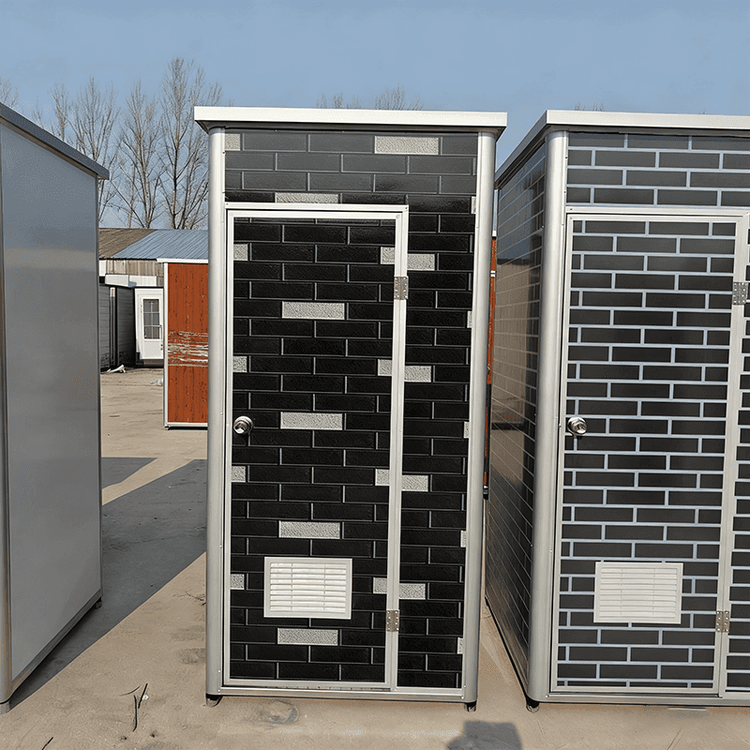
For short-term, high-traffic exhibitions, foam-sealed or microbial degradation toilets are preferred to reduce wastewater volume. Outdoor scenarios require freeze-resistant flush toilets (with insulation layers) or 304 stainless steel corrosion-resistant structures. The appearance can be customized to match the exhibition theme, supporting the installation of functional modules such as smart sensor flushing and barrier-free handrails.
VI. Service Provider Selection: Technical Strength and Service Chain
Prioritize service providers that master multiple technical routes (such as flush toilets and package-free toilets), examining their production qualifications (such as triple system certifications) and implementation cases. Confirm whether they offer a full-service package (transportation, installation, cleaning, maintenance, waste removal), and assess long-term operational stability for municipal engineering scenarios.