
Event Portable Toilet
Event portable toilets are facilities designed to meet the toilet needs of the public and customers during events. They can be moved as a whole and set up at fixed or temporary locations.
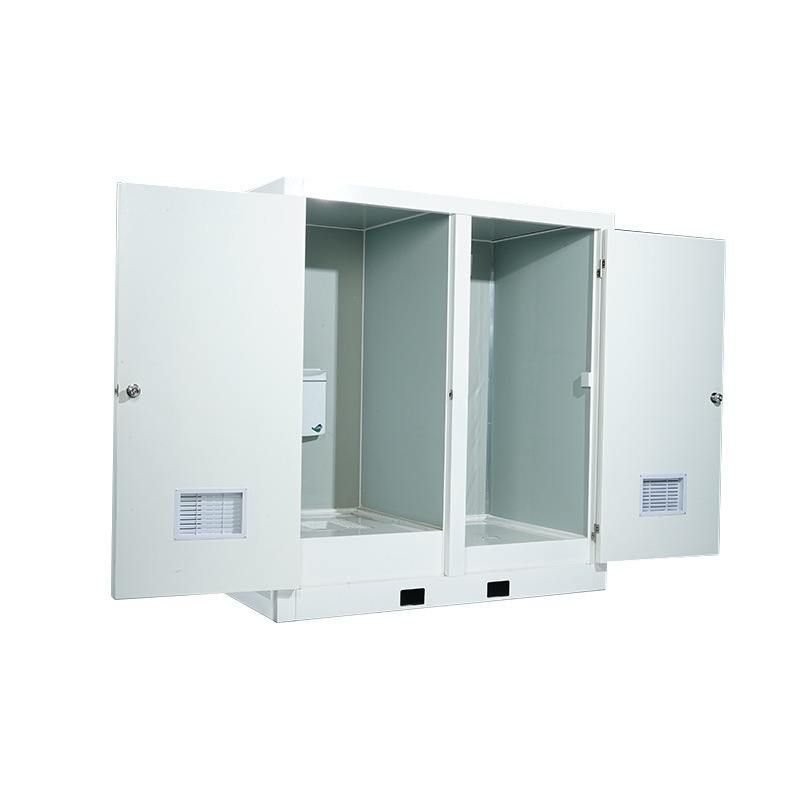
Arrangement in Events
The arrangement of portable toilets varies across different events. Take the 2025 Beijing Marathon as an example. A total of 169 portable toilets were set up along the route, and the number of toilets on the east side of Tiananmen increased from the original 765 to 1119. This arrangement was aimed at better meeting the toilet needs of a large number of participants and spectators and avoiding long waiting times. However, in the 2026 Harbin Marathon, there was an issue of unreasonable toilet distribution. Some runners reported that the toilets were occupied by people seeking shelter from the rain, forcing some runners to relieve themselves on the roadside lawns. This not only affected the environmental hygiene of the event but also caused inconvenience to the runners, indicating that further optimization is needed in the planning and management of portable toilets during event organization.
Composition and Classification
Portable toilets generally consist of multiple parts, including fecal sewage storage tanks (or fecal sewage treatment devices), floor slabs, sanitary ware, walls, washing equipment, water tanks, roofs, and mobile devices. In terms of structural form, they can be divided into single-structure portable toilets and composite-structure portable toilets. According to the method of movement, there are hoisting and handling portable toilets, as well as powered and trailer-mounted portable toilets. Based on the sewage treatment method, they can be further classified into water-flush and non-water-flush suction portable toilets, circulating water-flush portable toilets, and dry-packing portable toilets.
Features
Event portable toilets have many advantages. They can be easily transported to any location where toilets need to be set up, whether it is around large stadiums in cities or at event venues in remote areas, and can be quickly deployed. Moreover, they can be used repeatedly, reducing usage costs. In addition, they are mobile and combinable, allowing for flexible adjustment of the number and layout of toilets according to the actual situation and pedestrian traffic at the event site. The convenience of transportation also makes them more efficient in event preparation and post-event cleanup work.



