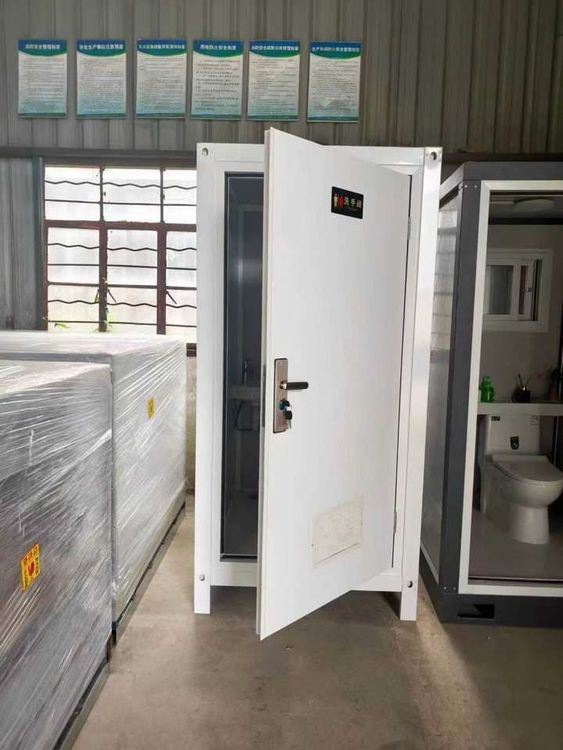
Equipment with Mobile Toilets
The provision of mobile toilets should be comprehensively planned based on specific scenarios, the number of people, usage duration, and waste disposal methods. Below are configuration recommendations and design principles for different scenarios:

I. Configuration Recommendations for Different Scenarios
Construction Sites
- Flexibly place toilets according to construction progress. Each toilet typically accommodates 1-2 people, meeting the needs of a 50-100 person team. For example, a construction site with 100 people can be equipped with 2-4 toilet stalls, prioritizing corrosion-resistant and rust-proof materials to withstand harsh outdoor conditions.
Logistics Parks and Freight Stations
- Position toilets at key nodes such as main roads, loading/unloading areas, and parking lots. It is recommended to configure 2-3 toilet stalls per 100 staff members. If the park has high staff turnover, increase the number of stalls or use powered trailer-type mobile toilets for easy repositioning.
Outdoor Events and Temporary Gatherings
- Configure based on expected attendance. For example, a 1000-person event should have 10-15 toilet stalls (including urinals). If the event spans multiple days, equip with water-flush or recirculating water-flush toilets and arrange regular waste removal.
Tourist Attractions and Parks
- Place toilets at scenic overlooks, trail entrances, and parking lots to alleviate visitor queuing. The number of stalls should be calculated based on the average daily visitor count. For instance, a scenic spot with a peak daily attendance of 5000 can be equipped with 100 stalls at a ratio of 1:50.
Temporary Offices and Emergency Shelters
- Choose models with self-contained features like water-flush and waste collection tanks, eliminating the need for external plumbing. For example, post-disaster emergency shelters can be equipped with dry-pack toilets that collect waste in sealed bags to reduce contamination risks.
Mines and Remote Work Sites
- Use corrosion-resistant and rust-proof materials and equip with large-capacity waste tanks to allow for weekly waste removal. For example, deep-mountain mining areas can be equipped with hoistable toilets transported by helicopter or vehicle to designated locations.
Schools and Training Institutions
- Configure stalls at a ratio of 1:15-1:20, prioritizing models with ventilation, lighting, and non-slip floors. For example, a school with 500 students can be equipped with 25-35 stalls and include barrier-free facilities.
II. Design Principles for Mobile Toilets
Mobility and Convenience
- The structure should be lightweight yet sturdy, using materials like color-coated steel plates, metal embossed plates, or stainless steel plates that are corrosion-resistant and fire-resistant. Mobility options include hoisting/transportable types and powered/trailer types, depending on the usage scenario.
Economic Durability
- Internally equipped with independent waste treatment systems, non-slip floors, automatic flush toilets, and ventilation/lighting systems to reduce maintenance costs. For example, recirculating water-flush toilets use biodegradation technology to conserve water.
Environmental Sustainability
- Waste treatment methods include water-flush, waterless suction, recirculating water-flush, and dry-pack types. For example, waterless suction toilets use vacuum pumps to transfer waste to storage tanks, making them suitable for water-scarce areas.
The configuration of mobile toilets should balance functionality and practicality to meet the needs of different scenarios while complying with relevant standards (e.g., GB/T 18092-2008 'Waterless Sanitary Toilets').