Water Movement in Environmental Protection Toilets
The 'water movement' in environmental protection mobile toilets primarily involves water resource utilization and water-saving technologies in flush-type solutions, with the core aim of achieving efficient water use and recycling through scientific design.

Basic Operating Conditions for Flush-Type Solutions
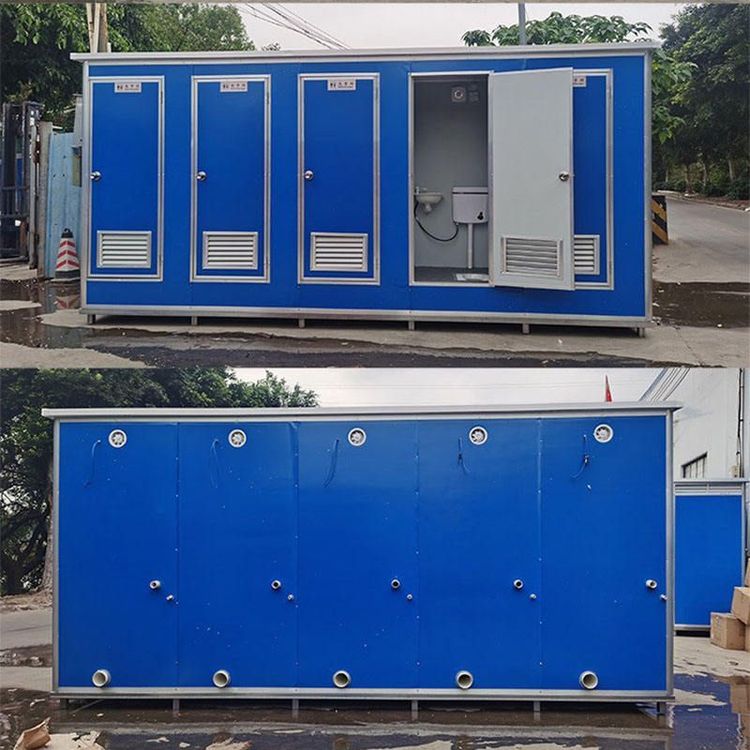
Flush-type environmental protection mobile toilets require connection to water supply and drainage pipes for normal operation. Unlike traditional fixed toilets, their design places greater emphasis on water conservation and recycling. For example, through rainwater collection and filtration systems, natural precipitation is purified and used for flushing, reducing reliance on municipal water supplies. Additionally, hand-washing water reuse technology allows wastewater from hand washing to be collected, treated briefly, and reused for flushing, enabling a cascading use of water resources.
Core Breakthroughs in Water-Saving Technologies
Some products significantly reduce single-flush water consumption by optimizing flushing processes and applying specialized agents. For instance, a solution that automatically collects hand-washing water and adds dedicated agents enables each flush to use only 0.46 liters of water. This technology enhances waste dissolution through chemical agents, combined with precise water volume control, substantially reducing water use while ensuring cleanliness. Furthermore, intelligent water-saving ecological toilets represent a further upgrade, utilizing intelligent control systems to monitor usage frequency, waste volume, and other parameters, dynamically adjusting flush water volume. Combined with water-saving specialized agents, they achieve a low water consumption range of 0.46 to 1.5 liters per flush. This intelligent management not only improves water-saving efficiency but also avoids waste caused by fixed-volume flushing.
Complementary Role of Waterless Flush Solutions
Although 'water movement' primarily focuses on flush-type solutions, waterless flush solutions serve as a complement, eliminating the need for water supply and drainage pipe connections. These solutions treat waste through microbial degradation, physical separation, and other technologies, completely eliminating reliance on water resources. Such solutions are suitable for water-scarce areas or temporary event scenarios, complementing flush-type solutions to jointly establish a diversified water-saving system for environmental protection mobile toilets.
In summary, the 'water movement' in environmental protection mobile toilets achieves efficient water utilization and recycling through the integration of flush-type solutions and water-saving technologies. With intelligent control and specialized agents at its core, it minimizes single-flush water consumption to extremely low levels, providing technical support for the sustainable development of public toilets.