
Back to blog
Article
Environmental Protection Smart Container House
Admin September 15, 2026
The environmental protection smart container house is a new type of building form that adopts modular design and industrial production, with advantages in environmental protection, energy conservation, and rapid construction. It is widely used in temporary residences, construction site barracks, cultural and tourism accommodations, and other fields.
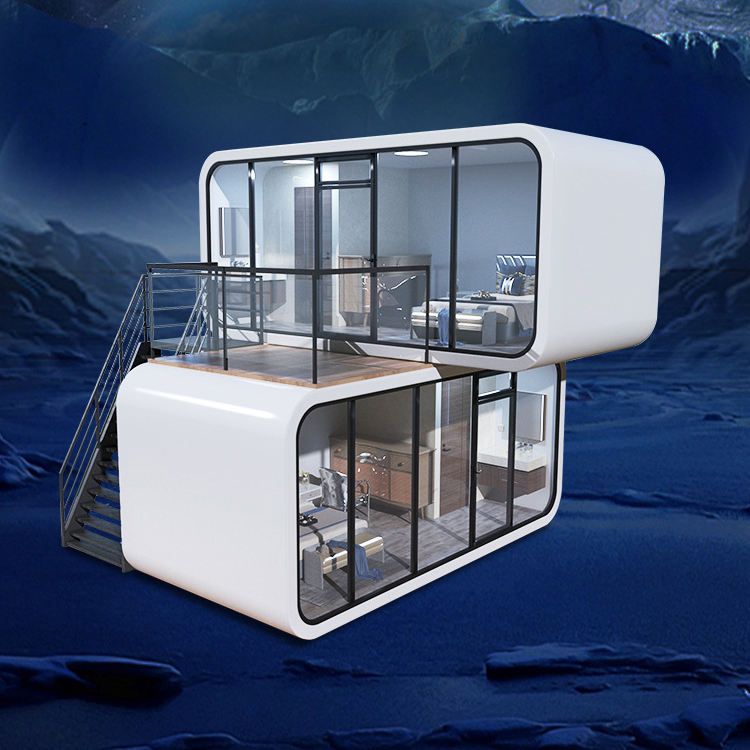
Environmental Protection Features
- Recyclable Materials: The container house uses steel as its main structural material. Each standard 20-foot container consumes approximately 1.2 tons of steel, reducing carbon emissions by about 60% compared to traditional concrete temporary houses of the same area. Steel is recyclable, and under standardized use and regular maintenance, the average number of disassembly and reuse times for compliant products can reach more than 8 times, reducing construction waste emissions by about 90% and improving resource utilization.
- Energy-Efficient Design: The walls are filled with high-density insulation materials such as rock wool or polyurethane, combined with a moisture barrier and ventilation layer to form a multi-layer protective system. In extremely cold environments, auxiliary heating equipment can maintain comfortable indoor temperatures; in high-temperature environments, reflective coatings and ventilation designs can effectively reduce indoor temperatures. Some products also adopt a bridge-cut inner lining structure, reducing heat exchange efficiency between the inside and outside of the container by about 40% and reducing reliance on heating equipment energy consumption.
- Self-Circulating Sewage System: For wilderness campsites without water or electricity, a sewage collection tank and gravity separator can be installed at the bottom of the container to separately treat gray water (bathing and washing water) and black water (toilet sewage). Gray water can be reused for watering vegetation outside the container after sedimentation and activated carbon filtration; black water is converted into liquid fertilizer through anaerobic fermentation with the addition of microbial agents, achieving self-circulating water resource utilization.
Smart Construction Advantages
- Modular Design: The entire building is divided into independent housing modules, with all processes such as the main structure, water and electricity pipelines, bathroom waterproofing, sanitary equipment, cabinets, and wardrobes completed inside the factory. These modules are then transported to the project site and assembled like building blocks, resulting in a short construction period and rapid commissioning.
- Industrial Production: Fully automated production lines and robotic collaboration are used, with manufacturing precision stably controlled between 1mm and 2mm. For example, China's first steel structure modular smart production line can produce up to 50 modules per day, with a capacity ten times that of similar factories in North America.
- Flexible Adaptability: It can be customized and flexibly adjusted according to different scenario requirements, such as the need for rapid delivery in engineering campsites, adaptation to specific functional layouts in government and enterprise temporary buildings, and flexible adjustment of spatial forms in commercial pop-up stores.



