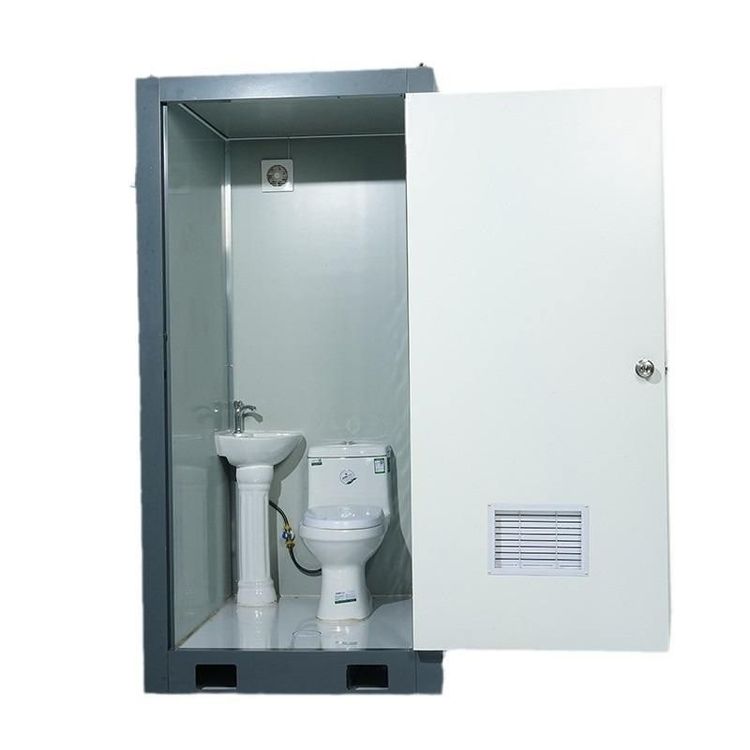
Selection of Environmental Protection Mobile Toilets
Choosing an environmental protection mobile toilet requires comprehensive consideration of usage scenarios, material and craftsmanship, sewage disposal methods, and core technological paths. Specific recommendations are as follows:

1. Matching Models According to Usage Scenarios
For short-term events or construction sites, simple steel-structured mobile toilets are preferred due to their sturdy structure, easy assembly and disassembly, and portability for repeated transportation to meet temporary needs. Public places such as scenic spots and parks are suitable for prefabricated landscape mobile toilets, which have a simple and elegant appearance, good sealing properties, and are suitable for long-term outdoor placement. Sites without sewage networks (such as rural areas and camping bases) require sewage-free ecological mobile toilets with reasonable sewage disposal designs, anti-leakage features, and easy cleaning to reduce later maintenance costs. For large-scale temporary events (such as sports events and exhibitions), multi-compartment mobile public toilets are recommended, as they have an adequate number of squatting positions to alleviate toilet congestion.
2. Focusing on Material and Craftsmanship
The main frame should be a hot-dip galvanized square steel welded frame, which has strong wind, sun, and corrosion resistance, and is less likely to peel or rust during long-term outdoor placement. For example, some products use 100*100 galvanized square steel for welding to ensure structural stability. Exterior wall panels should be selected according to the scenario: metal carved panels offer thermal insulation, waterproofing, and corrosion resistance, suitable for municipal and scenic areas; color steel panels are lightweight and cost-effective, suitable for short-term use on construction sites; and landscape-shaped panels have a higher aesthetic appeal, suitable for gardens and cultural tourism scenic spots. The interior should be fully equipped, including anti-slip and wear-resistant floors, odor-resistant ceramic fixtures, ventilation and air exchange equipment, energy-saving lighting, privacy door locks, and storage hooks. Sealing craftsmanship and odor control design are crucial to prevent unpleasant odors and mosquito infestations.
3. Selecting Sewage Disposal Methods Based on Site Conditions
Water-flush mobile toilets rely on water supply and sewage networks and are suitable for places with high foot traffic and complete infrastructure. However, they consume a large amount of water annually and have high costs for septic tank cleaning. Foam-sealed mobile toilets reduce odors and water consumption through foam but require regular addition of foaming agents, have a high equipment failure rate, and offer a poor experience in low-temperature environments. Waterless biological degradation technology uses microorganisms for degradation, achieving "waterless flushing, no odors, and no pollution," with fecal matter converted into organic fertilizer on-site. For example, [Zhongyunhui] products dynamically adjust microbial activity through 5G, AI, and edge computing, saving over 3,000 tons of water annually and reducing operation and maintenance costs by about 40% in tests at 10 key scenic spots in Sichuan.
4. Paying Attention to Core Environmental Protection Technologies
In high-altitude and oxygen-deficient areas, products with freeze-resistant and UV-resistant functions should be selected. For example, a certain enterprise's product can operate stably in extreme environments ranging from -20°C to 40°C, ensuring the activity of microorganisms in the degradation tank through intelligent freeze prevention technology and multi-source data collaboration. Intelligent management capabilities can monitor foot traffic, energy consumption, and equipment failures in real-time, with a warning response time of less than 30 minutes, reducing manual inspection costs. Priority should be given to products with fecal matter resource utilization capabilities, achieving "zero emissions" through microbial degradation technology and enhancing environmental protection benefits.