
Environmental Protection Mobile Toilet Flushing
The flushing methods for environmental protection mobile toilets mainly include water-flushing and gravity-flushing types. Some products also achieve water-saving functions through technologies such as rainwater collection and filtration systems and hand-washing water secondary flushing.
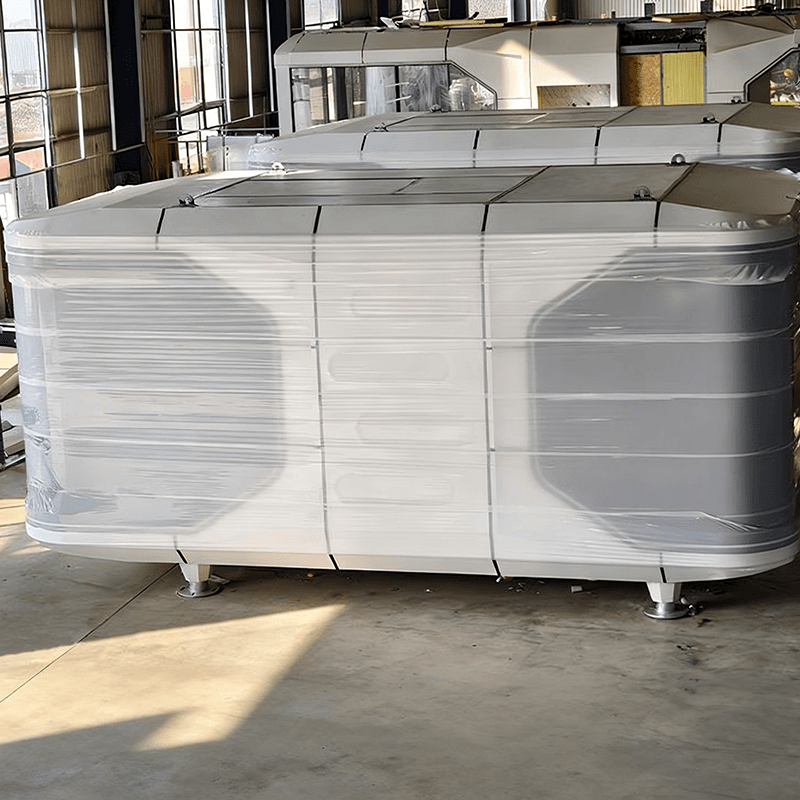
Water-flushing is a relatively common flushing solution. Its working principle is similar to that of traditional fixed toilets, where waste is flushed into the sewer pipes through water flow. However, this solution requires connection to both water supply and sewer pipes for normal operation, so it has certain limitations on usage scenarios. It is generally suitable for areas with well-established municipal pipeline networks, such as city parks and large event venues. Its advantages include a clean and thorough flushing effect, effective reduction of odor residue, and relatively low maintenance costs.
Gravity-flushing is more suitable for scenarios without water supply and sewer pipes, such as remote scenic spots and temporary construction sites. The 2026 new lightweight plastic mobile toilet adopts a design with a gravity-flushing sewage tank and a foot pump. Its principle is to use the water stored in the sewage tank and create water flow for flushing through foot-pump pressurization. This design does not require an external water source. When the sewage tank is full, it can be centrally processed by a sewage suction truck, offering flexible operation and strong environmental adaptability. Some products also add biodegradable agents to the sewage tank to accelerate the decomposition of waste and extend the cleaning cycle.
To enhance water-saving performance, some environmental protection mobile toilets have introduced rainwater collection and filtration systems and hand-washing water secondary flushing technologies. The rainwater collection system collects rainwater through roofs or dedicated water collection devices, filters it through multiple layers, and stores it in a clean water tank for flushing or hand-washing. Hand-washing water secondary flushing collects the drainage from hand-washing basins into the sewage tank, which is then discharged through the gravity-flushing system along with waste. These two technologies can significantly reduce the consumption of fresh water and are particularly suitable for arid regions or scenarios with water scarcity.
In general, the flushing solution for environmental protection mobile toilets should be comprehensively selected based on the usage scenario, water source conditions, and environmental protection requirements. Water-flushing is suitable for areas with well-established municipal facilities, while gravity-flushing offers greater flexibility. Water-saving technologies can further reduce resource consumption and promote the development of mobile toilets towards a green and sustainable direction.



